A Call to the Moral Debate the World Refuses to Face — A Black Jewish Voice Speaks for Israel and Global Jewry
Israel’s Secret Strength? Its Women
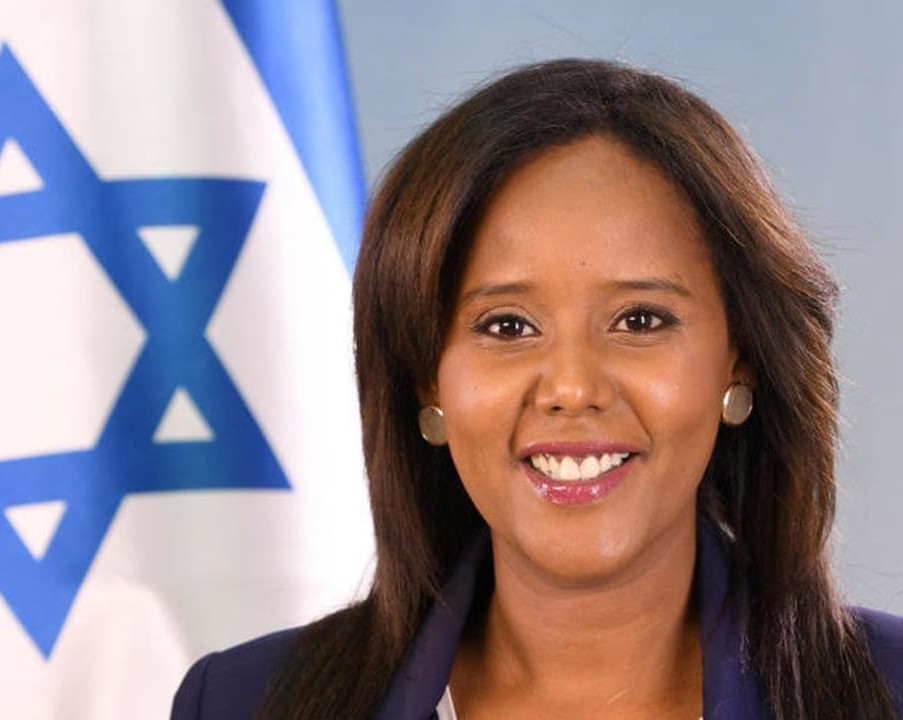
MK Pnina Tamano-Eshate. (Haim Tzach)
How a society treats its women is not a side issue; it is the clearest measure of its soul and its strength. As Rabbi Lord Jonathan Sacks, z”l, reminded us, the Torah begins with a radical affirmation of human dignity: “God created humankind in His image” (Genesis 1:27). That declaration knows no hierarchy of gender, race, or class. If we take it seriously, women’s freedom and leadership are not luxuries, they are necessities.
Israel today offers proof of this principle in practice. Tesga Malaku and Pnina Tamano-Eshate, both Ethiopian Israeli women, serve proudly in Parliament, a sign of the country’s growing inclusivity. Their presence is more than personal achievement; it reflects Israel’s commitment to empowering women, minorities, and immigrants in public life. In a region where women are often excluded or silenced, this openness deserves recognition. Israel’s neighboring countries should reflect honestly on how they treat their women citizens. It is cruel and unjust to impose life sentences or even harsher punishments, on women for ordinary social choices, such as relationships or public behavior, that should never be criminalized.
For us, this story is also personal. Jonathan’s father, Takele Ashnafee, was a courageous Ethiopian Jewish activist who gave his life in the struggle for Zionism. He was killed by communist forces in Ethiopia for recruiting women and children to attend Jewish schools, daring to dream of Jerusalem and mobilize his community toward it. His sacrifice is a reminder that the Jewish people’s return to their homeland was not abstract—it was paid for in blood, faith, and courage. That legacy now lives on in Jonathan’s work in the Knesset’s Human Resources Department, where he recruits and supports women professionals to succeed inside Israel’s legislature. In a very real way, he is helping to strengthen the very institutions his father longed for Ethiopian Jews to join. His father’s dream insists that Israel must not only survive but lead morally ensuring that every citizen, including women and minorities, shares fully in its promise.
Women currently hold nearly 29% of parliamentary seats in Israel—a proportion that places the country well above the Middle Eastern average and ahead of many of its neighbors. Compare this with Iran, where women account for barely 3% of parliamentary representation. Even more troubling, Iran’s courts continue to execute women: Amnesty International reported at least 31 women executed in 2022 alone, often following unfair trials. Elsewhere in the Arab world, women’s participation is even more limited. In Saudi Arabia, women sit only on the appointed Shura Council, which has no legislative authority, and executions including of women remain disturbingly frequent, with more than 300 carried out in 2024. In Yemen and Oman, women hold almost no political power, and their legal rights are severely curtailed. Too often, gender-based violence, discriminatory family laws, and harsh penalties go unreported and unchallenged. The difference is not only statistical—it is moral. One system empowers women to lead; another punishes them for aspiring to dignity.
Israel’s progress is real, but it is not complete. Women remain underrepresented in senior ministerial roles, face persistent wage gaps, and often encounter obstacles in religious leadership and the upper levels of science and technology. Yet every step forward matters. When girls see women serving in Parliament, commanding military units, or leading ministries, they begin to imagine new futures for themselves.
Jewish tradition insists we take these challenges seriously. The Talmud teaches: “In the merit of righteous women, our ancestors were redeemed from Egypt” (Sotah 11b). Redemption itself, our sages remind us, was linked to women’s leadership. Rabbi Sacks extended this teaching into a modern philosophy: a covenant of shared responsibility rooted in mutual dignity. Difference, he argued, is not a weakness but the condition of our humanity. Rabbi Ovadia Yosef, z”l, added another vital perspective. Grounding his rulings in kevod habriyot the dignity of every human being, he championed Torah education for women in Sephardic communities. His leadership showed that strengthening women strengthens Jewish life itself.
To build on its progress, Israel and those who look to it as a model must pursue five priorities. First, strengthen civic infrastructure by expanding affordable childcare, safe public transportation, and workplace protections for mothers. These are not luxuries but essential foundations for equal opportunity. Second, enforce gender parity in leadership by setting ambitious yet realistic targets for women’s representation in government, corporate boards, and academia. Transparency will ensure that rhetoric translates into measurable results. Third, champion women in innovation by opening pathways for female entrepreneurs to access capital, mentorship, and international markets, particularly Ethiopian Israeli and minority women innovators in technology and science. Fourth, change institutional culture so that women are fully included not only in politics but also in religious courts, city councils, and universities. Representation must extend across all spaces that shape society. Finally, root policy in narrative. From Eshet Chayil to Miriam and Deborah, Jewish history is filled with strong women leaders. Their stories should inspire civic education and public life, reminding us that equality is not foreign to Judaism, it is its inheritance.
Rabbi Sacks taught that optimism and hope are not the same: “Optimism is the belief that things will get better. Hope is the belief that we can make things better.” Across the Middle East, women already shoulder more than their share of hope, even when systems deny them basic rights. Israel has the opportunity to turn that hope into policy, setting a standard for freedom and inclusivity.
Our progress is not perfect, but it is undeniable. The presence of Ethiopian Israeli women MPs in Parliament, alongside Arab and Jewish women leaders, reflects how far we have come. In a region where women are too often marginalized, Israel has chosen a different path one of democracy, resilience, and moral clarity.
If we root our institutions in dignity and mutual responsibility across genders, we will not only expand freedom but also embody our deepest values as a moral democracy and, in the words of the prophets, remain a “light unto the nations.”
—
The above is coauthored by Dr. Shmuel Legesse and Jonathan Takele. Dr. Shmuel Legesse is an Ethiopian Israeli social activist, educator, and international diplomacy expert. He holds a doctorate in educational leadership from Yeshiva University and has represented the Israeli Knesset in global public affairs. Jonathan Takele is a community activist and son of an Ethiopian Jew who was killed by communists for his Zionist activity in Ethiopia. He currently works in the Israeli Knesset in the Human Resources Department.
Related Topics
Related Posts