
Israel’s Space Power, Commercial Gap
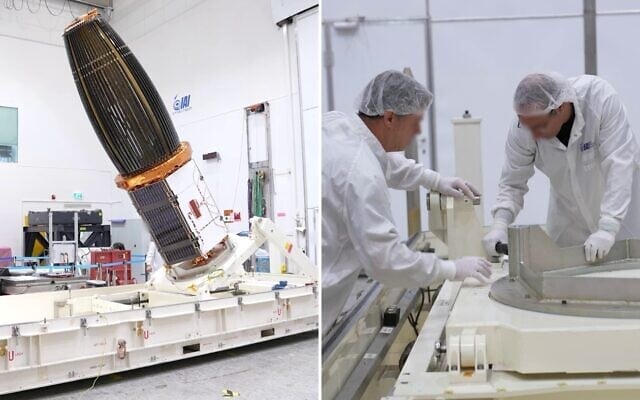
Ofek 19 proves Israel’s edge. Now it must build a civilian engine worthy of it
I felt that familiar quickening in the chest when the news broke: Ofek 19 had not only reached orbit, it had begun whispering back its first images. You do not need to be a space engineer to feel that thrill. It is the sensation that a small, stubborn nation knows well – the moment when raw ingenuity turns into working reality.
The moment when “Israel can” becomes “Israel did.” In those first downloads, somewhere between radar pulses and grainy terrain, you could almost hear Israeli resilience and renewal humming in the background.
Ofek 19 is more than hardware. It is a reminder of everything Israel does best under pressure: lean teams, world-class engineering, and a culture of solving for “impossible” until it becomes a Tuesday. Israel launches westward into a headwind other countries avoid, squeezes performance out of mass and fuel budgets that would make larger nations blanch, and iterates until the system sings. That is innovating the future of Israel in full voice: security fused with science, purpose braided to precision.
And yet, if one is honest – and now is exactly the time to be – Israel’s success in sovereign space has exposed a different kind of gap. It holds one of the rarest assets on earth: independent access to orbit, a three-decade heritage in satellites, and a talent stack that can take a spec and make it soar.
But in the booming commercial space economy – the internet-from-orbit constellations, the AI-driven Earth observation platforms for agriculture and climate, the in-space manufacturing pilots, the components and services that power it all – Israel is still more spectator than shaper. The defense crown is polished; the civilian engine is idling.
I do not write that as a criticism of Ofek, the defense industries, or the brilliant teams inside Unit 9900 and across Israeli space ecosystem. If anything, their excellence clarifies the opportunity. What the Ofek line achieves for national security could inspire a parallel track for national prosperity. The question is not whether Israel can build superb technology. It does that. The question is whether it designs strategy around it so that dual-use becomes a flywheel rather than a footnote.
The world has already tipped. Space is no longer a club of a few agencies launching a few satellites on a few dates circled in red ink. It is a conveyor belt of commercial capability. Constellations for global connectivity move from slide deck to sky.
Earth observation is becoming an analytics business, where value accrues not to the raw image but to the insights it powers on farms, ports, forests, roads and grids. Space infrastructure once reserved for superpowers is being unbundled into components that nimble firms can supply. In that landscape, Israel should not be the nation with a seat in the gallery. It should be on stage.
Israel has the raw materials. If you walk the floor at any deep-tech showcase in Tel Aviv or Herzliya, you will meet founders building radiation-hardened compute for spacecraft, hyperspectral sensing for methane and industry emissions, autonomous labs for microgravity chemistry and biomed, next-generation propulsion, and lunar resource utilization concepts that once lived only in science fiction.
You will meet veterans of elite IDF units who can turn zero to one on complex systems, and researchers from Technion, Ben-Gurion, and Weizmann who can push the physics envelope. You will find a healthy scattering of companies working on communications, components, analytics and services that could plug directly into global supply chains if Israel connects capital to capability with intent.
There are signs of that intent. The announcement of a national space R&D lab to help startups validate hardware in the real environment of orbit is the kind of enabling step that turns prototypes into products. The growth of specialist venture funds, the involvement of anchor primes, and the uptick in university–industry programs all suggest a system that wants to scale.
The lesson Israel learned in cybersecurity applies here. When Israel treats a field as truly strategic, everything changes. When government, academia, and industry pull in the same direction, Israel does not merely catch up, it leaps.
Still, the gap remains. Israel’s satellites often rely on foreign launchers – practical, certainly, but also a reminder that in the commercial space arena, self-sufficiency matters. And while boutique brilliance has its place, the real economic upside belongs to those who design full systems, integrate entire value chains, and capture recurring revenue.
So what must change? Not the nation’s spirit. Not its engineering. What must change is Israel’s national posture. The country must step into this market as a true builder of civilian space infrastructure, not only as a defense-driven innovator with incidental spillover.
That shift begins with language and ends with legislation, finance, and flagship programs. It means declaring space, clearly and publicly, a national growth vertical – and then aligning Israel’s tools with that declaration, just as the country once aligned Yozma with venture capital and the Israel Innovation Authority with early-stage risk.
If you want a picture of what this could look like, imagine the near-future daily life of an Israeli farmer in the Negev. Satellite tasking happens on demand from a local analytics platform tuned to desert soil and drip irrigation. A greenhouse operator gets a same-day alert about a fungal bloom because a startup in Haifa has turned raw multispectral bands into precise agronomic prescriptions. The water authority adjusts allocations based on evapotranspiration estimates from a mixed Israeli–European constellation, while insurance models risk in real time instead of months later.
Every step in that chain is a space-enabled service. And every shekel paid stays in an Israeli loop that creates jobs, intellectual property, exports, and tax receipts—turning orbital capability into everyday prosperity.
Or picture the climate and infrastructure dividends. Satellite sensing pinpoints leaks in Israel’s gas networks and emissions from heavy industry with a level of detail regulators can actually act on. Ports and railways are tracked for throughput and stress using a fusion of radar, optical imaging and the Automatic Identification System (AIS).
Construction timelines shrink because project managers see what is really happening on site, not just what a spreadsheet claims. This is not science fiction; it is the leading edge of workflows built on orbital data, onboard compute and edge AI.
If Israel wants the jobs and the value from that shift, it should be the one building the tools, the datasets, the integrations and the marketplace rules that make the country indispensable to those workflows.
There is a sovereignty argument too. Space is becoming the nervous system of the modern economy. Communications, timing, logistics, climate adaptation, disaster response, finance and insurance all depend on what happens above the Kármán line. If Israel’s future resilience depends on reliable access to space-borne services, then a minimal civilian stack – designed for openness with allies but not dependence – becomes part of the country’s national risk management. Security taught Israel redundancy. The civilian economy needs the same philosophy.
And there is a cultural argument I cannot resist making: space is the perfect canvas for the Israeli temperament. Israel thrives under hard constraints, moves fast without getting precious about perfection, prototypes in the morning and ships by nightfall. It assembles improbable skill sets and hands them the problems no one else dares to touch.
In a world where space is now software-defined and constellations are forged from fleets of small, smart objects rather than a handful of cathedral-class giants, that Israeli restlessness is not a flaw. It is a superpower.
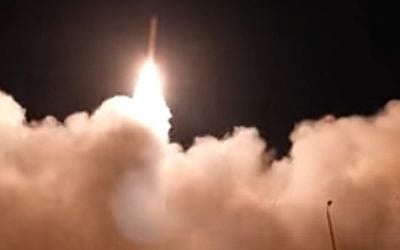
When I think back to those first Ofek 19 images, I think of what they quietly signaled: not only that Israel can keep itself safe, but that it can help keep the world smarter, cleaner, better connected, and better prepared. That is the civilian promise of space. It touches water and wheat. It touches fires and floods. It touches the phone in your pocket, the truck that delivers your groceries, and the grid that keeps your lights on. It is the connective tissue of prosperity.
The Startup Nation did not become itself by watching revolutions roll past and clapping politely. It became itself by jumping in early, learning faster than anyone else, and compounding that learning into companies, careers, ecosystems and exports. Space is the next such revolution. The commercial market will not pause for Israel – yet its doors remain open, inviting those bold enough to step through.
So join me to celebrate Ofek 19 for what it is: a jewel in Israel’s crown and a masterclass in what Israeli teams can do under pressure and with limited means. It is proof that when this country decides something must reach orbit, it usually does.
But celebration is only the beginning. Israel must now make a promise to itself: that the next decade’s biggest space story will not be just another spectacular launch window, but a flourishing marketplace of civilian services built on top of that hard-won heritage. That is how resilience and renewal become more than a slogan. That is how Israel keeps innovating its future – not only for the battles it must win, but for the businesses, sciences, and livelihoods it deserves to grow.
Israel has the talent. It has the track record. It has the urgency. What it needs now is the will to build – so that the next time it looks up, the glow it feels is not only pride in a safe sky, but confidence that it owns a true share of the booming economy orbiting above it.