
Israel’s teachers need support now more than ever
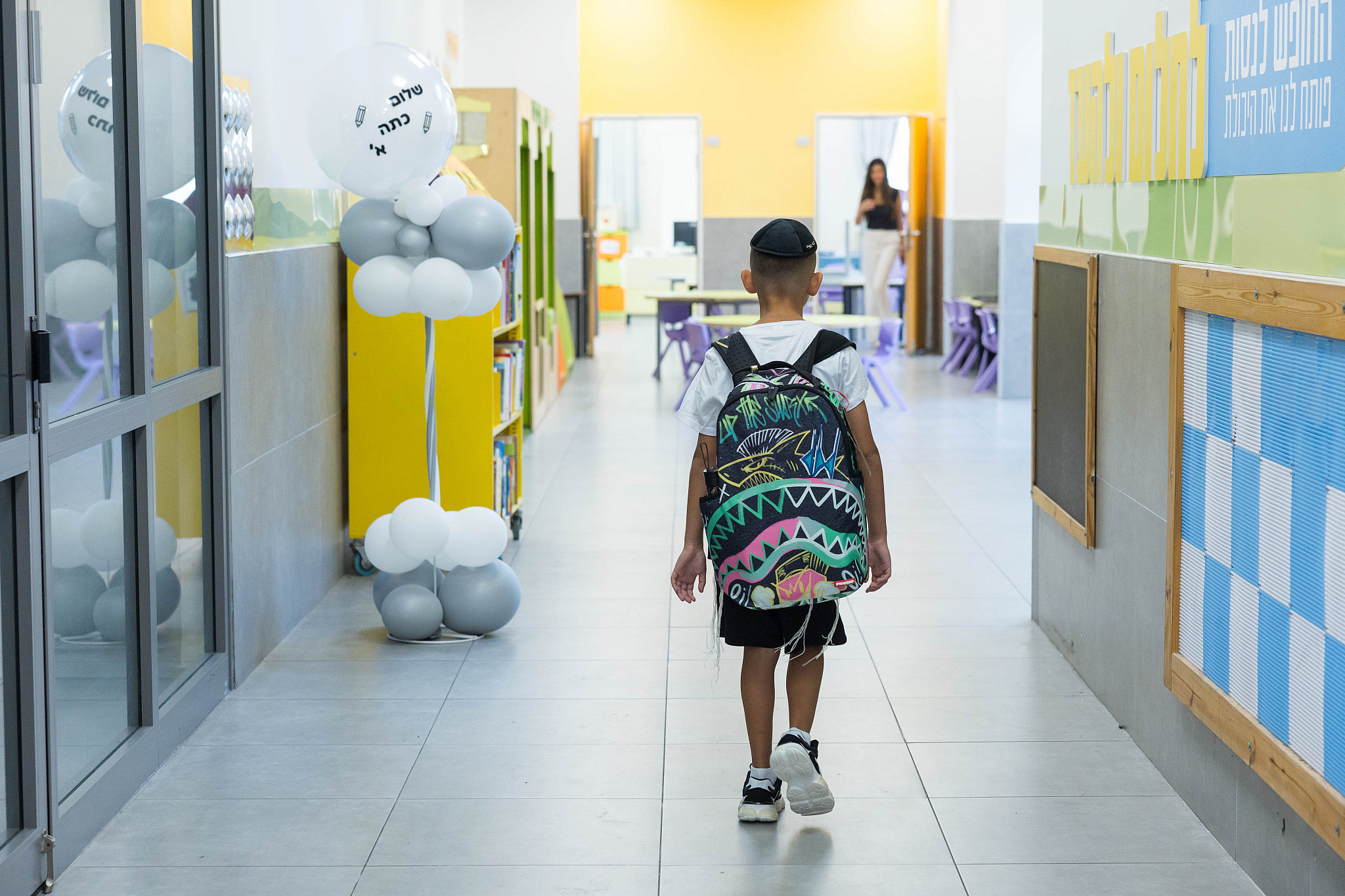
As Israel begins a new school year, the familiar excitement of first lessons, sharpened pencils, and fresh notebooks is weighed down by an ever-present reality: war. For the second year in a row, children are returning to classrooms carrying the trauma of displacement, loss, and prolonged uncertainty. Across Israel, from the northern border towns to the southern communities near Gaza, children are living in a reality where safety cannot be taken for granted.
And alongside these children stand their teachers — the unsung heroes of resilience. They are the ones who greet students each morning, who sense when a child has been awake all night from sirens, and who offer stability when everything else feels fragile. They have done this tirelessly for nearly two years, often without pause. But the question we must now ask is this: who is caring for the caregivers?
The unseen burden of educators
Teachers in Israel today carry a dual responsibility. On one hand, they provide a semblance of normalcy to children whose lives have been upended. On the other, they manage their own personal hardships. Many have been evacuated from their homes, shuttling between temporary housing and school. Others have spouses or children called up for reserve duty, leaving them to balance professional duties with family crises. Some have been directly exposed to violence and loss.
The expectation that these educators can give endlessly — to teach, to comfort, to absorb trauma — without structured support is both unrealistic and unfair. Educators are human beings, not inexhaustible resources. When their emotional reserves run dry, when burnout takes hold, the impact does not stop with them. It ripples outward, affecting students, families, and entire communities.
The idea of “caring for the caregivers” is not new, but in the context of Israel’s prolonged conflict, it has become an urgent necessity. If we want our children to learn, heal, and grow, we must ensure that their teachers are emotionally and mentally equipped to guide them. This means providing access to counseling, creating peer-support networks, offering opportunities for respite, and, crucially, cultivating a culture that acknowledges educators’ struggles rather than expecting silent endurance.
Caring for the caregivers in special education
The need is even more acute in schools for children with disabilities and special needs. For these students, progress depends not only on curriculum but on the presence of a stable, emotionally attuned adult. For their teachers, the emotional toll of trying to provide stability under such conditions is immense, and if teachers are depleted, the children most vulnerable to disruption pay the highest price.
This challenge is compounded by the fact that special education teachers in Israel work nearly year-round, until August 15, and continue teaching even during the holidays, a reality that heightens burnout and makes their circumstances even more demanding than those faced by other educators.
Yet where dedicated emotional support has been provided, educators are more able to maintain consistency and presence for students whose lives are anything but consistent.
At Alumot Or, we have seen the difference that this approach can make. In our special education school, Benjamin Rothman Eshel HaNasi in the south, where the community lost a student and a staff member murdered on October 7, and where many students and educators are grieving family members and friends, teachers who have been supported through structured resilience programs report not only lower stress levels but also greater ability to create calm, nurturing classrooms. In our special education school in Kiryat Shmona, which was evacuated after suffering direct rocket damage, the challenges have been even greater.
Supporting educators in these environments is not an option. It is a moral obligation.
A broader lesson for Israel and the Jewish world
Israelis have always understood that education is the cornerstone of resilience. During times of crisis, it is schools that provide continuity, identity, and a sense of future. But today, resilience must begin not only with the students, but with the teachers who guide them.
This is not only Israel’s concern. Jewish communities worldwide often ask how they can best stand with Israel in its most difficult moments. Much attention rightfully goes to immediate humanitarian relief, trauma support for children, and security needs. Yet one of the most strategic and impactful investments global partners can make is in strengthening the educational teams who are holding Israel’s social fabric together, day after day.
By directing support to programs that provide emotional care for teachers, international partners can ensure that every dollar spent has a multiplier effect: One cared-for teacher can sustain dozens of children, each of whom carries that stability back into their families and communities.
The truth is simple: children cannot thrive if their teachers are breaking under the weight of unrelenting pressure. And teachers cannot sustain resilience unless society acknowledges their needs and steps up to meet them.
As we enter the second year of this war, let us shift our perspective. Let us recognize that caring for educators is not a luxury or an afterthought, but the very foundation of educational and national resilience. The Jewish tradition has always placed teachers at the heart of community life; today, that tradition calls on us to act.
If we stand with our educators through recognition, resources, and real emotional support, they will stand with our children. And if our children are supported, they will carry forward not only knowledge, but the resilience and hope that will ensure Israel’s future, even in the shadow of war.
The time to care for the caregivers is now.