
Buying, renovating and managing Israeli property from anywhere
Israel’s unsold homes: Where buyers have the edge
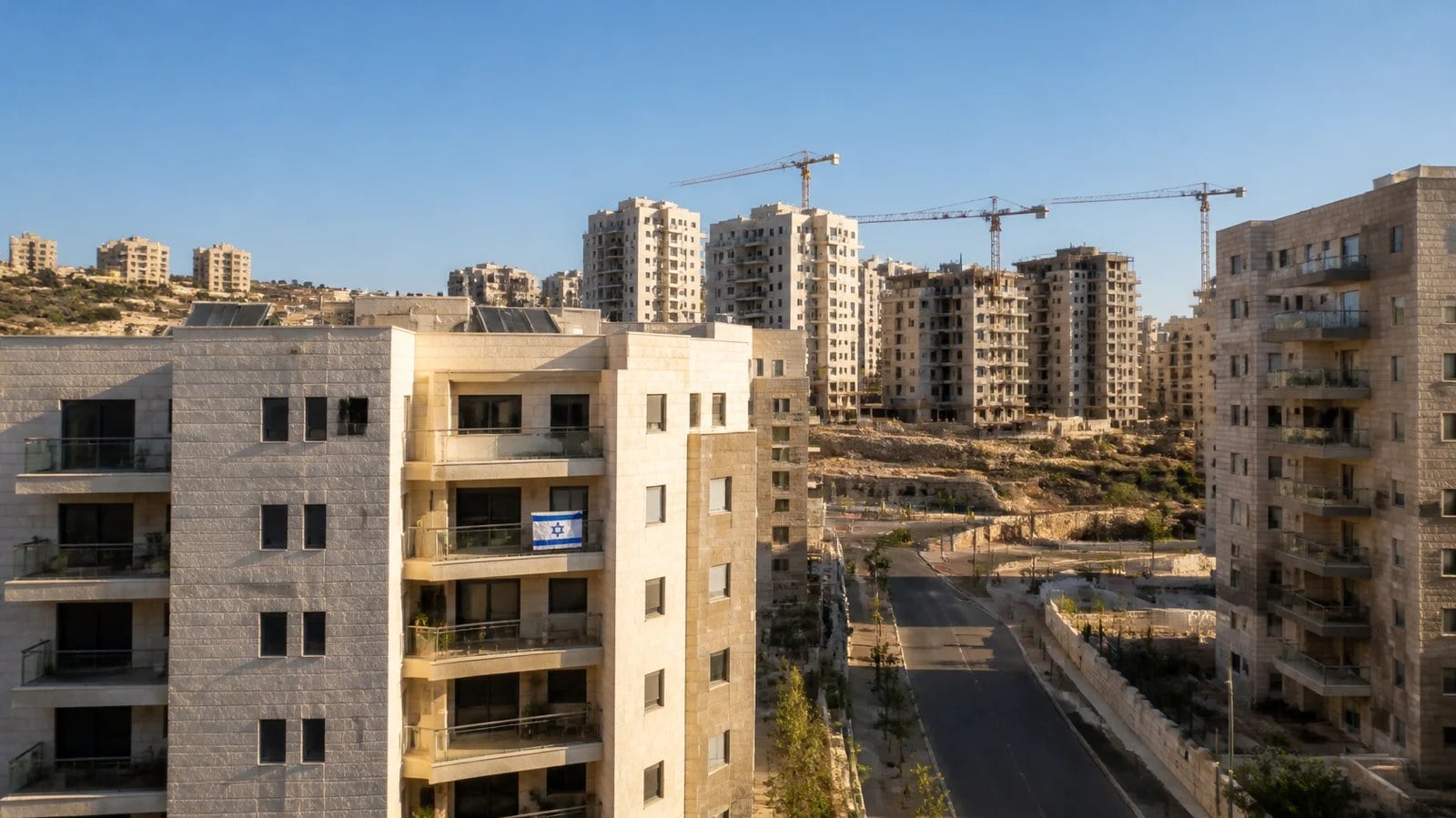
New apartment towers going up in Israel (illustrative, AI-generated image)
Israel’s housing market has more new apartments sitting unsold than at any point on record. At the end of July, about 85,000 new units were still on the market, according to Central Bureau of Statistics figures reported by Globes.
That number gets quoted a lot. On its own, it tells someone buying an apartment in Israel very little. A national glut does not mean every city has one, and a Globes analysis published this week shows just how uneven the picture really is.
How Globes measured years of housing supply
Globes took CBS data on unsold new apartments in each city and divided it by the average monthly pace of open-market sales between March and August. The result is a simple measure: how many years developers would need to sell what they already have, if sales stayed at today’s pace.
Israeli cities with the most unsold apartments
- Yehud-Monosson: 1,670 unsold apartments, and only 63 sold on the open market in the first half of the year. That is more than 13 years of supply, the highest in the country.
- Lod and Be’er Ya’akov: nearly 10 years each.
- Kiryat Gat: nearly 6.5 years. Lod and Kiryat Gat each hold about 3,000 new apartments for sale, more than Rishon LeZion and Holon combined.
- Jerusalem: 10,249 unsold units, the largest stock in Israel, with sales down to about 156 a month. That works out to 5.5 years.
- Beit Shemesh and Bat Yam: 5.3 years each.
Where Israel’s housing market is balanced
Globes counts anything under two years of supply as balanced.
- Ashkelon: 1,419 unsold apartments at the end of August, selling about 118 a month. Roughly one year of supply, the most balanced city in the analysis.
- Netivot 1.2 years, Haifa 1.4 years, Rehovot 1.7 years.
- Tel Aviv: 9,820 unsold units, almost as many as Jerusalem, but it sells about 348 a month. That leaves 2.4 years.
How did some cities end up so far ahead of demand? Globes points to the massive rezoning of agricultural land, fast-tracked approvals through the Committee for Priority Housing, heavy land marketing by the Israel Land Authority, and subsidized housing programs that bring large numbers of open-market apartments along with them. All of that was built for the market of 2021 and 2022. Since the 2023 slowdown, many of those buyers stepped back.
What it means if you are buying in Israel
I have bought, renovated and built property in Israel for more than 20 years. Here is how I would read these numbers.
1. Leverage is local. In a city with five or more years of stock, a developer has every reason to make a deal. In Ashkelon or Haifa, much less so. Globes notes that developers in balanced cities can take a firmer stance on price. A national headline does not belong in a local negotiation.
2. The discount is often not on the price tag. Developers would rather not cut list prices. Instead, as a recent Ynet analysis describes, they offer financing packages, subsidized interest, longer payment schedules, upgraded finishes and help with closing costs. Economically, these are price cuts. Compare offers on the total cost, including financing, and ask for the price if you pay on a standard schedule versus the promotional plan. The two numbers are not always the same.
3. Oversupply is not the same as cheap. Beit Shemesh has more than five years of stock, yet Globes reports that prices there have soared, driven by severe demand in the haredi community. Inventory is one input. What matters is whether the stock matches the demand in the neighborhood you actually want.
4. Check what is actually built. The Israel Builders Association has argued that the CBS count includes many apartments where construction has not even started. An unsold unit in a project that has not broken ground can be years away from keys. I waited 13 months for building approvals on my own home in Mazkeret Batya, before a single wall went up. Ask where the project stands today and what handover date is written into the contract.
The bottom line: four questions to ask before you buy
Israel’s housing glut is real, but it is not one market. It is dozens of local markets, some flooded and some tight. Before you sign anything, ask four questions: How many years of supply does this city have? How fast is this specific project selling? What is the price with and without the financing promotion? And when, realistically, will you get the keys?
The answers will tell you far more than 85,000 ever could.
Related Topics