Solicitor & foreign policy adviser
Italy’s ex diplomats still fight others’ war
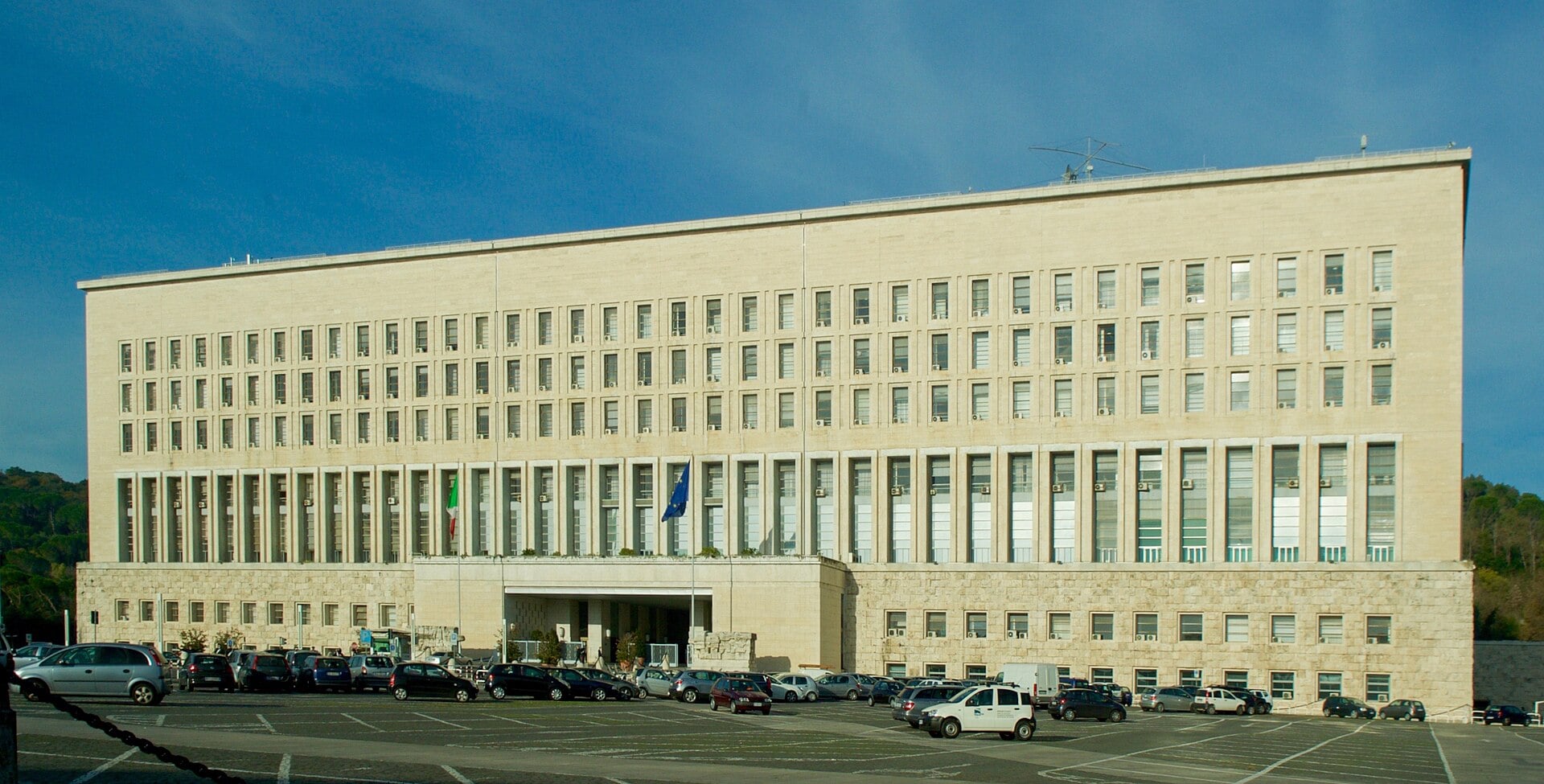
Italian Foreign Office (Photo by U.S. Department of State on Wikipedia Commons)
What is it about Italians and their urge to be heroic in someone else’s war?
This week, 34 retired Italian ambassadors—none of them accountable to voters, and most of them long detached from reality—published an open letter demanding that Prime Minister Giorgia Meloni immediately recognize the State of Palestine. Not eventually. Not as part of a negotiated peace. Immediately, and presumably unilaterally, while Hamas still holds hostages and fires rockets.
The letter is an exercise in moral vanity masquerading as statesmanship. It calls for an end to all military and defense cooperation with Israel. It demands sanctions against Israeli cabinet members. It denounces “crimes against humanity” in Gaza, without once mentioning the crimes of October 7 or the perpetrators of that massacre. These former diplomats, who once represented Italy to NATO, the EU, the UN, and Beijing, now seem to represent only the geopolitical equivalent of a student protest.
Their central demand, Italian recognition of a Palestinian state now, in the middle of a war, is not diplomacy. It is a reward for mass murder. No one can seriously believe that Italy’s declaration would change the facts on the ground, except perhaps to validate the fantasy that Hamas’s butchery can coerce the international community into redrawing the map. To cloak this in the language of peace and “dialogue” is obscene.
Then again, Italy’s diplomatic elite has always been more comfortable in the abstract. These are the heirs of a bureaucratic tradition that found equilibrium in ambiguity: balancing the Vatican with the Kremlin, speaking softly while outsourcing hard power to NATO, and attending peace conferences where the outcome mattered less than the aperitivo. Theirs was the diplomacy of non-alignment, so long as alignment wasn’t required. But now they want to “take a stand,” a curiously convenient one, at zero political cost.
The suggestion that Italy should “unite with the European consensus” on sanctions and suspend its association agreement with Israel reveals the actual aim: to restore the moral pecking order in which the Jewish state is permanently on trial, and Europe gets to preside. The diplomats write that there are moments in history where “ambiguity” is no longer possible. But what they mean is that they’re tired of being uncomfortable at dinner parties in Brussels. Better to make a big, performative move, like recognizing a nonexistent, terror-compromised state, than face another awkward silence about October 7.
Nowhere in their letter is there mention of Hamas. Not a word about the hostages. No reference to Iran’s role, or the genocidal charter of the terror group they now indirectly empower. This is not oversight, it is intentional. To acknowledge those facts would collapse their framework. It’s far easier to talk about “the two-state solution” in the abstract, as if it weren’t buried under the rubble of every bus bomb, rocket barrage, and classroom textbook that teaches children to hate Jews.
There’s also something grotesquely self-congratulatory in how the letter ends. They invoke Article 11 of the Italian Constitution, declaring that “Italy repudiates war.” A fine line for pacifists. Less convincing when the only state being told to disarm is the one fighting to rescue kidnapped children from underground tunnels.
If Italy’s ex-ambassadors want to rescue their country’s moral standing, they could start by recognizing the singular brutality of October 7. They could acknowledge that there can be no peace plan that ignores Jewish security, no Palestinian state while Hamas rules Gaza. But no. This letter is not about peace. It’s about posture. About signalling that the old elites are still here, still righteous, still fluent in the moral Esperanto of Geneva, even as the world burns around them.
And so, true to form, Italy stands ready to fight—on behalf of someone else, in someone else’s name, for a cause it won’t pay for, to flatter a conscience it never risked. This isn’t foreign policy. It’s performance art. And for the few Israelis still confused: yes, they’re serious.
Just not in the way serious people should be.
Related Topics