J’Accuse: Sailing to Devil’s Island
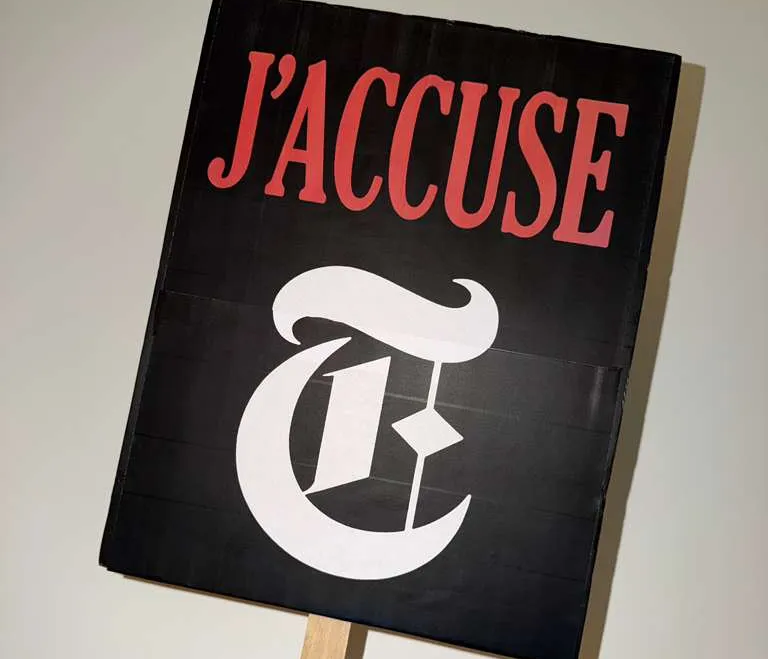
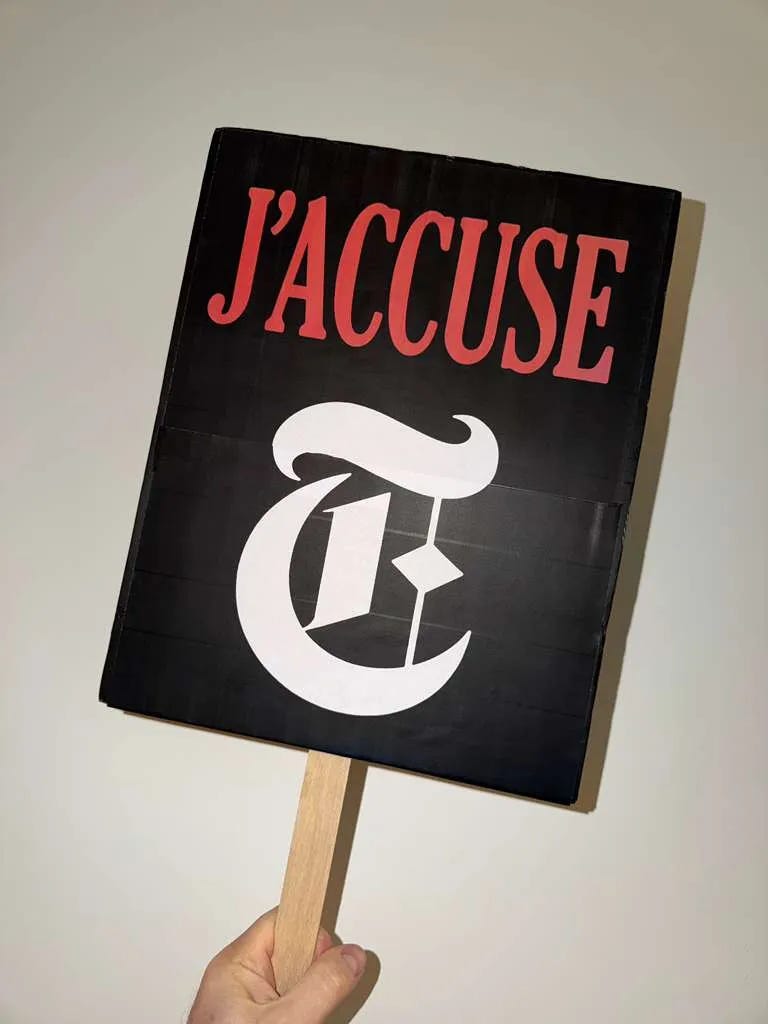
I have always felt uneasy about demonstrations.
Not because protest is illegitimate — sometimes it is necessary — but because crowds possess their own weather systems. Emotions gather force inside them. Certainties harden and nuance evaporates. One can begin by defending human dignity and end, almost without noticing, in the intoxicating pleasures of denunciation.
I have seen too much of that in my lifetime. Too much theatrical rage. Too much moral vulgarity. Too many intelligent people surrendering themselves to the narcotic comforts of collective certainty.
Which is why I hesitate even now.
And yet silence has its seductions too.
I do not know how much of it is true in full, in part, exaggerated, insufficiently verified, or tragically accurate.
And that uncertainty matters.
Not because such crimes are impossible. Human beings are capable of terrible acts in war, occupation, imprisonment, and in acts of revenge. Israelis are not exempt from humanity’s capacity for cruelty. Nor should any real abuse be hidden or excused out of tribal loyalty.
But when accusations reach this level of horror — particularly accusations directed at the Jewish state in a historical moment already saturated with rage toward Israel and, increasingly, toward Jews themselves — the burden on journalism becomes extraordinarily heavy: to illuminate without inflaming, to investigate without surrendering to moral theater.
As I read Kristof’s piece, I found myself asking questions less about politics than about atmosphere.
What happens to a society when such imagery enters public consciousness repeatedly, relentlessly, emotionally? What distinctions remain in the reader’s mind between documented crime, testimonial allegation, inference, extrapolation, and civilizational indictment? What emotional conclusions are silently forming underneath the reporting itself?
And perhaps most unsettling of all: would readers recognize the re-emergence of older cultural instincts if they arrived clothed not in crude racial language, but in the morally elevated vocabulary of human rights and anti-oppression?
Those questions returned me unexpectedly to a memory from thirty years ago.
In 1995, I sailed with my wife and son to Devil’s Island off the coast of French Guiana. The journey itself already felt unreal — that strange convergence of literature, history, jungle, sea, and memory. We landed among ruins slowly being reclaimed by salt air, vines, and heat. There, on that forsaken island, we sat on the rough stone bench Alfred Dreyfus built with his own hands during his exile.
I remember touching the stone and feeling something almost unbearable in the thought of duration — the endless tropical days, the surveillance, the humiliation, the loneliness of being transformed into a symbol.
Inside the narrow stone hut where he was confined, I saw the concrete slab where, at night, they shackled him “like an insect.”
The phrase has never left me.
What struck me most was not merely the cruelty itself, but the terrifying normality surrounding it. France at the time was among the most sophisticated civilizations on earth — literary, intellectual, refined, self-confident. Paris was the capital of modern culture. And yet vast sectors of that cultivated society surrendered themselves to an atmosphere in which a Jew came to embody national contamination, hidden corruption, divided loyalty, civilizational decay.
The facts themselves almost became secondary.
What mattered was the emotional utility of the accusation.
That was what Émile Zola understood when he wrote J’Accuse…! — perhaps the most morally courageous newspaper article in modern European history. Zola was not merely defending one innocent man. He was confronting something larger and more frightening: the way institutions, journalism, political passions, wounded nationalism, and social resentment can fuse into a kind of collective hallucination.
The Dreyfus Affair was not medieval barbarism. It was modernity itself losing its moral balance.
I think about that often now.
Not because criticism of Israel is illegitimate. It plainly is not. Israel is a nation, not a sacrament. Nations commit injustices, brutalities, and moral crimes. Palestinians are capable of suffering genuine humiliation and abuse, and serious allegations deserve serious investigation wherever they lead.
But Jews have also earned the right to become uneasy when the emotional atmosphere around them begins to change in historically recognizable ways.
What troubles me in parts of the contemporary discourse surrounding Israel is not criticism alone, but the cumulative moral tone — the growing ease with which Israel is portrayed not merely as mistaken or even cruel, but as uniquely depraved; the flattening of complexity into archetype; the subtle satisfaction one sometimes senses in indictment itself.
One begins to encounter not simply political criticism, but something older and darker in its emotional structure.
And journalism, in such moments, carries extraordinary responsibility.
When accusations involve rape, torture, children, humiliation, animals — when the imagery itself approaches the limits of what civilized people can bear hearing — then evidentiary discipline and restraint become more important than ever. Because these stories do not enter a calm public square. They enter an age already vibrating with ideological absolutism, tribal longing, and a frightening hunger for moral purification.
I do not wish to contribute to that atmosphere.
I do not want to become another voice hurling certainties across barricades. I do not believe human beings find their way back to one another through escalating rituals of contempt. The emotional economies of outrage may feel righteous in the moment, but they rarely leave societies wiser, gentler, or more capable of coexistence afterward.
And yet I also do not think it wise to ignore the ways tone, repetition, imagery, and sweeping narratives slowly shape public imagination.
History rarely announces itself clearly while it is unfolding.
It arrives first as atmosphere, as permission and a change in moral temperature.
That is partly why I feel compelled, however reluctantly, to stand publicly now.
Not out of tribal certainty or to deny Palestinian suffering and certainly not to silence criticism. But because I have seen, with my own eyes, where civilizations can drift when accusation acquires too much emotional momentum and too little restraint.
I remember the bench on Devil’s Island.
I remember the stone hut.
I remember the concrete slab.
And I remember that civilized societies do not lose their humanity all at once.
They lose it gradually and even gracefully — while believing themselves morally awakened.