
CEO of Time to Stand Up for Israel
Jerusalem: Facts Over Fiction
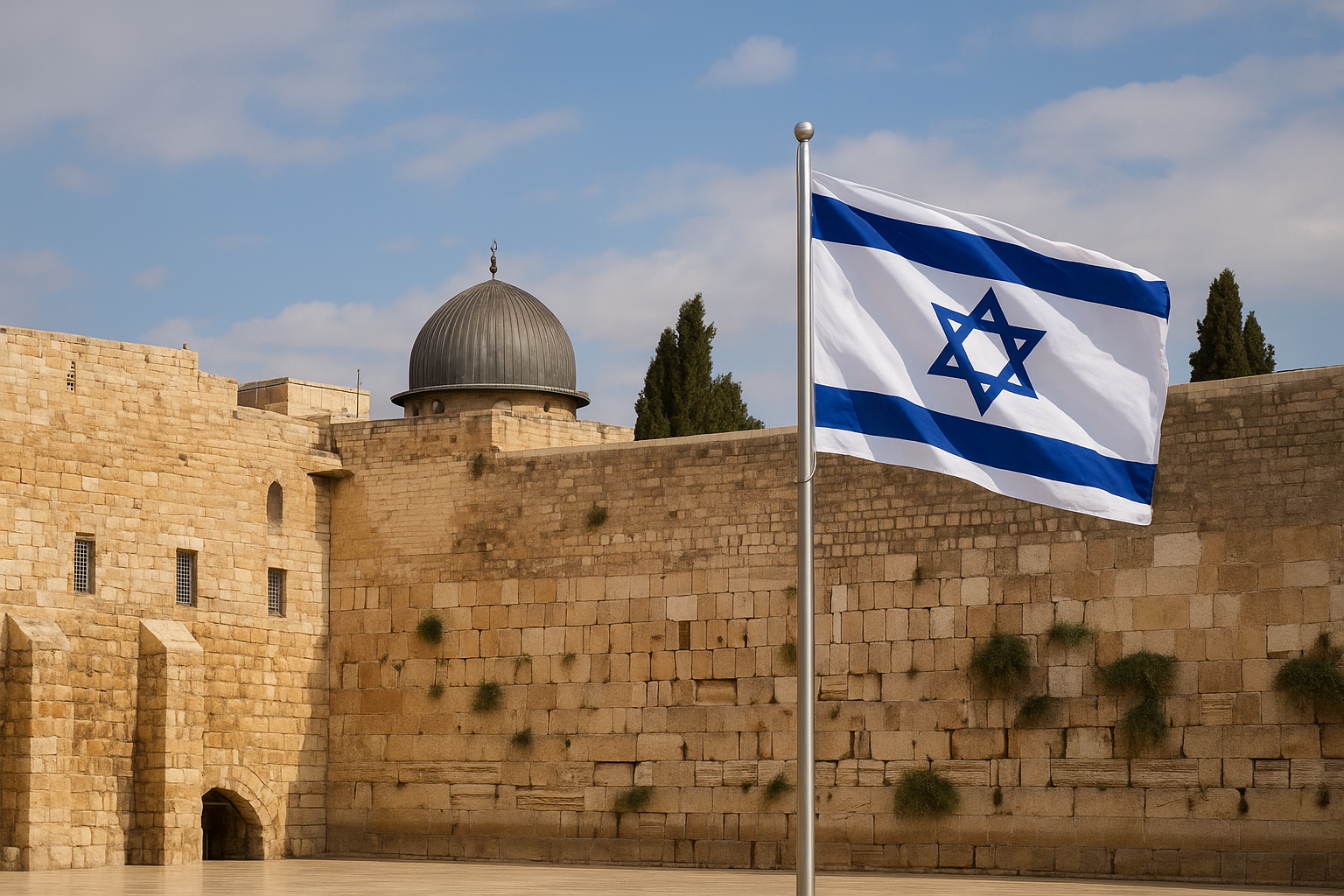
Photo Credits: Sabine Sterk (AI)
Jerusalem: History, Truth, and the Indigenous Claim
Jerusalem is not merely a city. It is the beating heart of Jewish history, faith, and identity and one of the most contested places on earth precisely because of that centrality. To understand the modern political conflict surrounding Jerusalem, one must first understand its uninterrupted Jewish connection, how other religions later related to the city, and why contemporary Palestinian claims of exclusive indigeneity collapse under historical and textual scrutiny.
Jerusalem’s Jewish Origins and Continuity
Jerusalem enters recorded history as a Jewish city. Around 3,000 years ago, King David established Jerusalem as the capital of the united Kingdom of Israel. His son, King Solomon, built the First Temple on Mount Moriah, today known as the Temple Mount, making Jerusalem the spiritual, political, and religious center of the Jewish people. This is not mythology; it is documented in archaeology, biblical texts, and external historical sources.
Even after the destruction of the First Temple by the Babylonians (586 BCE) and the Second Temple by the Romans (70 CE), Jewish presence in Jerusalem never disappeared. Jews prayed toward Jerusalem in exile, mentioned it daily in prayers, and ended Passover every year with the words: “Next year in Jerusalem.” No other people on earth have maintained such a continuous, documented, spiritual, demographic, and legal connection to a city for millennia.
Christianity and Jerusalem
Christianity, which emerged from Judaism, also holds Jerusalem sacred but its sanctity is entirely derived from Jewish history. Jesus was a Jew, lived as a Jew, taught in the Jewish Temple, and was crucified in Jerusalem by the Romans. Christianity reveres Jerusalem because it is the setting of events in Jewish history that Christians believe were fulfilled through Jesus. Without Jewish Jerusalem, there is no Christian Jerusalem.
Islam and Jerusalem: A Later Association
Islam emerged in the 7th century CE, more than 1,600 years after Jerusalem became the Jewish capital. Unlike Mecca and Medina, Jerusalem is never mentioned by name in the Quran. Not once.
Muslim claims to Jerusalem are based primarily on later interpretations of a verse referring to “Al-Aqsa Mosque” or “the farthest mosque”, a term not geographically specified in the Quran and only later associated with Jerusalem by Islamic tradition, after the Muslim conquest of the city in 638 CE. Even then, Jerusalem was not a capital of any Islamic empire, nor was it a primary religious focus compared to Mecca and Medina.
The Islamic attachment to Jerusalem intensified mainly in response to Jewish sovereignty, first in the early 20th century with Zionism, and again after Israel reunified the city in 1967.
The “Palestinian” Identity Question
A critical historical fact often ignored: the Quran never mentions “Palestine” or “Palestinians.” There is no Palestinian people referenced in Islamic scripture, early Arab chronicles, or classical Islamic jurisprudence.
The term Palestina itself is Roman, imposed after the Romans crushed the Jewish revolt in 135 CE and renamed Judea as Syria Palaestina specifically to erase Jewish identity. For centuries afterward, the population of the land identified primarily as Arabs, Muslims, Christians, clans, or Ottomans, not Palestinians.
The modern Palestinian national identity emerged only in the mid-20th century, largely as a political response to Jewish self-determination. Even Arab leaders openly acknowledged this. Until 1967, when Jordan controlled eastern Jerusalem and Judea & Samaria, there was no Palestinian state, no Palestinian capital, and no mass movement demanding one.
Claiming indigeneity requires historical continuity, cultural origin, and national identity rooted in the land. Jews meet all three criteria. Arabs identifying today as Palestinians do not.
Indigenous by Any Honest Definition
Indigenous peoples are those whose identity, culture, language, and religion originated in a land. Hebrew is a Canaanite language. Jewish holidays are agricultural, tied to the seasons of the Land of Israel. Jewish law, calendar, and prayers are inseparable from Jerusalem.
By contrast, Arab culture, language, and religion originated in the Arabian Peninsula. Islam’s holiest sites are hundreds of kilometers away. This does not negate Arab historical presence, but presence is not the same as indigeneity.
Jerusalem Today: Freedom Under Israel
Under Israeli sovereignty, Jerusalem is the only period in history where all religions enjoy freedom of worship. Jews, Christians, and Muslims can pray at their holy sites—something that was not the case under Roman, Byzantine, Islamic, or Jordanian rule.
Israel did not colonize Jerusalem. It returned to its ancestral capital.
Conclusion
Jerusalem is Jewish by origin, by history, by faith, and by continuous connection. Christianity is rooted in its Jewish past. Islam adopted it later, without textual foundation in the Quran. The modern Palestinian claim to exclusive indigeneity is a political narrative, not a historical one.
Acknowledging Jewish indigeneity to Jerusalem is not denying others’ rights—it is recognizing historical truth. And peace can only be built on truth, not on rewritten history.
Jerusalem is not occupied.
Jerusalem is home.
About Time To Stand Up for Israel
Time To Stand Up for Israel is an independent foundation dedicated to fighting misinformation, countering antisemitism, and providing clear, fact-based education about Israel. We do not engage in internal Israeli politics. We stand on two core principles: Israel has the right to exist. Israel has the duty to defend itself. Support our work: Donate and/or subscribe at: www.timetostandupforisrael.com
Related Topics
Related Posts