Jerusalem Mixed Grill: A Slice of Life
Jerusalem Mixed Grill: A Slice of Life
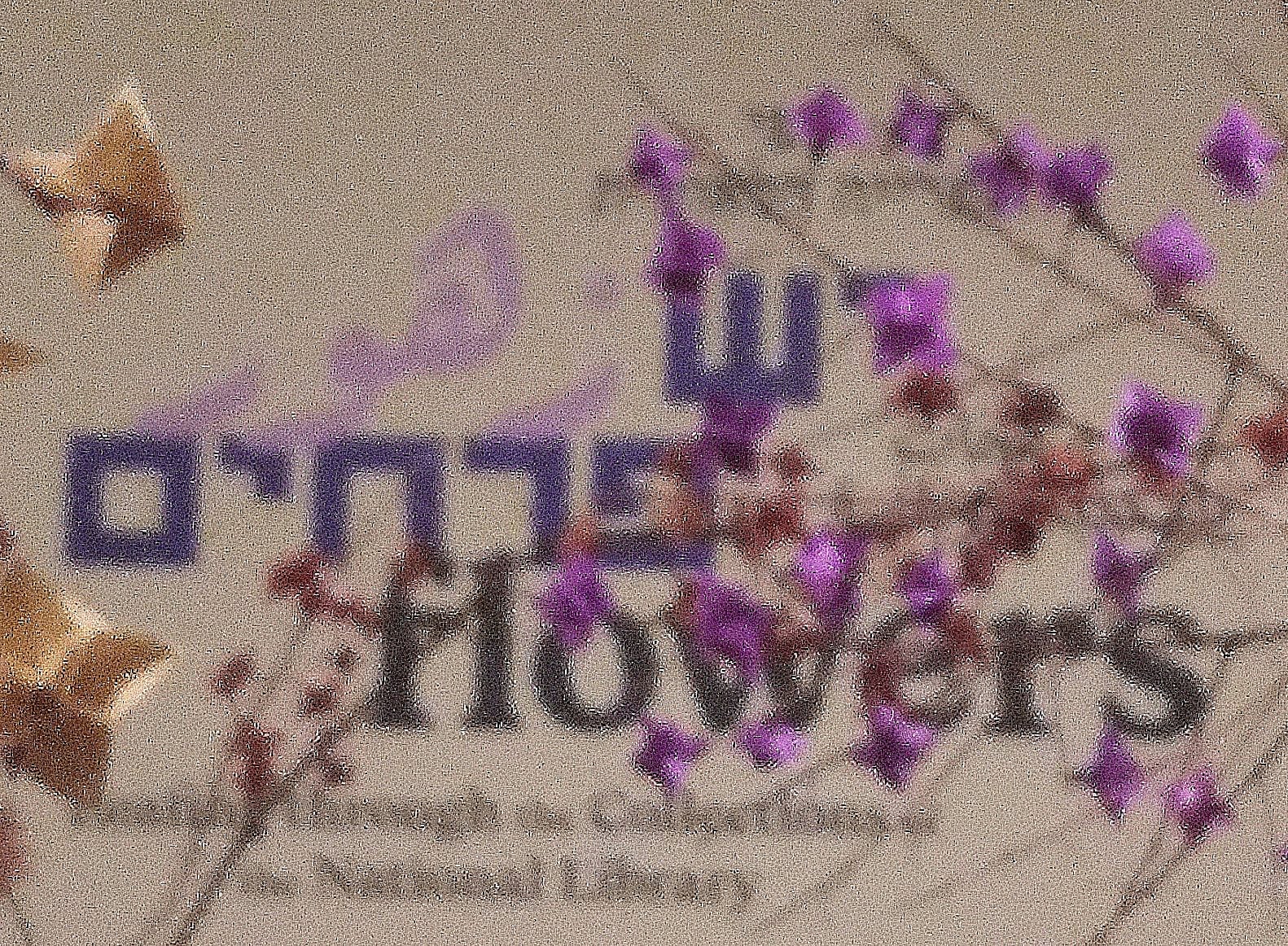
Tiptoeing Through the Flowers at the National Library openings
My first blog post, now circling back to my first writing home. My Jerusalem Mixed Grill will be a dip into the cultural side of Jerusalem, with many different facets covered.
With Tisha B’Av again behind us, I am giving myself permission. It was not a difficult stretch to reach back into our collective Jewish lives to find the ability to say I need and want a break. Is it a sacrilege to say it?
This week has seen the joint cudgeling of Hamas head-to-head with Prime Minister Benjamin Netanyahu and President Donald Trump, all grandstanding into a great big beautiful staring contest. Who will blink first?
No one who lives in Israel can mouth the words. No one who lives here can think back to nearly two long years ago, when a prayer for hostages would seem to be borderline bizarre; when we could take a walk to the local store without plotting out a route to include public shelters. I am exhausted.
Some of you might be, too.
I am a writer, artist, foodie, and an Israel lover, though not necessarily in that order. My original public writing was meant to reveal the less well-known cultural side of Jerusalem and that is my intent here. Bring a bit of the wonder that is my home to your screen.
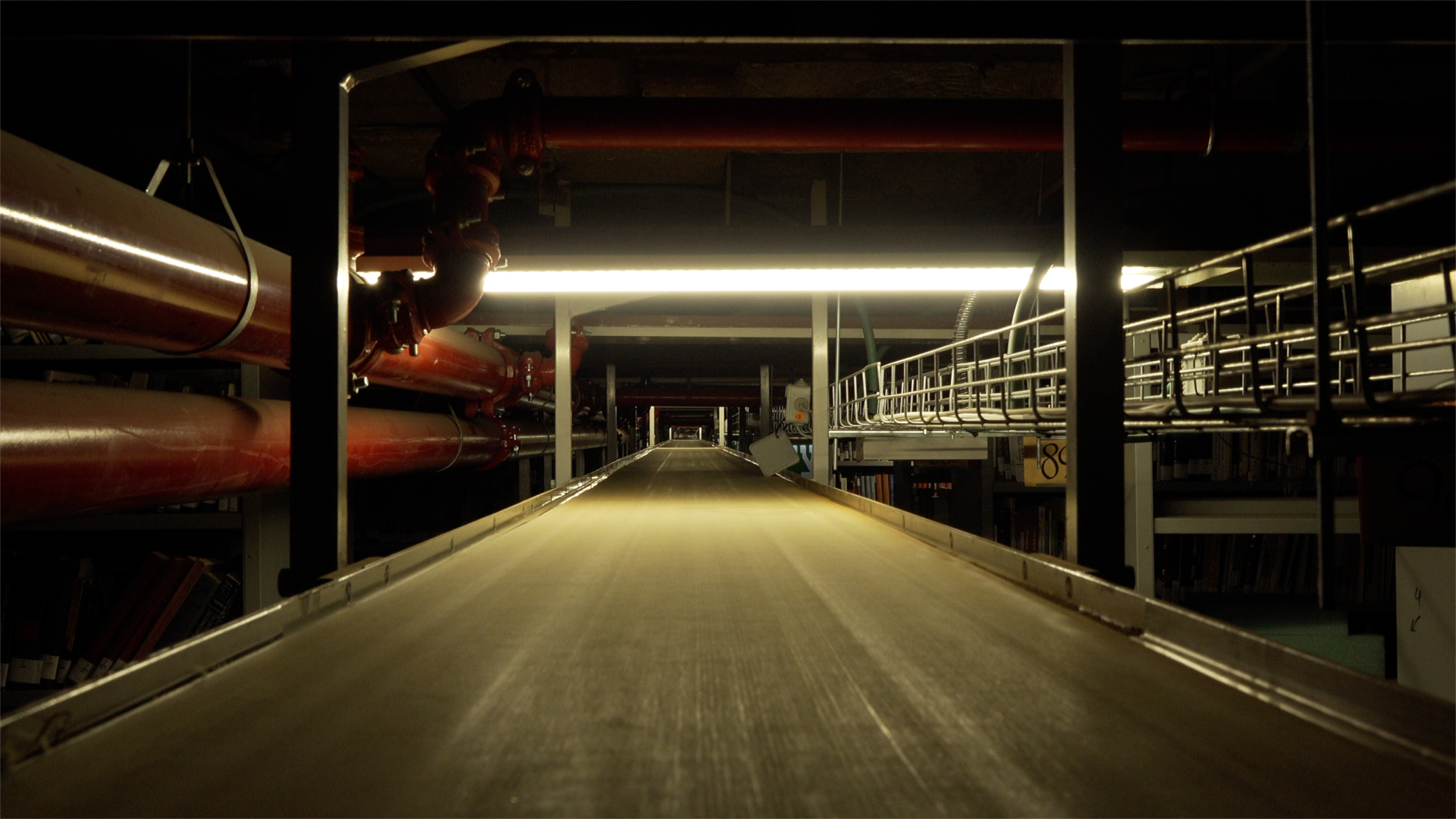
Last night, two wonderful exhibits opened at the National Library of Israel, showcasing the results of years of preparation on behalf of the staff and the artists. International multidisciplinary artist Haddassa Goldvicht did a very deep dive into the heart of the Givat Ram location of the National Library, founded in 1892, with its 133-year-long history as the underpinning for her research that started in 2019 through 2024, leaning heavily on the senior staff and old guard of the NLI.
In her four 8-minute video arts works, “To the Internal Libraries,” Goldvicht used conveyor belts, sound, and film to take advantage of the historic moment when the shelves and increasingly old files and objects containing the sum of knowledge would be rehoused, modernized, and robotized in the new library. At its center, she created a kinetic sculptural installation using an original conveyor belt salvaged from the old Library and reanimated in the present. Her book, Biblioscopia, 2025, discusses this process.
Also sharing the spotlight is the sure to be popular “Flowers: Leafing Through the Collections of the National Library.” It illustrates the bond between the people of Israel and the natural world, as reflected through literature, science, music, and art.
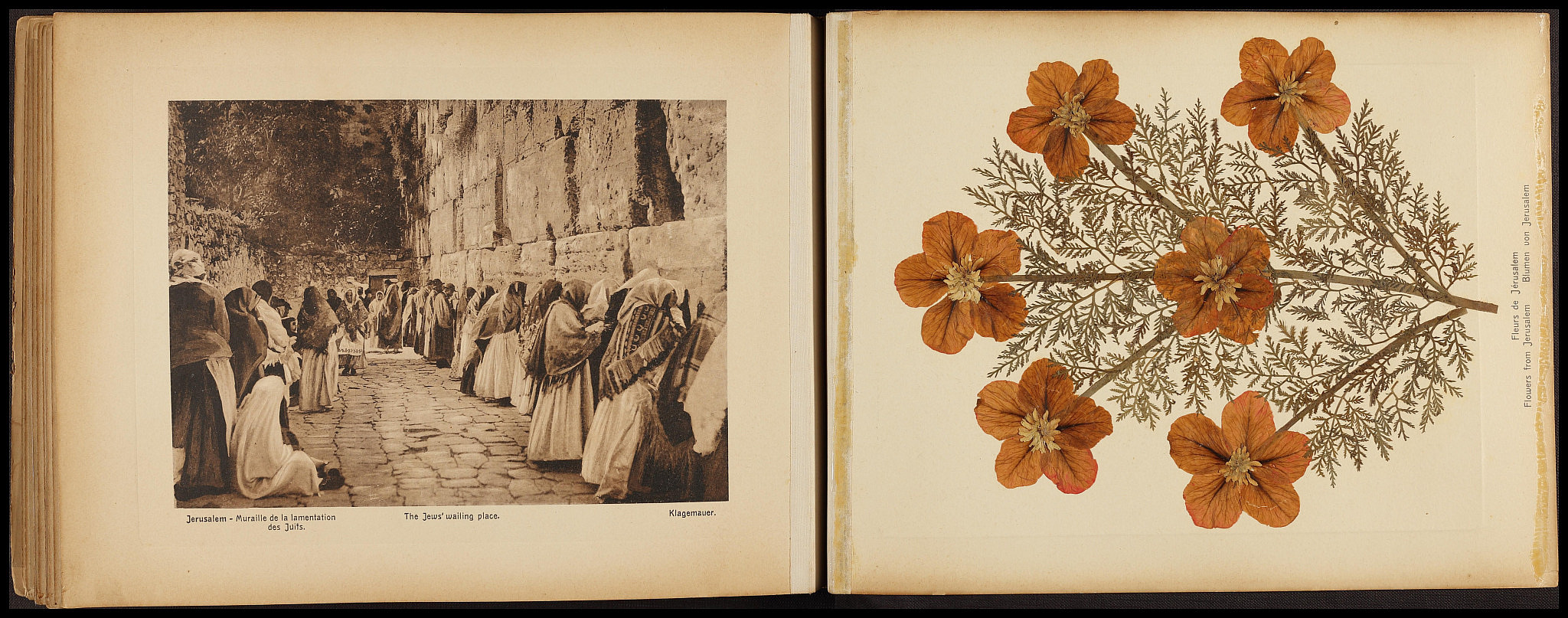
We are thrown into the floral world with the fragile souvenir books that share a vitrine, including one of the Western Wall. In its time, it could be seen as a progressive viewpoint, but as the Ottoman Empire was in charge of the Holy Places of Jews, it is not considered representative of the Jewish outlook. They could allow it, but we did not.
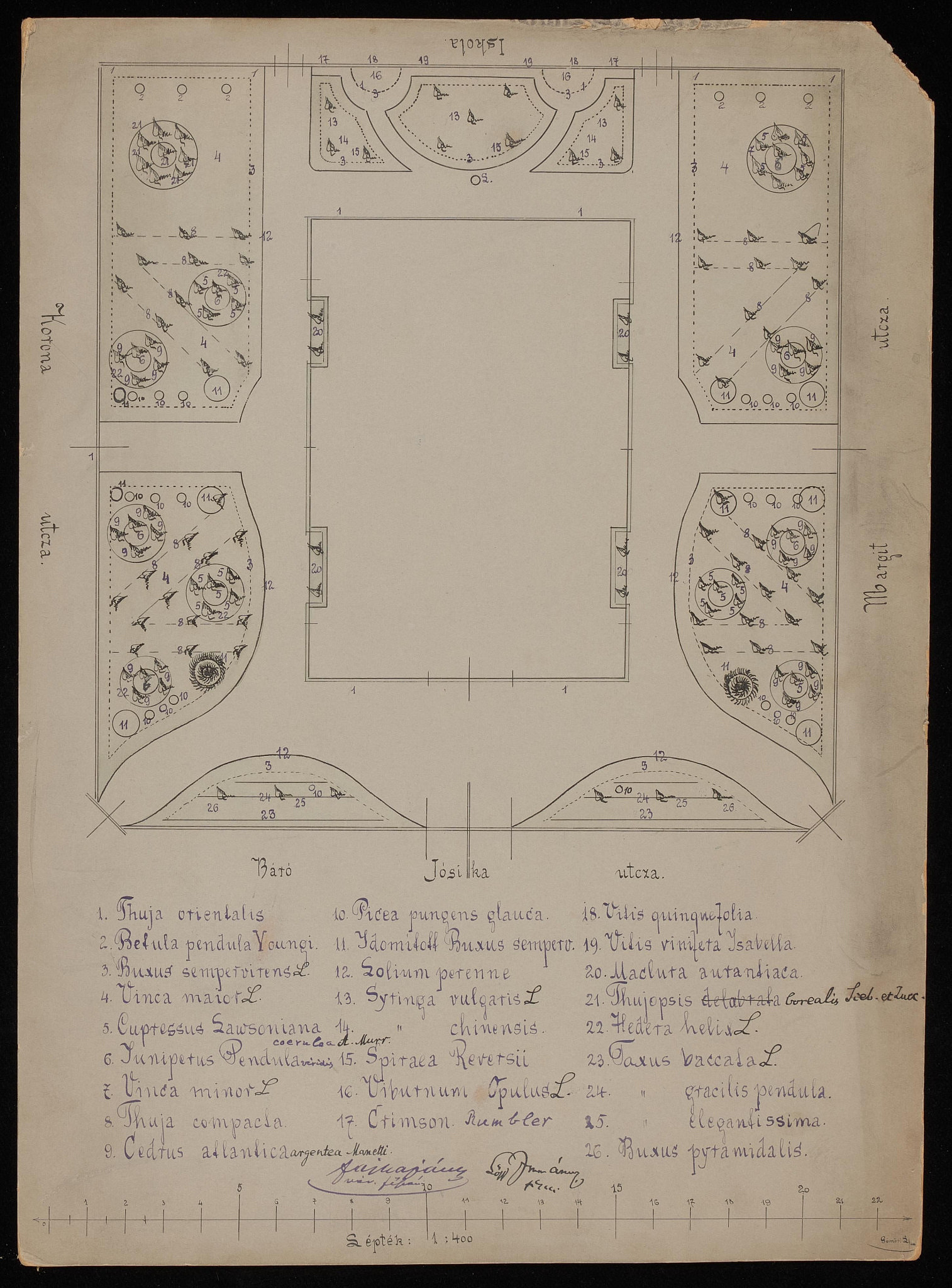
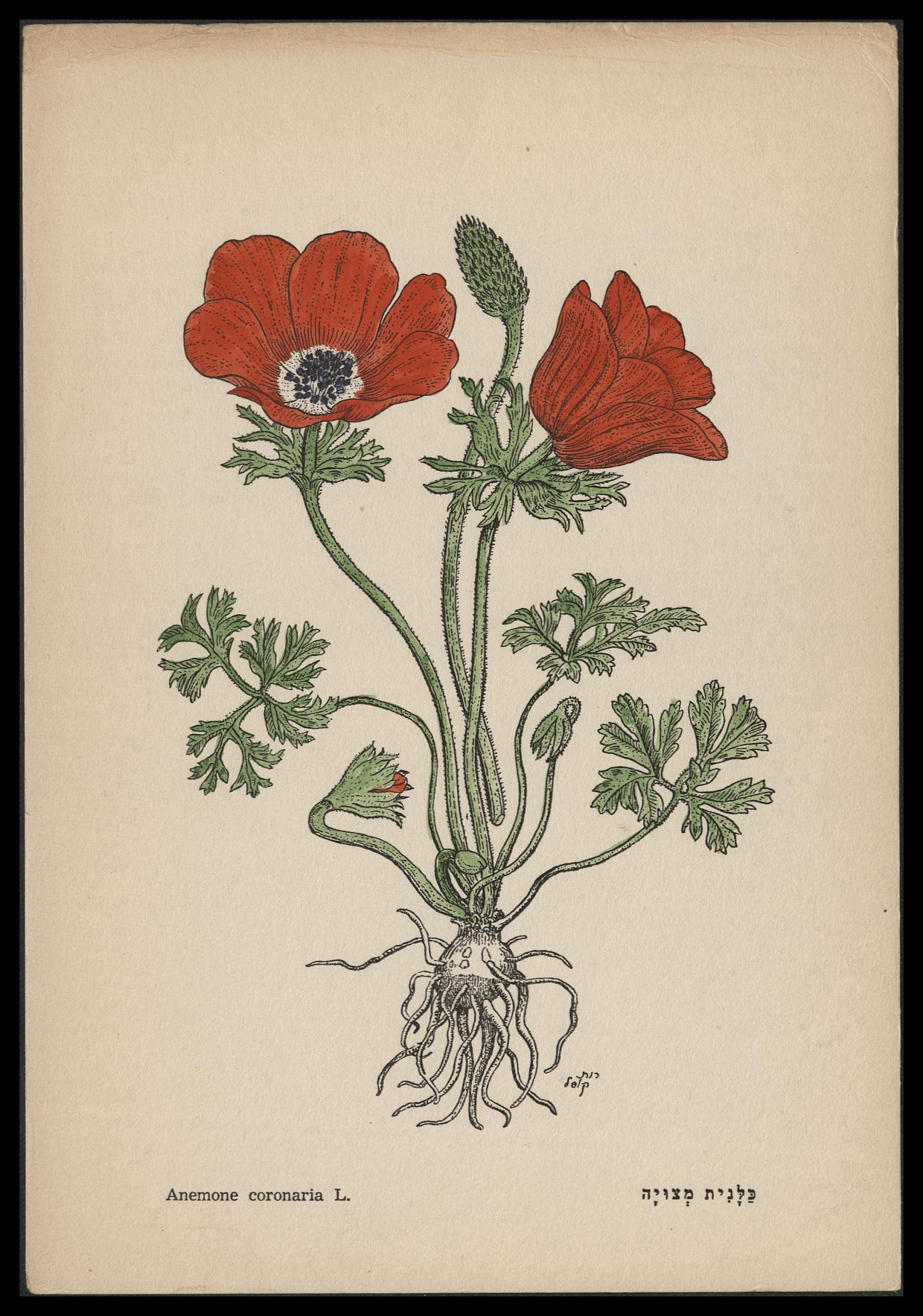
We see as well, ephemera from the collections of the botanist Rabbi Immánuel Löw who carefully researched and gave Latin names to the plants of the region with joy like Adam naming what he encountered in the Garden of Eden, shown for the first time. Also the work of botanical illustrator Ruth Koppel is on display for the first time.
There was a bit of a backing and forthing while the proto-Zionists were trying to decide what they wanted to do with the wealth of native floral growth it inherited in the legacy of the Holy Land. Were they the custodians of the collectible pressed flowers alone? What was their role but to encourage the Jewish youth in sending their collections to pen pals abroad, thus connecting worldwide Jewish youth to the Land of Israel too?
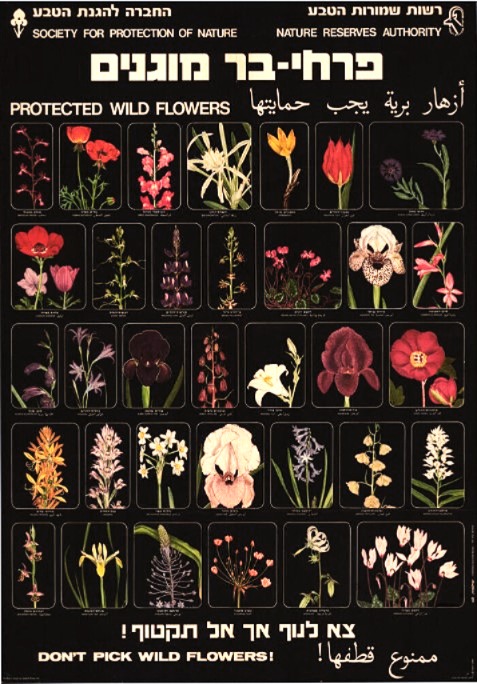
These questions and more became more significant, as the youth of Israel and Shabbat day collectors found the natural habitat was thinning considerably. In a landmark collaboration, the Library will also display original botanical paintings from the 1970s wildflower conservation campaign, on loan from the Israel Nature and Parks Authority.
It is a sad coda to our present world where we recall the idyllic days of the Adom, Adom Festival now forever associated unfortunately with the red of the blood of October 7 and the not-so-new installation of red poppies at the Reim Music Festival and now killing fields.
Thought to be lost for decades, rediscovered works by botanical illustrators Mary Anderson Grierson and Heather Wood, of the Royal Botanic Gardens at Kew, England, are also on view for the first time.
Contemporary artworks are a part of the exhibit, with a new installation of hundreds of folded paper flowers by artist Shelly Freiman, a video piece by designers Alon Boutboul and Eden Fainberg Sabach, inspired by their photographic project Nir Oz: Flowers of Redemption and Mourning and a new immersive audio-visual installation by duo Roy Avital and Anat Gutberg, drawing on the NLI music archives and reimagining Hebrew song classics. If you hear your neighbor humming along with Shoshana Damari, do not be surprised: This one is not to be missed.
“Flowers: Leafing Through the Collections of the National Library.” Runs concurrently with the exhibition “Hadassa Goldvicht – To the Internal Libraries.” Both exhibitions will run from August 1, 2025, to February 2026.
Related Topics
Related Posts