
CEO of Time to Stand Up for Israel
Jerusalem, Where Childhood Innocence Met the Price of Freedom
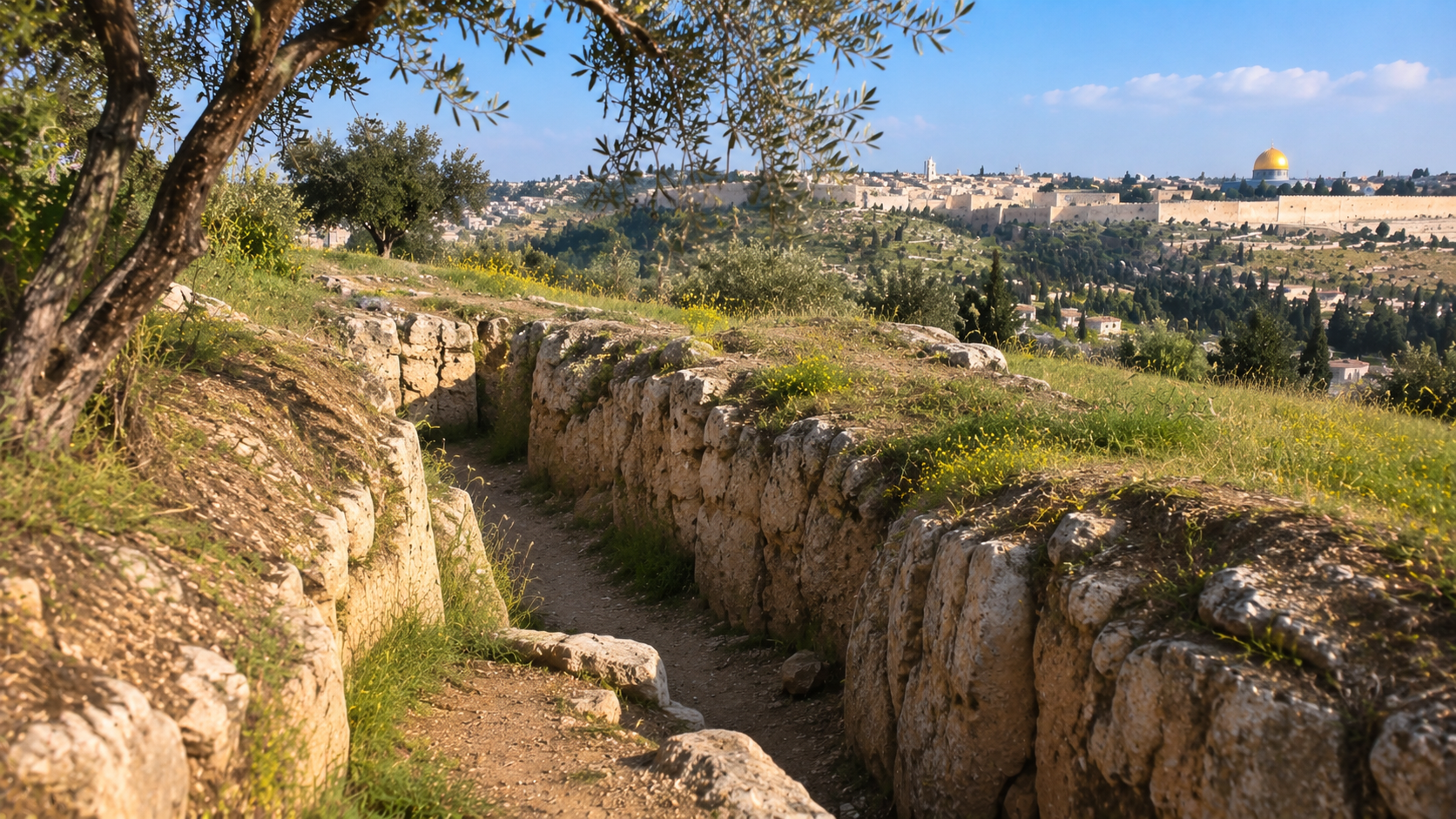
Photo Credits: Sabine Sterk ( AI)
Jerusalem is, to me, the most beautiful city in the world. Not because of its magnificent architecture, its ancient stones, its breathtaking views or even its extraordinary history, although all of these make Jerusalem unlike any other place on earth. Jerusalem is the most beautiful city in the world because it is where I experienced some of the happiest moments of my childhood, where I felt a sense of belonging that I have never been able to explain entirely, and where, at a very young age, I began to understand that the freedom we so casually enjoy often comes at a terrible human price.
My childhood memories reach extraordinarily far back, and some remain so vivid that I can almost smell the Jerusalem air and feel the warm earth beneath my feet. I still see myself wandering with my friends across the hills between Rehov Mordechai Caspi and Abu Tor during the late 1970s. We were Dutch children, carefree, curious and completely unaware of the enormous historical significance of the ground beneath our feet. Scattered across those hills were old military trenches, remnants of the battles and defensive positions associated with Jerusalem’s violent struggle for survival. Whether those particular trenches dated from the War of Independence in 1948 or the Six Day War in 1967, I cannot say with certainty. What I do remember is that they were still there, silent reminders of a time when the future of Jerusalem was decided not by comfortable political discussions, but by men prepared to fight for it.
For us, those trenches were an adventure. We walked through them, explored their narrow passages, laughed, played and imagined ourselves discovering something mysterious. We had absolutely no comprehension of what those trenches represented. We did not think about soldiers waiting anxiously for an attack, about the sound of gunfire, about fear, pain, exhaustion or the possibility that a man standing in precisely the same spot might never return home. We were children, enjoying the freedom that others had fought to secure, without understanding that freedom had a history written in sacrifice.
That innocence ended abruptly one afternoon in September 1978.
I was walking through one of those trenches when something on the ground caught my attention. Partially covered by dust and earth lay an old man’s wristwatch. I bent down, picked it up and examined it. It was nothing particularly valuable or impressive, just an ordinary watch that had clearly been lying there for some time. Yet the moment I held it in my hand, something happened that I remember as clearly today as I did almost half a century ago. An overwhelming sadness came over me, so intense that I began to cry uncontrollably.
That watch had belonged to someone. A real person, with a name, a family, perhaps a wife waiting at home, perhaps children who adored their father. In my young mind, I immediately connected it to the soldiers who had once occupied those trenches. Had its owner fought there? Had he been wounded? Had he died? Had someone waited for him to return, never knowing what had happened? I had no answers, and I still do not know who owned that watch or how it ended up there. But suddenly, the trench was no longer a playground. It had become a place of human suffering, courage and possible tragedy.
I felt guilty. Terribly guilty. We had been laughing, running and playing in a place where others might have experienced the most frightening moments of their lives. To my childish mind, we had somehow desecrated something sacred through our ignorance. My brother laughed at my tears, called me a crybaby and took the watch as a collector’s item. For him, it was an interesting discovery. For me, it was a heartbreaking encounter with history. I never set foot in those trenches again.
Looking back, I realize that afternoon taught me something no classroom, history book or political speech could ever have taught me. Behind every military position, every battlefield and every victory are individual human beings whose lives cannot be reduced to statistics or political arguments. Jerusalem was not simply handed to the Jewish people. Its survival and reunification came through struggle, determination and sacrifice, against a background of centuries of Jewish history and longing.
Today, when I hear people casually questioning Israel’s legitimacy, dismissing Jewish historical connections to Jerusalem or speaking about the city as though its history began with modern political disputes, I think about that dusty wristwatch. I think about the soldiers who defended Jerusalem, about the families who paid the price and about the generations of Jews who never stopped dreaming of returning to their ancestral capital.
I do not know whether the owner of that watch was Israeli, whether he was a soldier or whether he survived the war. I refuse to invent a history for him. But I know what that watch came to represent in my life. It was the moment when childhood happiness encountered the reality of sacrifice, when a place I loved became something I felt morally compelled to respect and defend.
Nearly fifty years later, Jerusalem remains my most beautiful city in the world. Not because its history is free of suffering, but precisely because its beauty, resilience and extraordinary spirit have survived so much of it.
And perhaps that is why my love for Israel has never been conditional on political fashion, international approval or the opinions of people who have never walked those hills.
Some people see trenches and think of war. I see the price that was paid so that children like me could play in freedom.
Related Topics
Related Posts