Jerusalem’s Next Crisis Is a Hiring Decision
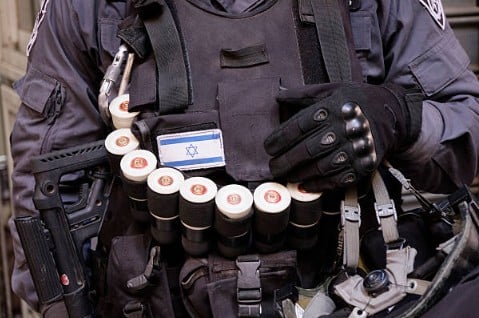
Last Friday a Turkish worshipper tried to enter the Al Aqsa compound for prayers. An officer stopped him and said, in English, “Turkish, it’s closed, okay?” He walked to a second gate, where officers shook their heads once he told them where he was from and sent him away until the next prayer. Israel Police said this week that the rules permit Turkish citizens to pray there, and that the episode is under review.
That sequence describes how the most sensitive thirty-five acres in the Middle East are actually governed. Cabinet decisions and court rulings set the written rules. An officer standing at a gate decides what happens. When those two diverge, the officer wins, and the world reads the outcome as Israeli policy.
Which is why the composition of the police unit at those gates deserves far more attention than it gets in an election season.
The Temple Mount Unit polices the compound, built into a dedicated force of some two hundred officers after 2017. Its deputy commander, Daniel Lirach, has recruited for it through WhatsApp groups linked to West Bank settlers, inviting anyone who wants to help implement sovereignty to contact him directly. He and the unit commander, Guy Tal, filmed recruitment videos with rabbis of the religious Zionist movement, which favours rebuilding a Jewish temple there. Haaretz reported the effort in June 2023 and again this June. In January, National Security Minister Itamar Ben-Gvir installed a political ally at the head of the Jerusalem police.
Set aside whether Jews should pray at the site and consider only the operational question. Officers there decide in real time who enters, who prays, and who gets removed. Filling those posts with people who regard the compound as a national claim to be enforced changes the judgment applied when judgment carries the most weight.
In July 2017, gunmen killed two Israeli police officers at the Lions’ Gate. Haiel Sitawe was thirty and had become a father three weeks earlier, and he had taken charge of the guard force on the Mount two months before that. Kamil Shnaan was twenty two. Both were Druze, from villages in the north, and both served in that unit. Israel responded by installing metal detectors at the entrances. Worshippers read the machines as a change in who controls access and prayed in the streets outside them. The Palestinian Authority suspended security coordination for three months, which cost Israeli intelligence more than the detectors ever gained, and the detectors came out inside two weeks.
The wider record runs the same way. The Second Intifada began after a visit to the compound. The 2021 war began with an ultimatum that named the site, and it ended with Jewish and Arab citizens of Israel fighting each other in Lod, Ramle, Acre and Jaffa. Small moves at those gates produce outcomes wildly out of proportion to their size, and the bill lands on Israelis.
Israel’s own security establishment has said so plainly. The Shin Bet warned in 2022 that changing prayer arrangements at the compound risked wide escalation, and security chiefs repeated the warning in 2024, tying it to violence in Jerusalem and the West Bank. Those warnings came from people whose careers depend on forecasting Israeli casualties correctly.
The tempo has climbed steadily. On Tisha B’Av last month, thousands entered, Ben-Gvir among them, and he prayed openly again. Police made arrests on the western side of the compound while tolerating prayer on the eastern side, which is a rule invented at the gates rather than in the Knesset. Beyadenu, which organises Jewish visits, counted 10,766 entries in 2015 and 76,448 last year. Arab and Islamic foreign ministers met in Amman this week to warn against an Israeli takeover.
The strongest counterargument is that this has been under way for three years and the region absorbed it. That reading is honest, and it also describes the shape of every intelligence failure I studied and several I worked through. A sequence of increments passes cleanly, each one lowering the perceived cost of the next, until the increment that alters the underlying arrangement arrives and the other side’s reaction turns out to have been intact all along.
Israelis vote on 27 October. Coalitions form and dissolve and ministers rotate, while the unit at the gates stays in place with the people now being recruited into it. Personnel outlast politics.
The bill for a serious incident would arrive from several directions at once. Saudi normalisation, already stalled, becomes untouchable in Riyadh for years. Jordan, whose monarchy has held custodianship since 1924 and draws real legitimacy from it, faces its own street while carrying debt above eighty percent of output and an International Monetary Fund review due from the first of October. Washington would be asked to help defend Israel while its interceptor stocks sit far below prewar levels, with Patriot production near twenty units a month.
I spent years reading warning indicators for a living. Real ones rarely arrive as announcements or as intelligence coups. They arrive as a change in who is on shift.