A New York City Cantor
Jew Means Thanksgiving
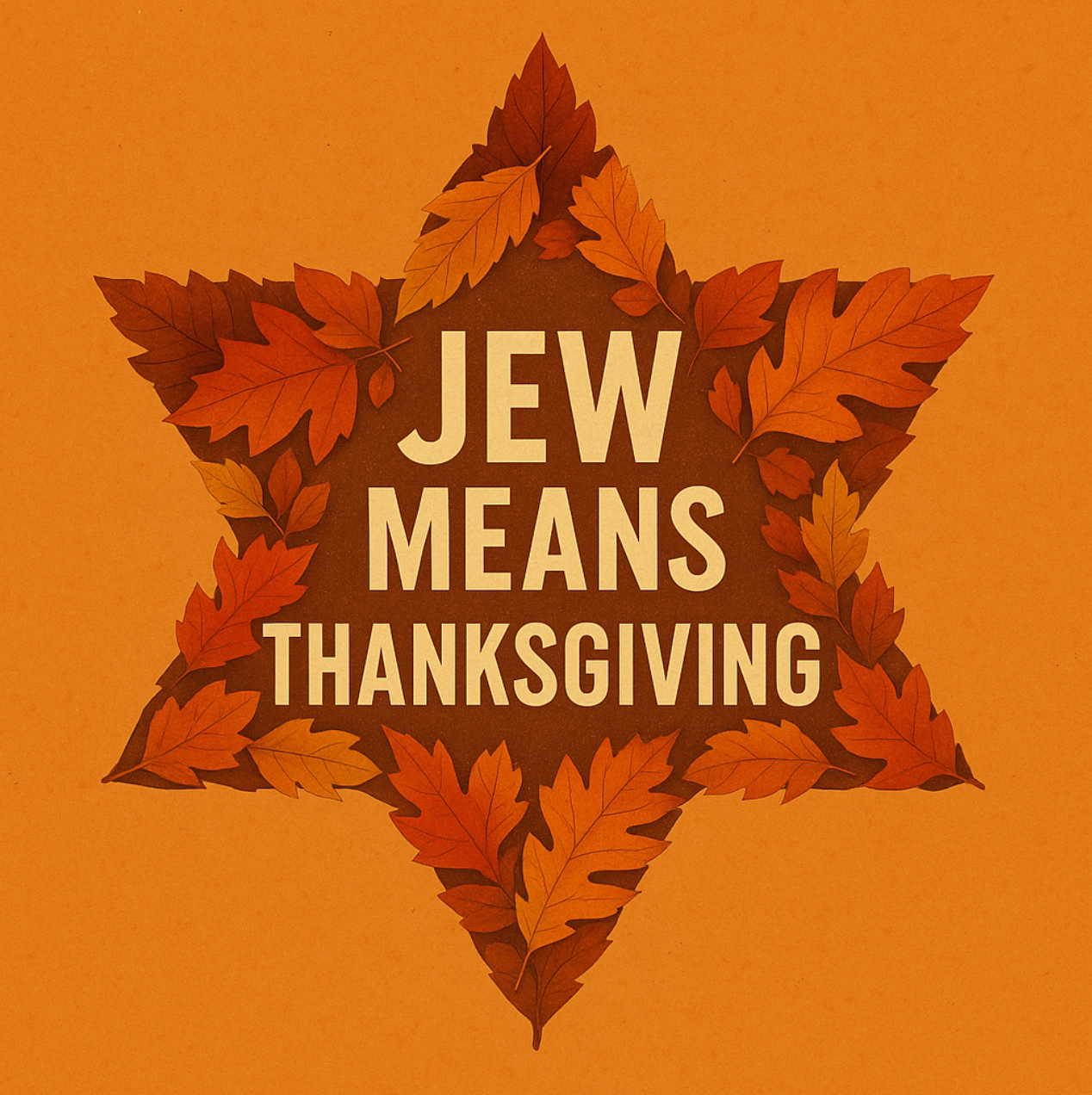
The word Jew comes from Yehudi, a descendant of Yehuda. Yehuda is best known as the name of an ancient tribe and of the land of Judea, but the name itself, יְהוּדָה, comes from a Hebrew verb that means to give thanks. The name appears as the first instance of verbal thanks in the Torah, given by Leah when Judah is born. Our very identity as Jews carries the meaning of gratitude. A Jew is, quite literally, a Thanksgiver.
Thanksgiving has always felt like a holiday that invites us back into the deepest meaning of our name. In a year when it often feels like Jews are standing alone, the themes of gratitude, presence, and showing up for one another take on new urgency.
One of the people I am most grateful for is Silvia Foti. Her story is almost impossible to believe. A Catholic Lithuanian woman, she grew up hearing heroic tales about her grandfather, Jonas Noreika. Only later in life did she discover that he was a Nazi collaborator responsible for the destruction of much of Lithuania’s Jewish community, including members of my own family. Many would have denied the truth or tried to soften it. Silvia did the opposite. She exposed it, wrote about it, and became a fierce and outspoken ally of Jews and Israel.
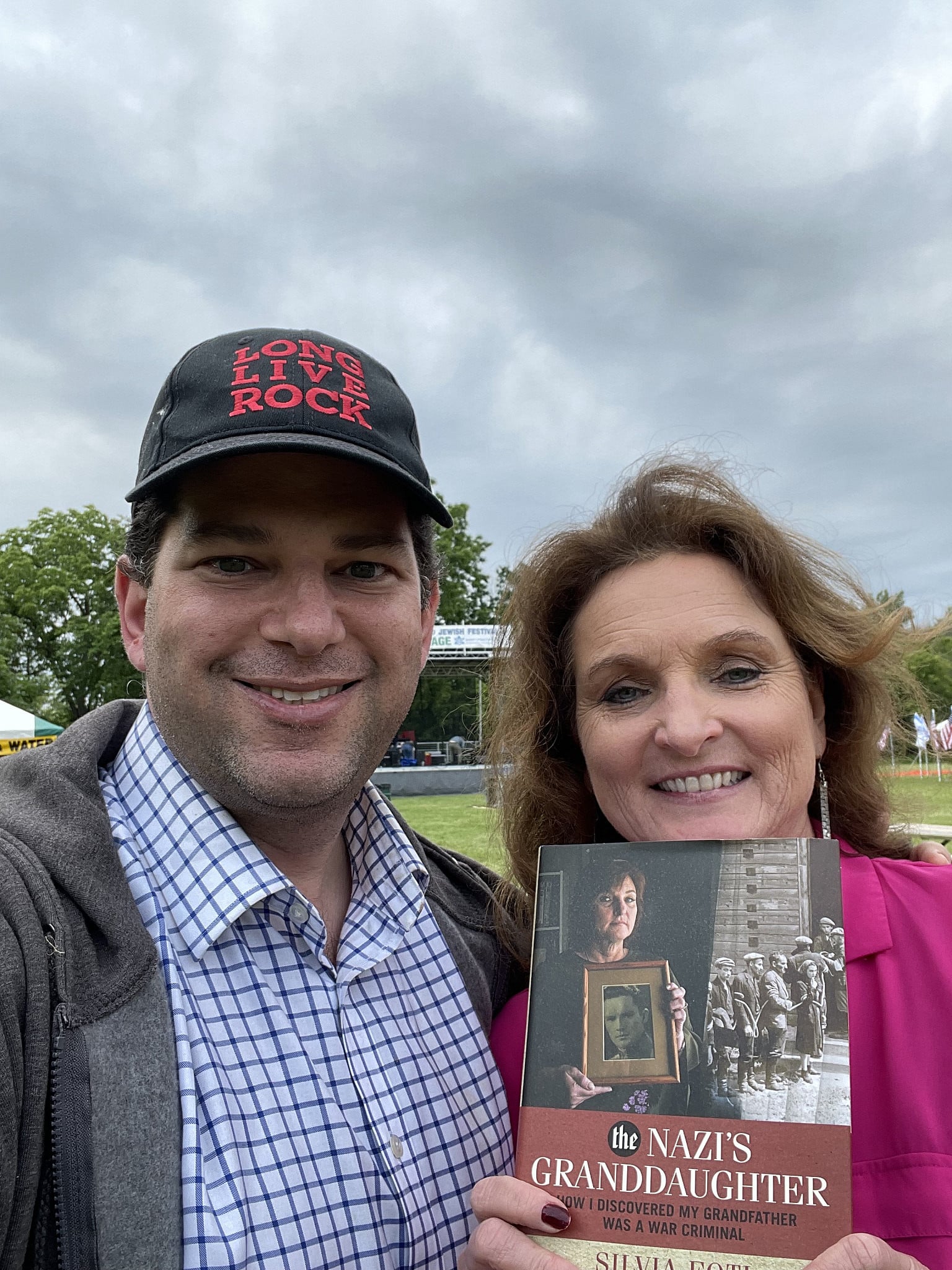
I met her a few years ago while performing with the a cappella group Six13 at the Greater Chicago Jewish Festival. Meeting her in person after following her brave work was a moment I will never forget. Later, presenting the award winning documentary “J’Accuse” at my synagogue, featuring Silvia and my cousin Grant Gochin as they confront Lithuania’s Holocaust history, was one of the most meaningful experiences of my career. Silvia did not have to show up for us. She chose to.
There are other stories that capture the profound gratitude embedded in our name. One happened at my synagogue only weeks ago. Our congregation welcomed a woman named Julia Nikonovaite through conversion. She is a professionally trained classical pianist who immigrated to the United States as a teenager and found her sense of home and family through Jewish friends and Jewish life in New York. What stunned me was learning she was born in Birzai, the same small Lithuanian town my grandfather’s family came from. In her beautiful statement before immersion, she wrote about her grandmother secretly sheltering Jewish women during the Holocaust and about discovering that music is her form of prayer. Standing with her at the mikvah felt like witnessing a spark of light returning from a place once consumed by darkness. A Jew by choice from the same soil my ancestors walked, choosing to bind her future to ours. Her story is its own act of thanksgiving.
I have also been shaped by the example of my aunt, whose relationship with Thanksgiving was always unconventional. She called it the Holocaust for Turkeys and may well have inspired the old Saturday Night Live sketch “Cinder and Sarah,” with its tragicomic protest ballad “Basted in Blood.” But beneath her humor was something deeper. She is the kind of left-leaning Israeli who chooses to spend time in Arab villages as an act of solidarity and friendship. Her visits come from a genuine desire to show up for others, especially those she sees as vulnerable. At a moment when so much of the world fails to show up for Jews in our own time of need, her instinct to show up for others is a reminder of what gratitude looks like in action.
And then there is the irony that our very name, which means thanksgiving, has so often been twisted into an insult. One of the strangest chapters of this history unfolded in the mid-1990s when a Jewish Scrabble enthusiast named Judith Grad discovered that the Official Scrabble Players’ Dictionary included the lowercase verb “jew,” meaning to bargain or swindle. Shocked that an ethnic slur appeared in a family game, she demanded its removal. When her letters were ignored, she organized a grassroots campaign with the National Council of Jewish Women and the ADL. Hasbro finally agreed, and the 1996 edition removed the word along with more than one hundred other derogatory terms. It was a victory, but also a reminder of how thoroughly antisemitism can distort even the language of gratitude. More ironic than our name becoming an insult is that the woman who led the charge to remove it was named Judith, a name derived from Jew itself. A Jew defending the dignity of the word Jew, fighting to reclaim the meaning of thanksgiving from the distortions of history.
Thanksgiving, at its heart, is a holiday about showing up for one another. The 1621 harvest feast between the Plymouth colonists and the Wampanoag people was a celebration of shared survival. One community helped another endure, and the response was gratitude. Whatever history became later, the core memory is about presence, mutual learning, and acknowledgment.
I find myself longing for a moment like that for the Jewish people. A moment when the world pauses to acknowledge our indigeneity in our own land, our right to exist, and the deep roots that tie us to Israel. A moment when others recognize that we, too, have gifts to offer, the way the Wampanoag helped the early settlers survive. Israeli innovation has changed the world many times over. Jewish culture and learning have enriched every society we have touched. Yet we still fight for the simple recognition that we belong.
Thanksgiving brings me back to the meaning of my own name. It reminds me to give thanks for those who stand with us, especially when it is difficult or dangerous. It reminds me that showing up is itself a sacred act. And it reminds me that Jew is not an insult, not a slur, not a caricature. It is a name rooted in gratitude.
It is ours.
It means thanks.
And I am proud to carry it.
Related Topics
Related Posts