

Jewish and Palestinian peoplehood are intertwined and interdependent
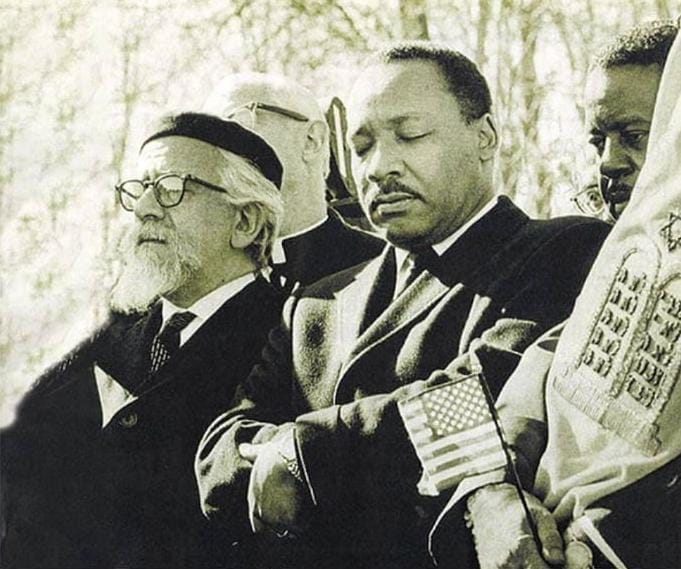
I recently participated in the impressive event commemorating Jewish peoplehood and the legacy of Rabbi Abraham Joshua Heschel, one of the prominent leaders of American liberal Judaism in the 20th century, which is organized annually by Yizhar Hess, the Deputy and Acting Chairman of the Zionist Federation in Israel.
This year, the backdrop of the conference was the impact of the shocking massacre that occurred at the Chabad Hanukkah event in Sydney, Australia, just two days before we gathered. The horrific event in Bondi Beach brought to the forefront the connection between world Jewry and the State of Israel and the impact of anti-Zionism on antisemitism.
For many years, I was unaware of Jewish peoplehood. When I served on my first diplomatic mission at the Israeli embassy in Washington, my interactions were primarily with Jewish organizations, rather than with the broader communities. I treated the representatives of the organizations in a utilitarian manner – a tool to influence U.S. policy toward the State of Israel, which I represented, not as inherently valuable in and of themselves, or even simply because they were our sisters and brothers.
I was supposed to understand what Jewish peoplehood was, because our Declaration of Independence uniquely defines Israel as the nation-state of the entire Jewish people, in addition to being the state of its citizens. However, like many Israelis, my Jewish identity had been taken for granted my whole life – both by others and myself—so I didn’t bother to delve into the issue.
During the year I spent among the Jewish community of Boston as a Wexner Foundation Fellow, Jewish peoplehood finally took on significant importance in my life and became a deeply personal issue. I learned that we are an extended family, including those in Israel and the Diaspora. And so our country is also theirs. I understood that Jews in the Diaspora should not be treated solely instrumentally as a source of financial or political support, or to encourage immigration to Israel, but as a community that has a world of value and substance in itself.
I also then understood the gap that exists between most American Jews and the majority of Jewish organizations. Most American Jews held liberal or progressive views and saw Rabbi Heschel’s legacy and his special ties to the American civil rights movement as an expression of their Judaism. Meanwhile, a significant number of Jewish organizations aligned themselves with the Israeli government, which grew increasingly distant from these liberal values.
By the time I began my next assignment in Boston as Consul General for the New England states, and later when I served as Political Advisor to the ninth President of the State, Shimon Peres, I had already internalized the lessons I learned during my year in Boston. The issue of Jewish peoplehood was at the top of my priorities.
Over the years, I further deepened my understanding of the various aspects of Jewish peoplehood. One of my core insights is the inseparable connection between Jewish and Palestinian peoplehood, which grew alongside it, influenced it, and was influenced by it.
The profound connection between the Jewish and Palestinian peoples arises from their mutual affinity for the same geographical territory and the intertwined history of the two groups over the last 150 years. Both Jewish and Palestinian peoplehood encompass shared identity, national solidarity, and the aspiration for self-determination in a sovereign state in the Holy Land.
Jewish solidarity existed throughout Jewish history even before Zionism, but it was tied to religion and culture – it had no political or national significance. Zionism asserted that the Jewish people aspired to a national home in the Land of Israel, thereby establishing us as a political entity. The shared experience of a newly formed national identity that seeks a home in the Land of Israel/Palestine forged a close connection between our peoplehood and that of the Palestinians.
My belief in the importance of engaging with the Israeli-Palestinian conflict as it relates to the issue of Jewish peoplehood led to my being asked to leave a WhatsApp group called “The Peoplehood Coalition,” which focuses on exchanges and collaborations among people who are passionate about Jewish peoplehood. My deep belief in the relevance of the Palestinian issue to Jewish peoplehood led me to insist on addressing the Palestinian topic, which many group members perceived as irrelevant to Jewish peoplehood and provocative. My position was not meant to be provocative, and in my understanding and belief, the Palestinian issue is highly relevant to fundamental questions of contemporary Jewish peoplehood.
I strongly identify with Israeli leaders’ long-standing insistence on connecting Jews of the Diaspora to the State of Israel. This connection plays an important role in sustaining Jewish continuity and in advancing Zionism. It is meaningful to see the Israeli flag displayed in synagogues and community centers alongside the flag of the country in which those communities live, and we are doing everything we can, as a country and as Zionist organizations, to strengthen Zionist identity among Jews in the Diaspora.
It therefore doesn’t make sense why such a gap exists between our self-perception of the solidarity between Israeli and Diaspora Jews and the suspicion and offense with which we treat manifestations of Palestinian national solidarity. For instance, Israeli Jews viscerally understand the connection between Diaspora Jews and the State of Israel, yet we don’t understand why Palestinian citizens of Israel choose to identify as Palestinians alongside their Israeli citizenship.
Palestinian identity is not only similar to Jewish identity; the two are intertwined. Approximately 7.5 million Palestinians live in the State of Israel and the territories under its control. The issue of their right to sovereignty in a neighboring country is, of course, relevant to Jews living in Israel, but it also deeply impacts the ability of many Jews around the world to identify with the State of Israel and believe in its righteousness.
Our recognition of the Palestinian right to self-determination in their state is, therefore, a prerequisite for both resolving the existing conflict between the Jewish and Palestinian peoples and for healing the rifts that currently threaten the Jewish collective identity. This includes the growing rift with so many Jews who cannot identify with the Jewish state as long as it occupies another people.
Recognition of the Palestinian right to self-determination is also the true response to a significant portion of anti-Zionists, as it would demonstrate that Zionism does not necessarily promote Jewish supremacy at the expense of Palestinians. Rather, it can promote a Jewish national home alongside a Palestinian national home.
Even after we resolve the conflict, anti-Zionists will persist, and some Palestinians will still demand full Palestinian sovereignty from the river to the sea, not being satisfied with a Palestinian state alongside Israel. Unfortunately, there are also quite a few such Jews. But I am sure that those Palestinians and Jews who deny each other’s right to self-determination will be a minority.
The two-state solution, as part of a regional integration architecture, is the only way to alleviate the most significant tensions within Israel and within the Jewish community. It would also fundamentally change how Jews and their state are perceived in the world.
The legacy of Rabbi Heschel, so beautifully presented at the conference, highlighted not only his Zionism but also his commitment to the rights of non-Jews as a central expression of his Jewish values. Without recognizing the Palestinians’ right to peoplehood and sovereignty in their state, we cannot realize Rabbi Heschel’s approach, which combined particularism and universalism.
It’s time we understand that the discussion about ending the occupation does not harm Jewish peoplehood. Rather, it is a necessary component in the realization of Jewish peoplehood and the Zionist and humanistic legacy of Rabbi Heschel.