

Jewish Day School Education: In Search of 21st Century Excellence

The Jewish day school and yeshiva is the most ambitious project the American Jewish community has ever undertaken. We ask a small school, with a modest budget, to do what no other school in America attempts: to create a child who is fully fluent in two civilizations — America and Judaism — at the same time.
And for the most part, it works. But if we are truly honest, excellence still eludes us. We have good schools. We have even great schools. But we do not yet have a “system” of excellent schools. The question is: what would it take to get there?
Excellence Means Defining What We Are For
Most day schools try to be everything to everyone. They want to be academically elite like Harvard, religiously inspiring like a Lakewood yeshiva, warm and nurturing like a family, and affordable like public school. The result is often a school that is none of those things excellently.
An Excellent School knows What it Is.
Is your mission to produce talmidei chachamim who can learn Gemara independently for life? Then your measure of success is not how many kids get into Ivy League schools, but how many are still learning Daf Yomi at 30.
Is your mission to produce committed Modern Orthodox leaders who can navigate both worlds? Then your measure is not just religious observance, but whether graduates can live a fully halachic life while being doctors, lawyers, and artists in the broader world.
Is your mission to keep any Jewish child Jewish? Then your measure is Jewish marriage and Jewish engagement 20 years from now.
We cannot search for excellence until we decide what excellence really and truly looks like. Not every school should have the same definition — but every school must have a definition.
Excellence Requires Excellent Teachers – But Do We Pay Them Sufficiently?
This is the painful question no one wants to publicize or repeat out loud.
We expect our Limudei Kodesh teachers to have semicha or years learning in a kollel, to be role models, to teach at a high level, to handle social-emotional issues, to learn after hours — and then we pay them a salary that forces them to take on supplemental jobs at night or need tuition assistance for their own children.
We expect our general studies teachers to have a master’s degree and match the pedagogy of the best private schools, but we offer significantly less salaries and benefits than the local public school.
Friends, we cannot have excellent schools without excellent teachers, and we cannot have excellent teachers without professional pay and professional respect. The day school and yeshiv teacher or rebbe who is worried about making rent or affording groceries cannot be fully present in the classroom for your child.
In search of excellence, the first budget line we must fix is not the building, not the technology, not the STEM lab — it is the teacher’s paycheck.
Excellence Means Taking Judaics as Seriously as General Studies and Visa Versa
In almost every day school, there is an unspoken hierarchy: General studies is “real” school. Judaics is essential, but…
We track math levels carefully. We would never let a 5th grader do 2nd grade math. But we routinely have a 5th grade Chumash class where one child is reading Rashi fluently and another cannot read the pasuk.
We hire general studies curriculum coordinators, provide professional development, test and assess. For Judaics, we often hand a teacher a Chumash and say please “teach.”
Excellence means applying the same science of education to Torah that we apply to math: scope and sequence, differentiated instruction, assessment for learning, not just assessment of learning, and serious teacher training. Torah deserves at least what algebra gets.
If a child graduates from our day school able to write a brilliant AP essay but unable to open a Gemara and learn a blatt on his own, we have failed — no matter how good our college acceptance list looks.
Excellence Means Educating the Whole Jewish Child
For a generation, day schools focused on academic achievement. That was needed. But today’s crisis is not only academic — it is spiritual and emotional.
Many of our children are anxious. They are on their smartphones 7 hours a day. They are watching a world that feels unstable. They are asking big questions: Who am I? Does HaShem hear me? Why should I stay Jewish?
An excellent day school in 2026 must be as good at developing the neshama as it is at developing sechel.
That means:
Tefillah must be taught as relationship, not just recitation. Children should understand what they are saying and feel they are allowed to struggle with it.
Israel must be taught as identity, not just politics. Not just defending Israel on campus, but loving it, understanding it, and dreaming about Yishuv Eretz Yisrael.
Middot and character development must be on the report card. We grade math. Why don’t we grade kindness, integrity, and responsibility with the same level of rigor commitment and seriousness?
Excellence Requires an Unswerving Partnership, Not Transaction
The final barrier to excellence is the parent-school relationship.
In too many schools, parents act and are treated as customers: “I pay $28,000, so I demand…” And schools act as vendors: “We will give you whatever keeps you enrolled.”
Excellence cannot and must not grow in a transactional culture. It grows in a partnership culture — where parents and school share the same mission, where parents support the school’s standards even when their child complains, and where the school is honest with parents even when it risks losing enrollment.
A Jewish day school is not a service you buy. It is a community you join.
The Bottom Line
We have proven that Jewish day school works. Studies show that day school graduates are 80% more likely to marry Jewish, to lead Jewish lives, to support Israel.
Now we must prove that it can be excellent.
That will require courage: the courage to define our mission clearly, to pay our teachers what they deserve, to hold Judaics to the highest academic standard, to educate the soul as well as the mind, and to rebuild the sacred partnership between home and school.
It is expensive. It is hard. But what is the alternative?
As the saying goes: If you think Jewish education is expensive, try Jewish ignorance.
Let us hope and pray that our educational community recognizes Jewish day school and yeshiva excellence as a requirement for our community’s future. Its a communal investment and an imperative with unlimited potential and significant implications.
We need leadership who not only talk the talk about school excellence, but those who are passionately committed to walking the walk. To be sure, it is a commitment which will impact our children, families and community for generations.
Talmud Torah K’neged Kulum
About the Author
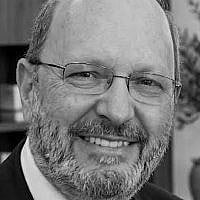
Dr. Chaim Botwinick is a senior executive coach and an organizational consultant .
He served as president and CEO of the central agency for Jewish education in Baltimore and in Miami; in addition to head of school and principal for several Jewish day schools and yeshivot.
As an Influencer, he has published and lectured extensively on topics relating to education, resource development, strategic planning and leadership development.
Dr. Botwinick is Author of “Think Excellence: Harnessing Your Power to Succeed Beyond Greatness”, Brown Books, 2011
Related Topics
Related Posts


Chaim Y. Botwinick