

Mathematics Teaching Professor, Author
Jewish Heritage: David Melul Jewish Museum of Bejar, Spain
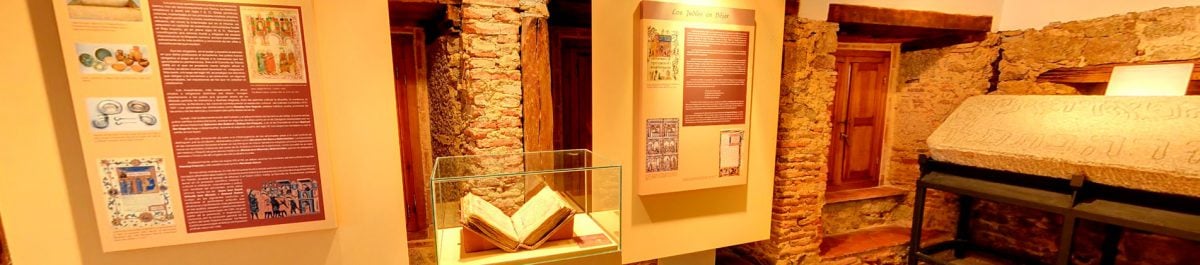
Interior of David Melul Jewish Museum (Source: David Melul Jewish Museum of Bejar, Spain)
The Jewish history of Béjar, Spain, reflects centuries of cultural heritage, religious life, persecution, and resilience. From the establishment of a thriving medieval Jewish community to the expulsion of 1492 and the subsequent persecution of Jewish converts by the Inquisition, the town preserves important traces of its Jewish past. The opening of the David Melul Jewish Museum in 2004 marked a significant step in preserving and sharing this history. Through its historical artifacts, documents, exhibitions, and cultural activities, the museum honors Béjar’s Jewish community and keeps its legacy alive for future generations.
Museum
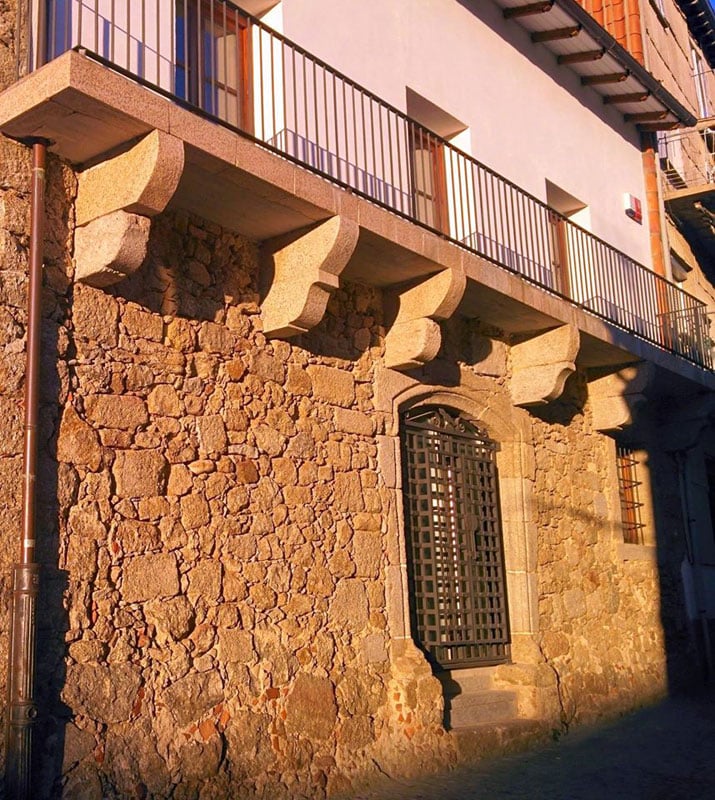
The David Melul Jewish Museum in Béjar, Spain, presents the history of Jews in Spain, with particular attention to their presence in Béjar and the surrounding area.
The museum’s ground-floor exhibition features the Charter of Béjar, which established rules governing the coexistence of Christians, Muslims, and Jews. Another significant exhibit is the tombstone of Doña Fadueña, dating from between the 12th and 14th centuries, which was discovered in excellent condition at the end of the 19th century. The collection also includes original objects used in Jewish religious ceremonies, such as menorot, megillot, tefillin, and tallitot, as well as objects illustrating daily life in the Middle Ages, including coins and documents relating to purchases, sales, and leases. The ground-floor tour concludes with an audiovisual presentation about the Edict of Expulsion issued by the Catholic Monarchs in 1492.
The first floor is dedicated to converts in post-expulsion Spain. A detailed scale model of Béjar in the 15th century allows visitors to identify areas where the presence of Jews has been documented. Other exhibits include documents relating to inquisitorial trials, a 17th-century Megillah Esther, and books concerning purity of blood. The exhibition also features Don Francés de Zúñiga, a prominent 16th-century figure from Béjar who may have been a convert. He served as a jester at the court of Emperor Charles V and wrote his Burlesque Chronicle about the court.
The second floor is dedicated to the Sephardim who chose to remain faithful to Judaism and left Spain. This section presents graphic information about the routes they followed into exile in other countries across Europe, Asia, and America. Audiovisual materials explore their language, Judeo-Spanish, while personal testimonies and other materials document the experiences of Jews whose surnames include Béjar, Behar, Bejarano, Bicerano, and other names associated with their origins. These individuals and families have contributed photographs and additional materials of historical interest.
The museum also provides a conference room and a room for researchers. Restrooms are available on the ground floor, along with a small shop.
Exhibitions
The David Melul Jewish Museum hosts exhibitions and cultural activities dedicated to Jewish history and Sephardic heritage.
The exhibition The Journeys of the Jewish People, which arrived at the museum on April 12, was loaned by the National Library of Israel to the Network of Jewish Quarters of Spain. It features six informational panels and 24 photographs exploring the motivations behind journeys and significant migrations throughout Jewish history. Before reaching Béjar, the exhibition had visited other cities, including Cáceres and León.
The museum also organizes Jewish Culture Days, featuring lectures on Jewish history and heritage. Activities have included a presentation by Carlos Coca Durán on the relationship between writer León Felipe and Judaism, and a talk by Walter Wasecier, founder of Háblame de Sefarad, titled The Resurgence of Sepharad (1834-2024).
Another significant event is the annual La Salamanquesa hiking route, organized in collaboration with the Béjar City Council, the Association for the Memory of Sepharad, and the Network of Jewish Quarters of Spain. The 13-kilometer trail follows a route associated with the expulsion of Jews from the Kingdom of Castile in 1492. It passes through chestnut and oak forests, follows sections of the Vía de la Plata, and returns to Béjar along the Vía Verde.
The route is named after Isabel González, a Jewish convert known as La Salamanquesa, who lived in La Calzada de Béjar during the second half of the 15th century. Tried by the Inquisition of Llerena in 1494, she subsequently disappeared.
The associated An Unforgettable Jewish Weekend program also includes activities dedicated to Hebrew culture, history, and gastronomy. Through these exhibitions and events, the David Melul Jewish Museum helps preserve Jewish heritage and strengthen awareness of Béjar’s historical connections to the Sephardic world.
Books
The David Melul Jewish Museum promotes research and educational outreach on the Jewish history of Béjar and its surrounding area. Its publications include Separate, a Dream by Anna Lensch, an exhibition catalogue published in 2003; Jews and Converts in the History of Béjar by Antonio Avilés Amat, published in 2004; and Fadueña: History of a Possibility by Luis Felipe Comendador, also published in 2004.
The museum also has a small shop located in the ground-floor entrance hall. It offers souvenirs, books, and audiovisual materials related to Jewish history and culture, including handmade items created by local artisans. Visitors can inquire about available publications and products at reception.
David Melul
David Melul, founder and patron of the museum that bears his name, was born in Melilla on April 20, 1928. In 1946, he arrived in Béjar to study at the School of Industrial Experts, now the Higher Technical School of Industrial Engineering at the University of Salamanca, before completing his textile engineering studies in Terrassa. He later settled in Barcelona, where he married Adelina Nacmías and had five children: Daniel, Rafael, Raquel, Mario, and Víctor. There, he established Hispano Tex, an innovative textile company specializing in household products. Melul served as the first honorary consul of the State of Israel in Barcelona and honorary president of the city’s Jewish Community.
Committed to preserving Jewish identity, culture, and history, he supported philanthropic initiatives, including the Hatikva School in Valldoreix and the David Melul Jewish Lyceum in Melilla. Maintaining a strong connection to Béjar, he spearheaded the creation of the David Melul Jewish Museum in the late 1990s to promote awareness of the region’s Jewish heritage. He died in Melilla on October 15, 2007.
Historical Backgrounds
Jewish communities first established a presence in Spain during the Roman period, possibly as early as the first century BCE, when Jewish settlers arrived alongside trade and migration networks and settled in various parts of the Iberian Peninsula. Following the fall of the Roman Empire, the Visigoths took control of Spain during the 5th century. Although relations were initially relatively stable, the Visigothic kingdom’s increasing commitment to Christianity led to restrictive anti-Jewish laws, forced conversions, and persecution, particularly during the 7th century.
The Muslim conquest of Spain in 711 CE brought significant changes to Jewish life, ushering in a period of cultural, scientific, and economic development under Islamic rule in al-Andalus. Between the 8th and 11th centuries, Jewish communities contributed to scholarship, philosophy, medicine, commerce, and literature, making medieval Spain an important center of Jewish intellectual and cultural life.
The Jewish presence in Béjar and its former lordship, spanning parts of present-day Salamanca, Ávila, and Cáceres, dates back at least to the late 12th century. During the Middle Ages, Béjar and Hervás developed Jewish quarters (aljamas) with synagogues, schools, ritual baths, and cemeteries. The Charter of Béjar established rules for coexistence between Christians, Muslims, and Jews, granting Jewish residents certain legal rights, including swearing by the Torah in legal disputes and having a Jewish judge participate in cases involving both communities.
Among Béjar’s notable Jewish residents was Doña Fadueña, believed to have lived between the 12th and 13th centuries. Her tombstone was discovered in 1879 and bears an inscription honoring her memory. In the late 14th century, Rabbi Hayyim ibn Mussa was born in Béjar. A physician, translator, and poet, he defended Judaism in religious debates and authored Magen va-Romav (The Spear and the Shield). He died in 1460. Following the persecutions of 1391 in southern Spain, Jewish migration increased the populations of Béjar and Hervás. Francés de Zúñiga, born in Béjar shortly before the expulsion, later served at the court of Emperor Charles V and became known for his satirical chronicle. His writings suggest a possible Jewish converso background.
In 1492, the expulsion of the Jews from Spain marked a turning point for Béjar’s Jewish community. Those who converted to Christianity were subsequently investigated by the Inquisition, which sought to identify people secretly maintaining Jewish traditions. In 1665, Jerónimo González de Lucio, archpriest of the Church of San Juan, remarked that “Old Christians in Béjar are not easy to find.”
Many Jews who left Spain adopted surnames derived from their birthplace, including Béjar, Behar, Bejarano, Becerano, and Bicerano. These names spread throughout Europe, North Africa, present-day Turkey, and the Americas.
Today, descendants of Sephardic families continue to visit Béjar to reconnect with their ancestral roots. The David Melul Jewish Museum preserves and shares the history of the town’s Jewish community, helping ensure that its cultural legacy remains alive for future generations.
The history of Bejar, Spain, between 1492 and 2004 spans the forced exile of the Jewish community, the persecution of converts suspected of secretly maintaining Jewish traditions under the Inquisition, and the eventual revival of interest in the town’s Jewish heritage. This history reached a significant milestone in 2004 with the opening of the David Melul Jewish Museum (Museo Judío David Melul), dedicated to preserving and promoting the history and cultural legacy of Béjar’s Jewish community.
The David Melul Jewish Museum stands as an important tribute to the Jewish heritage of Béjar, preserving the memory of a community whose history spans centuries of coexistence, persecution, exile, and resilience. Through its historical artifacts, documents, exhibitions, and cultural activities, the museum helps visitors understand the lasting influence of Jewish life on the town and its surrounding region. Since its opening in 2004, it has provided a meaningful connection between Béjar’s medieval past and the descendants of Sephardic Jews who continue to seek their ancestral roots. By safeguarding this history and sharing it with future generations, the museum ensures that the legacy of Béjar’s Jewish community remains an enduring part of Spain’s cultural heritage.
Contact Information:
David Melul Jewish Museum C/ Los Curas, s/n.Bejar (Salamanca), Spain
Phone: 923 410 539
Email: info@museojudiobejar.com
Website: https://www.museojudiobejar.com/