


Mathematics Teaching Professor, Author
Jewish Heritage in Trieste, Italy: Community, History and Jewish Museum
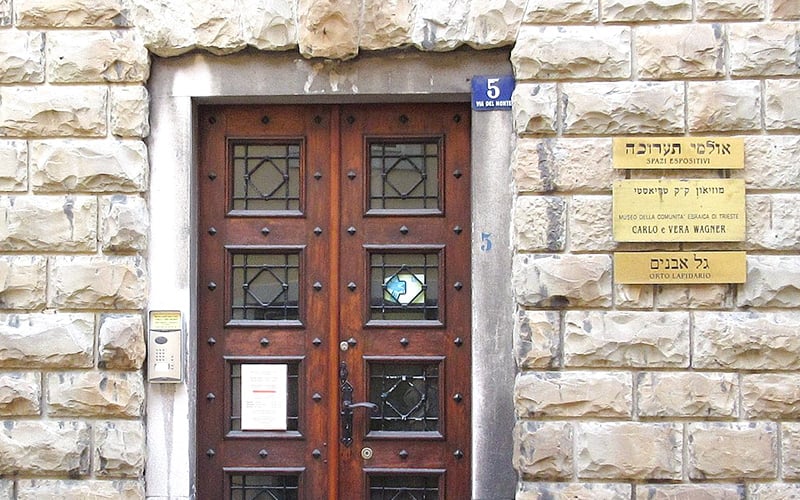
Jewish Museum of Trieste (Source: Trieste's Jewish Community)
Trieste has a rich and fascinating Jewish heritage dating back to the thirteenth century, when the first Jewish settlers arrived in this important Adriatic port city. Over the centuries, the Jewish community played a significant role in shaping the city’s cultural, commercial and intellectual life, contributing to its distinctive cosmopolitan character.
Today, the Carlo and Vera Wagner Jewish Museum, together with the magnificent Great Synagogue, the historic former Ghetto, the ancient Jewish cemetery and the Holocaust memorial at the Risiera di San Sabba, offers visitors a unique opportunity to explore this remarkable history. Through its museums, historic landmarks and active community, Trieste preserves the traditions, achievements and memories of generations of Jewish residents, celebrating their enduring contribution to the city’s identity.
I would like to thank the esteemed Annalisa Di Fant, Curator of the “Carlo and Vera Wagner” Jewish Museum for her guidance.
The Jewish Museum and Synagogue of Trieste
The Carlo and Vera Wagner Museum of the Jewish Community of Trieste offers visitors a fascinating insight into the history, culture, spirituality and traditions of Jewish life in the city. Inaugurated in 1993, the museum occupies two floors of a historically significant building on Via del Monte, once home to the Jewish hospital and, in the early twentieth century, the local Jewish Agency. This agency played an important humanitarian role, welcoming Jewish refugees fleeing Nazi persecution as they departed from Trieste for Palestine and the Americas. An Ashkenazi prayer room, which remained in use until 1987, is also preserved within the building, adding to its historical significance.
Following an extensive renovation in 2014 to 2015, the museum reopened with renewed exhibition spaces designed to make its collections more accessible to Italian and international visitors. Its permanent displays explore different aspects of Jewish life, including religious practices, community history, cultural traditions and the relationship with Eretz Israel. The museum also organizes temporary exhibitions in collaboration with the University of Trieste and other cultural institutions. Its rich collection of Judaica includes precious silver ritual objects, textiles, books and historical documents. Among its most remarkable treasures are eighteenth-century silver pieces crafted in Venice and a Sefer ornament dating back to 1593. Important archival materials, including a seventeenth-century ledger and the 1771 sovereign patents granted by Empress Maria Theresa of Habsburg, offer further insight into the history of Trieste’s Jewish community.
A particularly moving section of the museum is dedicated to the Holocaust and the fate of Trieste’s Jews who were deported to extermination camps. Among the exhibits are personal belongings stolen by the Nazis, later discovered by Allied forces hidden in jute sacks. Sent to Rome, these objects remained forgotten for decades in the basement of the Ministry of the Treasury before being returned to the Jewish Community of Trieste in 2000. Some are now displayed in the museum, while others have been donated to the Civic Museum of the Risiera di San Sabba and Yad Vashem in Jerusalem. These personal objects provide a deeply human connection to the victims, preserving memories of lives and families forever changed by persecution and deportation.
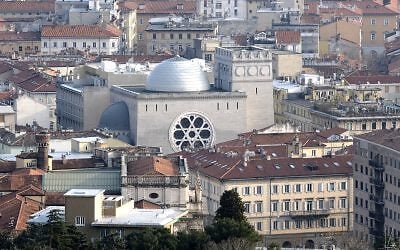
Beyond its exhibitions, the museum is an active cultural and educational center, dedicated to preserving Jewish heritage and sharing it with future generations. Its conference space hosts lectures, book presentations, film screenings, conferences and meetings, while its educational programs welcome school groups of all ages and provide training opportunities for teachers. A visit can also be combined with the nearby Trieste Synagogue (Tempio Maggiore), one of the largest and most significant synagogues in Europe. Together, the museum and synagogue offer a meaningful journey through the religious, cultural and historical legacy of Trieste’s Jewish community, highlighting its important contribution to the city’s identity and multicultural character.
The Jewish Museum of Trieste regularly hosts cultural events, book presentations, lectures and film screenings that explore Jewish history, identity and heritage from an international perspective. Its program provides a meeting place for writers, historians, researchers and cultural organizations, encouraging dialogue and deeper understanding of the Jewish experience across different countries and historical periods.
Among its recent events was the presentation of Sergio: Clandestino at ESMA, a book by Daniel Tarnopolsky, offering an opportunity to reflect on memory, identity and the legacy of political persecution in Latin America. Another significant event focused on The Price of Salvation: Fascism and the ‘Jewish Question’ in Dalmatia (1941 to 1943), examining a particularly complex chapter of Jewish history during the Second World War and the impact of fascist policies on Jewish communities in the region, thanks to the research carried out by historian Federico Goddi.
The museum has also welcomed initiatives celebrating the cultural connections between Jewish communities and Latin America, including Shalom: The Jewish Path in Latin America, a section of the 41st Ibero-Latin American Film Festival of Trieste, organized by the Association for the Promotion of Latin American Culture in Italy. This initiative highlighted the history, traditions and cultural contributions of Jewish communities throughout Latin America, emphasizing the links between different geographical and cultural identities.
Such collaborations demonstrate the museum’s commitment to promoting cultural exchange and intercultural dialogue, bringing together Jewish heritage, literature, history and contemporary artistic expression. Through these events, the museum continues to serve not only as a place of remembrance but also as a vibrant centre for cultural encounters and international cooperation.
An other significant event was the presentation of Raffaele Romanelli’s book Post-West: How October 7th Rewrites Our History on October 7, 2026, in collaboration with Trieste’s ADEI WIZO. The Community participated also to the initiative One Minute, Together, a nationwide moment of silence on October 6 commemorating the victims of the October 7, 2023 attacks. These initiatives demonstrate the museum’s commitment to remembrance and Jewish identity.
The Museum’s Collections and Permanent Exhibition
The permanent exhibition of the Carlo and Vera Wagner Museum explores the religious, historical and cultural heritage of Trieste’s Jewish community. On the ground floor, visitors can discover the partially preserved “Polish Synagogue”, featuring the Aron HaKodesh (Holy Ark), the bimah and traditional religious furnishings. The collection includes precious ritual silverware, Torah ornaments, embroidered curtains and family objects, with one of the oldest pieces being a silver plaque dating back to 1593.
Other rooms trace the history of the Jewish community from its medieval origins through the Second World War. Historical documents, including a seventeenth-century ledger and the 1771 sovereign licenses granted by Empress Maria Theresa, illustrate its development. Particularly moving is the collection of personal belongings stolen by the Nazis from Jewish residents who were deported to extermination camps.
The first-floor exhibition focuses on Jewish culture and celebrates the lives and achievements of prominent and lesser-known figures who contributed to Trieste’s history. The outdoor terrace features a small lapidary garden displaying ancient tombstone fragments, remains from the former Ghetto and two eighteenth-century stone tubs used for ritual purification and the washing of the dead.
The museum also houses an extensive library, enriched by donations from scholars and members of the Jewish community, including Professors Giovanni Miccoli, Felice Israel and Riccardo Guala Duca. Although not generally open to the public, it can be accessed by appointment for research into Jewish history, anti-Semitism, contemporary history and sociology.
Past Exhibitions
The Carlo and Vera Wagner Museum regularly hosts temporary exhibitions on the third floor, which is dedicated to this purpose. The exhibitions, whether historical or artistic, are organised by the Museum itself or on loan from other institutions. The most recent was a photography exhibition by Merav Wegerhoff, an Israeli photographic artist and breathwork facilitator who explores water as a living space of memory and consciousness.
The Jewish Community of Trieste: Morpurgo Tedeschi Schools
The Morpurgo Tedeschi Jewish Schools of Trieste provide an educational pathway from nursery through kindergarten to primary school, placing each child’s personal development and well-being at the heart of their teaching philosophy. Their approach encourages independent thinking, creativity, critical awareness and a sense of responsibility, while respecting each child’s individual abilities, pace of learning and cultural identity. Working closely with families and the wider community, the schools aim to create a welcoming, inclusive and supportive environment that promotes educational excellence and personal growth.
Jewish culture and tradition are central to the school’s educational program alongside a broad cultural education that prepares children to become active and responsible citizens. The nursery welcomes children from 13 months to three years, while kindergarten encourages curiosity, exploration and social development. At primary school, pupils develop the knowledge and skills needed to understand the world around them, appreciate cultural diversity and become thoughtful, independent individuals aware of their rights and responsibilities.
Morpurgo Center
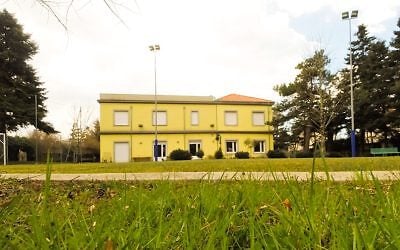
Surrounded by the beautiful greenery of the Karst plateau, the Morpurgo Center has welcomed children and young people from the Jewish Community of Trieste since the early twentieth century. Over the years, continuous renovations and improvements have transformed it into a modern, safe and comfortable facility, serving as an important center for community life and activities.
During the summer, the center hosts camps for Jewish children and young people from Italy and abroad, while throughout the rest of the year it provides a venue for community events and gatherings. It offers an ideal setting to discover Jewish culture and traditions, enjoy sports and participate in a variety of recreational and leisure activities.
The Jewish Cemetery of Trieste
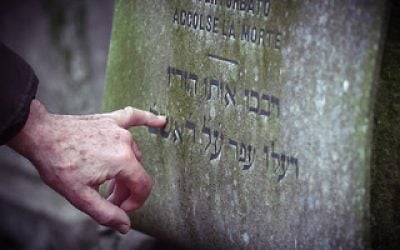
The Jewish Cemetery of Trieste, located in Via della Pace near the Catholic Cemetery of Sant’Anna, is a place of great historical and cultural significance. Established in 1843, it replaced the older Jewish cemetery on Via del Monte, which existed since mid-Fifteen century and was closed due to the city’s expansion and restrictions on burials within urban areas. Following an agreement signed in 1842, the Municipality helped fund the creation of the new cemetery. Known in Hebrew as Beth Olam, meaning the House of Eternity, it represents a sacred resting place and an enduring symbol of remembrance for the Jewish community.
Today, the cemetery is a beautiful and atmospheric site, where monumental nineteenth-century family tombs stand among dense vegetation. Its multilingual inscriptions in Latin, Czech, Russian, German and English, as well as a rare biblical inscription in the Samaritan alphabet, reflect Trieste’s cosmopolitan Jewish community and the arrival of families from Carinthia, Germany, Poland and Turkey. Beyond its architectural and historical importance, the cemetery remains one of the most sacred places for Trieste’s Jewish community, preserving the memories of generations and telling the story of its centuries-old presence in the city.
Community Services
The Jewish Community of Trieste provides a range of religious and practical services for residents and visitors. In order to attend religious services at the synagogue, visitors must complete an online form available on the Community’s website at least three days in advance. Kosher takeaway meals can be ordered at least one week in advance by contacting info@triestebraica.it, whilst a high-quality bakery and a a great ice cream shop offer products certified by the Chief Rabbi. The community also provides access to the Mikveh (ritual bath), which must be booked at least three days in advance. In addition, its offices offer a selection of Jewish ritual objects for purchase, including mezuzot, tallit and tefillin, Shabbat candlesticks and Havdalah candles. The community can also help to organize guided tours of Jewish Trieste by contacting visit@triestebraica.it.
The Jewish Ghetto of Trieste
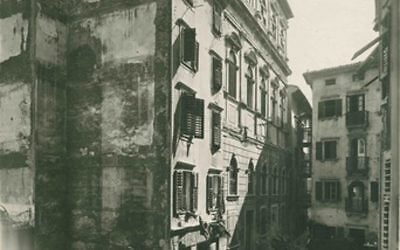
The ancient Jewish Ghetto of Trieste was established in 1696 by imperial decree of Leopold I of Habsburg, in the heart of the city’s commercial district, close to Piazza della Borsa and the Roman Theatre. Initially home to around one hundred Jewish residents, it consisted of thirteen houses surrounded by narrow streets and enclosed by walls with three guarded gates. Over the following century, the neighborhood became an important center of Jewish religious and cultural life, with several synagogues, including the German and Spanish rites.
The ghetto gates were opened in 1784 following Emperor Joseph II’s Patents of Tolerance, and Jewish segregation was completely abolished the following year. Although many Jewish families continued living in the area, the historic neighborhood and its synagogues were largely destroyed during urban redevelopment under the Fascist regime in the 1930s. Today, ritual objects and furnishings from the former synagogues, including original pews, are preserved in the Carlo and Vera Wagner Jewish Museum, keeping alive the memory of this important chapter in Trieste’s Jewish history.
The Rice Mill
The Risiera di San Sabba, located on the outskirts of Trieste, was the only Nazi camp in Italy equipped with a crematorium and is today an important memorial site, recognized as a National Monument and Civic Museum. Between 1943 and 1945, a former rice-husking factory was transformed into a police detention and transit camp, used for the imprisonment, deportation and murder of political opponents, partisans and Jews. An estimated 2,000 to 4,000 people died there, mostly Italian, Slovenian and Croatian partisans and political prisoners, but including also some Jewish victims from Trieste, Fiume and elsewhere. For Jewish prisoners the Risiera was mainly a transit camp on the way to Auschwitz-Birkenau and other concentration camps. Today, the Risiera di San Sabba preserves the memory of these atrocities and stands as a solemn place of remembrance for the victims of Nazi-Fascist persecution.
Across the city, more than 150 Stolpersteine serve as another memorial to these victims. Since 2018, the community has been collecting requests for installations for both victims of racial deportation and political deportation, and has been carrying out the necessary research and liaising with the Gunter Demnig Foundation and with the local Municipality. The Carlo and Vera Wagner Museum’s website features an up-to-date map, which is also available in English.
Historical Backgrounds
The Jewish presence in Trieste dates back to at least 1226, when the earliest known document mentions a Jewish resident named Daniele David of Carinthia. During the Middle Ages, the small community was mainly involved in trade, money lending and pawnbroking. After isolated anti-Jewish incidents, relations soured between Jews and non-Jews during the seventeenth-century. The clergy and the nobility, for religious reasons, and also due to economic rivalry, openly opposed the Jews and repeatedly called for their expulsion from the city. In 1693 a decision was made to create a ghetto, which, was set up three years later in the town centre by Emperor Leopold I in Riborgo, near the city’s commercial centre. A major turning point came in the eighteenth century, following Trieste’s designation as a free port in 1719. Trade flourished, the Jewish population expanded, and the community formally established its statutes and inaugurated its first synagogue in 1746. Under Empress Maria Theresa and Emperor Joseph II, important privileges were granted.
During the nineteenth century, Jewish residents gradually achieved full civil and political equality, particularly following the 1867 Constitution, which marked the complete “emancipation”. Jewish entrepreneurs, bankers and merchants played a significant role in Trieste’s economic prosperity, contributing to shipping, insurance and international trade. By the early twentieth century, the city had become an important centre of Jewish culture and migration, bringing together Sephardic, Ashkenazi and Corfiot communities. Known as Shaar Zion, or the Gate of Zion, Trieste served as a major departure point for Jewish refugees travelling to Palestine and the Americas. The inauguration of the magnificent Great Synagogue in Piazza Giotti in 1912 reflected the community’s growing importance. However, this prosperity was shattered by Mussolini’s racial laws in 1938, followed by Nazi persecution during the German occupation from 1943. Hundreds of Trieste’s Jews were arrested and deported, many through the Risiera di San Sabba, to Auschwitz-Birkenau and other concentration camps.
The Holocaust devastated the Jewish Community of Trieste, with more than 700 of its members deported and only 19 known survivors returning from the extermination camps. Following liberation in May 1945, the Great Synagogue reopened, marking the beginning of a difficult process of recovery. Although many survivors subsequently emigrated to Palestine and the Americas, the community gradually rebuilt its religious, cultural and educational institutions. Today, Trieste’s Jewish heritage remains an essential part of the city’s identity, reflecting centuries of cultural exchange, economic achievement, religious tradition and resilience. The Carlo and Vera Wagner Jewish Museum plays a particularly important role in preserving this legacy through its precious artefacts, historical documents and personal stories, ensuring that the history and contributions of generations of Jewish residents are remembered and shared with future generations.
Alongside the magnificent Great Synagogue, the historic Ghetto, the Jewish cemetery and the memorial at the Risiera di San Sabba, it offers visitors a deeper understanding of the Jewish contribution to Trieste’s cosmopolitan identity. Today, the Jewish Community continues to preserve its traditions, honor the memory of the past and share its rich cultural heritage with future generations.
Contact Information:
Trieste’s Jewish Museum “Carlo and Vera Wagner”: via del Monte 5-7, 34122 Trieste, Italy.
Email: museumcarloeverawagner@triestebraica.it
Website: www.museoebraicotrieste.it/en/
Synagogue: Via S. Francesco 19, 34133 Trieste, Italy.
Email: info@triestebraica.it
Website: https://www.triestebraica.it/it/
Tourist information: visit@triestebraica.it