


Mathematics Teaching Professor, Author
Jewish Historical Museum of Saint John, New Brunswick Celebrates 40 Years
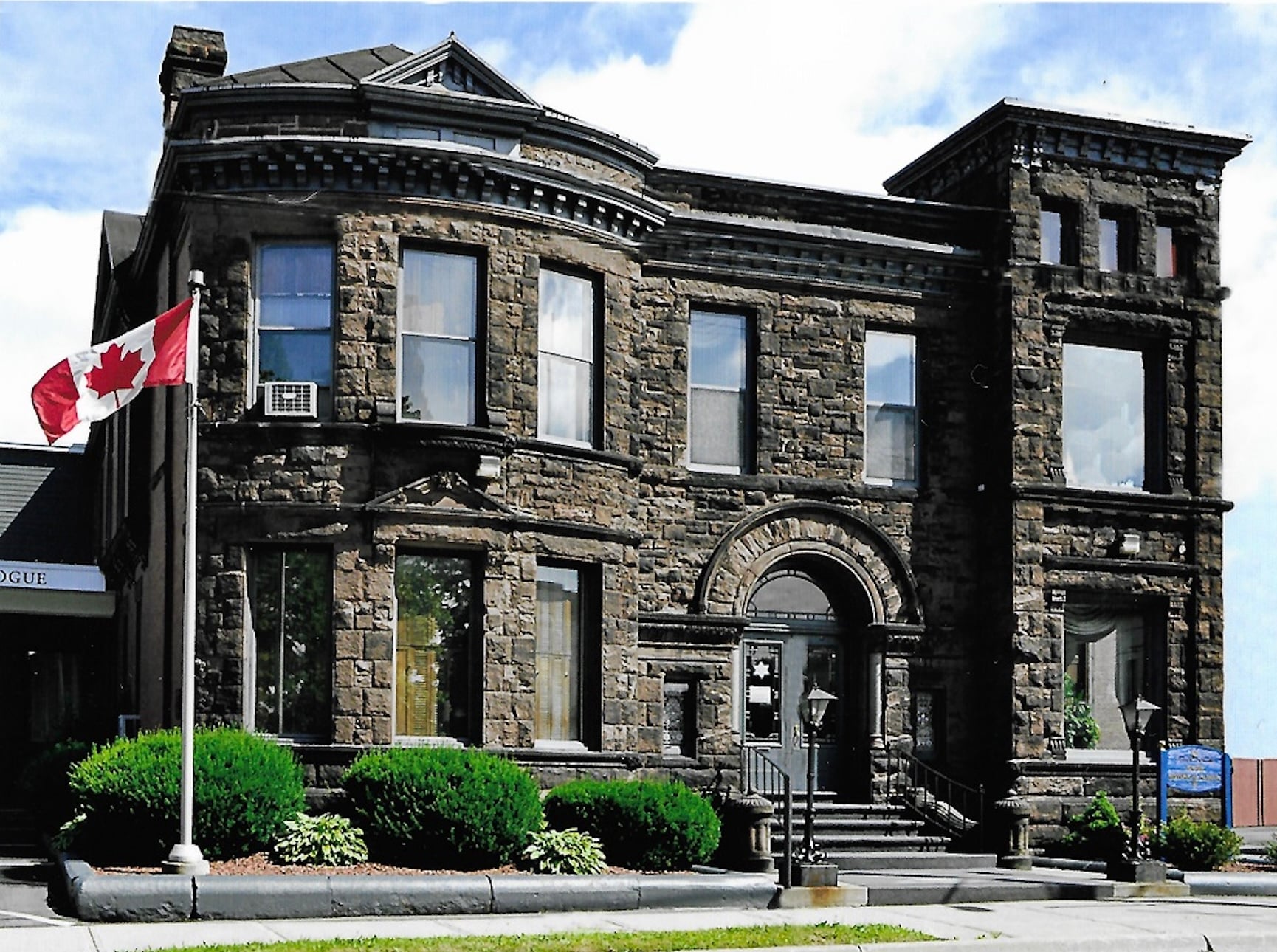
Saint John Jewish Historical Museum, exterior (Source: Lloyd Goldsmith)
The Saint John Jewish Historical Museum marked a significant milestone on Sunday, June 28, celebrating its 40th anniversary as a guardian of Jewish heritage in Atlantic Canada. Located in an elegant late-Victorian mansion at 91 Leinster Street in Saint John, New Brunswick, the museum is the only Jewish museum in the Atlantic Provinces.
Through its permanent galleries, historic synagogue, archives, and library, it preserves and shares more than 200 years of Jewish life and contributions in the region. Over the past four decades, the museum has become an important cultural and educational institution, fostering a deeper understanding of Jewish history, traditions, and community through its exhibitions, educational programs, and public events.
I would like to thank the esteemed Julia Gorko, Katherine Biggs-Craft, Executive Director and Curator, for her support and guidance.
Museum
Over the past 40 years, the Saint John Jewish Historical Museum has become a cornerstone of Jewish heritage in Atlantic Canada. It has welcomed more than 142,000 visitors from around the world, including cruise ship passengers since 1989, and has promoted education through 33 Yom Hashoah commemorations, 20 Holocaust study groups for high school students, and 13 Jewish Film Festivals.
The museum has also led walking tours of the historic Shaarei Zedek Cemetery and Saint John’s former Jewish neighbourhoods, employed 145 students in the summer months, and built an impressive archive of 275 boxes of documents, more than 6,000 photographs, and a library of over 2,500 books. Through more than 100 exhibitions and over 80 newsletters, the museum continues to preserve and share the rich history of Jewish life in Saint John and Atlantic Canada.
Exhibitions
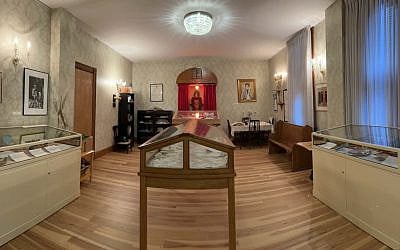
Current exhibitions highlight the richness of Jewish life in Saint John. Under the Chuppah explores local Jewish wedding traditions through dresses, photographs, and family memorabilia, while From the Cradle to the Grave showcases treasured objects that illustrate Jewish life-cycle events and religious traditions. In Their Own Words: Part Two features oral histories from community members, preserving memories of family and community life. A new exhibition, Immigration to Saint John: The Evolving Jewish Community, traces the history of Jewish settlement from the arrival of Loyalist David Gabel in 1783 to the growth of today’s community.
Library
The museum’s library, created from the former Shaarei Zedek Library and generous community donations, houses a diverse collection of more than 2,500 books in English, Hebrew, and Yiddish. Covering Jewish history, religion, the Holocaust, Israel, literature, biography, art, cookbooks, and children’s books, the library is open year-round by appointment for students, researchers, and the general public. Limited borrowing privileges are available for museum members.
Archives
The Saint John Jewish Historical Museum preserves the history of Jewish life in the city from 1858 to the present through an extensive archive of documents, photographs, artwork, and artifacts. Its collections cover synagogue records, Jewish organizations, immigration, businesses, military service, Holocaust research, family histories, oral interviews, and the museum’s own history. Together with hundreds of photographs and a growing collection of fine art and artifacts, the archives provide an invaluable resource for researchers, genealogists, students, and the wider community.
Digital Museum Canada
The museum’s online exhibitions explore the history and evolution of Jewish life in Saint John. The Changing Role of Jewish Women in Saint John highlights the contributions of Jewish women to both the local Jewish community and the broader city. Celebrating 150 Years of Jewish History in Saint John traces the community’s growth since the arrival of the Hart family in 1858, while Past to Present: Generations of Jewish Life in Saint John chronicles Jewish settlement from the late 18th century through successive waves of immigration that shaped the community. Open for Business is a detailed look at the many Jewish-owned shops the lined the city’s streets from the early 1900s to the early 2000s.
Education
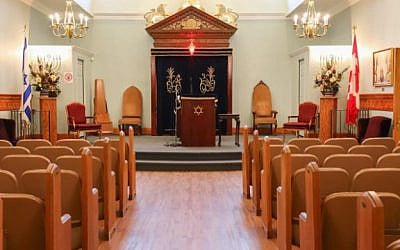
The Saint John Jewish Historical Museum offers a range of educational programs designed to deepen students’ understanding of Jewish history, culture, and traditions. School groups can take guided tours of the museum and the historic Shaarei Zedek Synagogue, complete with educational videos and interactive worksheets.
The museum also provides eight outreach kits on Jewish holidays, life-cycle events, and the Holocaust for classroom use, as well as adaptable Holocaust lesson plans that can be delivered in person, virtually, or by teachers using museum-developed resources.
Historical Backgrounds
In the 1760s, Canada transitioned from French to British rule following Britain’s victory at the Battle of the Plains of Abraham in 1759 and the 1763 Treaty of Paris. During this period, Saint John was a small settlement where the First Nations and European or American traders met to exchange goods. After the expulsion of the Acadians, the British built Fort Frederick to protect the harbor, while the merchant partnership of Simonds, Hazen, and White established a trading post at Portland Point, laying the foundations for the city’s future development.
Jews first came to Canada in the 1760s as merchants and soldiers with the British army following the British conquest of New France.
By 1783, Saint John was transformed by the arrival of thousands of United Empire Loyalists following the American Revolution. The newcomers established two settlements, Parrtown on the east side of the harbor and Carleton on the west, but faced severe hardships during their first winter due to shortages of shelter, supplies, and medical resources. The first Spring Fleet arrived on May 18, 1783, bringing more than 2,000 settlers, with later arrivals increasing the population to nearly 14,000.
Among those who arrived with the Loyalists was David Gabel, the first known Jewish resident of Saint John. Arriving in 1783, he established a butcher shop and bakery on Kings Square, raised a family in the city, and became the beginning of a Jewish presence in Saint John that continues to the present day.
In 1858, Solomon and Alice Hart arrived in Saint John with their family and are recognized as founders of the city’s Jewish community. Solomon Hart, an accomplished cigar maker, operated a factory in the city, while Alice played a vital role in community life by teaching Hebrew to children, running a day nursery, and founding the Daughters of Israel, an organization dedicated to supporting the poor, new immigrants, and those in need.
The Hart family was soon joined by Louis Green and his family, along with brothers Abraham and Israel Isaacs. Connected through marriage, these early Jewish families worked as cigar makers and helped establish the foundations of the Saint John Jewish community.
Between 1892 and 1930, more than 200 Jewish families settled in Saint John, with many arriving from Eastern Europe, particularly Lithuania, Poland, Russia, and Romania. They came to North America as persecution and hardship increased in the region, with a significant number originating from Dorbian, Lithuania.
A small number of Holocaust survivors also arrived in Saint John during and after the Second World War, often through existing family connections. The Jewish community flourished, reaching more than 200 families between the 1920s and the 1960s.
Which brings us to 1986.
Canada in 1986 was a nation defined by major cultural shifts, economic recovery from earlier recessions, and a population that experienced its life through analog technology and vibrant mid-80s aesthetics. The country’s population was around 25.3 million.
In 1986, Saint John, New Brunswick, was in the midst of a massive transition. The city was shifting from a traditional industrial and manufacturing hub into a modern, service-based economy. The city boasted a dense collection of Victorian and Loyalist brick architecture, though it was still recovering from some of the heavier “urban renewal” demolitions of the 1960s and 70s.
In 1986, the Saint John Jewish Historical Museum opened to preserve and share the history of the local Jewish community. Founded by Marcia Koven, the museum reflects her lifelong dedication to Jewish community life. A devoted educator and volunteer, Koven contributed in many roles, including as a Sunday School teacher and as a leader in Sisterhood and Hadassah, where she served multiple terms as president.
The success and longevity of the Saint John Jewish Historical Museum are the result of the dedication of its members, volunteers, supporters, and the generosity of government and foundation partners. Built on the vision of founding curator Marcia Koven and the contributions of generations of community members, the museum continues to preserve and share a remarkable history. As the Jewish community of Saint John moves forward, the museum looks ahead to the next 40 years with optimism and purpose.
The Museum is open for visitors from late May to early November and by appointment for the remainder of the year for a modest admission fee.
Contact Information:
Jewish Historical Museum of St John, 91 Leinster Street, Saint John, New Brunswick, Canada E2L 1J2
Phone: 1-506-633-1833
Email: sjjhm@nbnet.nb.ca
Website: https://saintjohnjewishhistoricalmuseum.com/