


Mathematics Teaching Professor, Author
Jewish Museum Frankfurt: Over 800 Years of Jewish History, Memory, and Renewal
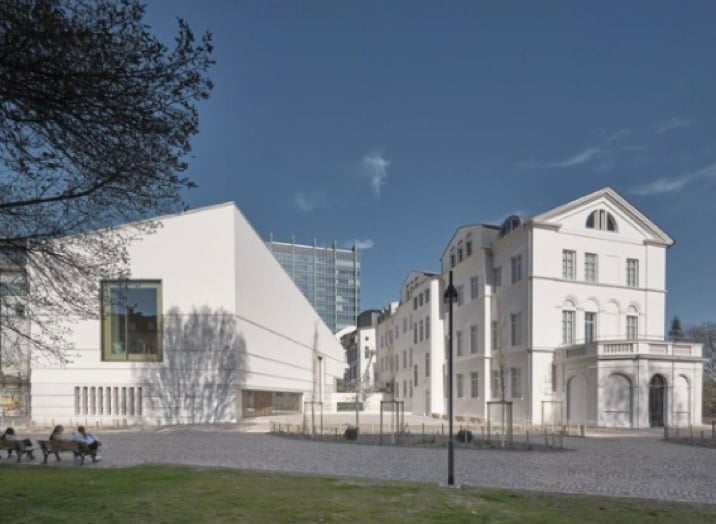
Jewish Museum Frankfurt (Source: Jewish Museum Frankfurt)
At the Jewish Museum Frankfurt, more than 800 years of Jewish history and culture come to life. Founded as the first municipal Jewish Museum in Germany after the Second World War, the museum collects, preserves, and shares Frankfurt’s Jewish heritage from a European perspective. Across its two locations, the museum tells the story of one of Europe’s most influential Jewish communities, from the medieval Judengasse to the vibrant cultural life of the 19th century and the present day.
At the Jewish Museum Frankfurt in the restored and expanded Rothschild Palais, visitors explore Jewish history and culture from around 1800 to the present, following the lives of Frankfurt’s Jewish citizens through periods of emancipation, innovation, destruction, and renewal.
At the Museum Judengasse, archaeological remains and historic artefacts offer a rare window into Jewish life between the 15th and 18th centuries, revealing the everyday experiences of one of Europe’s most significant early modern Jewish communities.
Jewish Museum
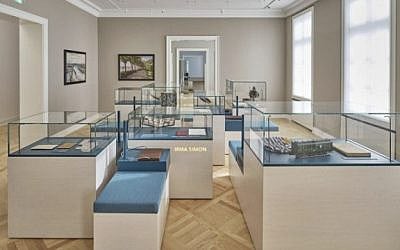
The Jewish Museum Frankfurt’s permanent exhibition, We Are Now: Jewish Frankfurt from the Enlightenment to the Present, is housed in the beautifully restored Rothschild Palais. Opened in 2020 following an extensive renovation and expansion, the museum combines the historic former home of the Rothschild family with a striking contemporary extension, creating one of Europe’s most significant centers for Jewish heritage.
Spanning three floors, the exhibition traces Jewish life in Frankfurt from the Enlightenment around 1800 to the present day through a variety of perspectives. Through paintings, photographs, films, personal letters, historical documents, everyday objects, and interactive displays, it explores how Jewish communities shaped the city’s cultural, economic, and social life while also confronting periods of discrimination, persecution, and the Holocaust.
Rather than presenting history alone, We Are Now begins with contemporary Jewish life, inviting visitors to consider questions of identity, memory, family, tradition, and belonging. Personal stories connect the past with the present, highlighting the resilience and diversity of Frankfurt’s Jewish community.
The Jewish Museum Frankfurt’s public library is open Tuesday to Sunday from 10:00 am to 6:00 pm and is free to visit without a museum ticket. Its collection includes specialist works as well as children’s and young adult literature on Jewish history, religion, and culture. Visitors are welcome to browse the collection or relax in the comfortable reading room.
Located within the Jewish Museum Frankfurt, Life Deli serves kosher vegan cuisine and homemade drinks in a bright, welcoming setting. Open Tuesday to Sunday from 10:00 am to 6:00 pm, with extended hours until 10:00 pm on Thursdays, Friday and Saturday, the café offers both indoor seating and a sunny outdoor terrace. It is open to everyone and can be visited without purchasing a museum ticket.
Museum Judengasse
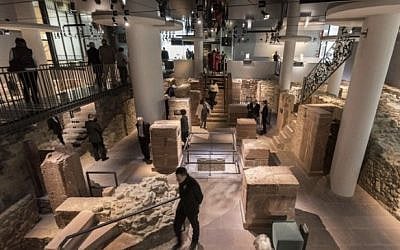
The Museum Judengasse offers a fascinating journey into the everyday lives of Frankfurt’s Jewish community during the early modern period. Built around the archaeological remains of five original houses from the historic Judengasse, the museum preserves the site of Europe’s oldest Jewish ghetto, established in 1460.
Discovered during construction work in 1987, the foundations of the former Jewish quarter sparked a public campaign that led to the creation of the museum. Today, the permanent exhibition explores how the residents of the Judengasse lived, worked, worshipped, and maintained a community despite the restrictions of ghetto life. Through archaeological finds, historical artefacts, music, literature, and interactive displays, visitors gain a vivid insight into one of Europe’s most important centers of Jewish life, where more than 3,000 people lived at its peak.
Complementing the Jewish Museum Frankfurt’s exhibition on Jewish life from 1800 onwards, the Museum Judengasse completes the story by illuminating Jewish history in Frankfurt from the 15th to the 18th centuries. In recognition of its outstanding presentation and preservation of this unique heritage, the museum received the 2016 Museum Prize of the Sparkassen-Kulturstiftung Hessen-Thüringen.
Digital Museum
The Jewish Museum Frankfurt extends its reach beyond its galleries through a range of digital experiences, including online exhibitions, museum apps, and social media platforms. Guided by its digital strategy, these resources allow visitors around the world to explore the museum’s collections, exhibitions, and stories, making Jewish history and culture accessible both on-site and online.
Education Program
The Jewish Museum Frankfurt offers a wide range of educational programs that explore Jewish history as an integral part of German history while connecting it to contemporary life. Visitors can join themed guided tours, participate in hands-on workshops, and discover the museum through interactive learning experiences. Programs can also be tailored to suit the interests and needs of different groups, making each visit engaging and meaningful.
Invisible Places App
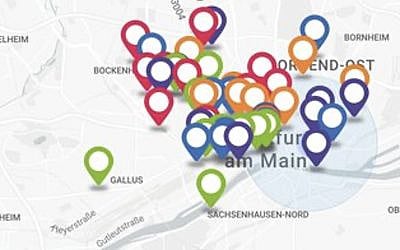
The Invisible Places app invites users to explore Frankfurt through the stories of its migrant communities. Developed in collaboration with the Historical Museum Frankfurt, the app serves as a virtual guide to places whose histories are often overlooked, complementing the city’s visible memorials and monuments with personal memories from the post 1945 era.
Following themed walking routes, users discover stories of Jewish football clubs in Zeilsheim, Greek fur traders near the main station, and Turkish restaurants in the city’s East End. By tracing these shared histories, Invisible Places reveals how Jewish, Greek, Spanish, Turkish, Italian, and other communities helped shape modern Frankfurt into the diverse city it is today.
Historical Background
Jews first arrived in the region that is now Germany during the Roman Empire. The earliest definitive historical evidence is an edict issued by Emperor Constantine in 321 CE regarding the Jewish community in Cologne, which implies Jews were already well established enough to hold public municipal offices.
The first written evidence of a Jewish community in Frankfurt was between in the mid to late 12th century. By the 13th and 14th centuries, a growing Jewish community had established itself around what later became the Judengasse, Jews’ Lane, one of the oldest Jewish quarters in Europe.
In 1462 along the city’s late medieval walls, the Judengasse was established and was one of Europe’s earliest Jewish ghettos. Despite restrictions and overcrowded living conditions, it developed into a major center of Jewish religious, cultural, and economic life. At its height, up to 3,000 people lived within its narrow streets.
By the 17th century, Frankfurt was home to one of the largest Jewish communities in the German-speaking world. Over the centuries, Frankfurt’s Jewish citizens played major roles in trade, finance, scholarship, culture, and civic life. The community expanded beyond the Judengasse after emancipation in the 19th century, contributing significantly to the city’s development.
By the beginning of the 20th century, Frankfurt was home to one of Germany’s largest and most influential Jewish communities, a vibrant center of cultural, economic, intellectual, and social life.
By the 1930s, around 23,000 Jews lived in the city, contributing significantly to Frankfurt’s cultural, economic, intellectual, and social life. But with the rise of National Socialism after 1933, this community was rapidly dismantled. Jewish residents faced discrimination, exclusion, forced economic dispossession, and the destruction of synagogues and communal institutions.
For two days in early November in 1938, during the Reichspogromnacht, a nationwide wave of anti-Jewish violence was carried out by the Nazi regime and its supporters. Jewish homes, businesses, synagogues, and communal institutions were attacked, looted, and destroyed throughout Germany and Austria.
In Frankfurt, the Museum Jüdischer Altertümer (Museum of Jewish Antiquities) was looted by members of the SA and SS, and much of its collection of Jewish ritual objects was destroyed or stolen. Around 1,000 surviving objects were later incorporated into the holdings of the Historical Museum Frankfurt; others appeared on the local art market or were melted down.
Between 1941 and 1945, more than 10,000 Frankfurt Jews were deported from the city to ghettos, concentration camps, and extermination camps as part of the Nazi genocide. Many were deported from the former Großmarkthalle, which became a central site of persecution and deportation in Frankfurt. When U.S. forces liberated Frankfurt in March 1945, only a small number of the city’s Jewish residents had survived.
In the decades that followed, Jewish life gradually returned to the city. A significant rediscovery of Frankfurt’s Jewish past took place in 1987, during construction work at Börneplatz. Excavations uncovered the foundations of 19 houses from the former Judengasse, revealing one of the most important archaeological sites of Jewish heritage in Europe. It is these remains now form the core of the Museum Judengasse.
Which brings us to 1988.
In 1988, Germany was still a deeply divided nation split into capitalist West Germany (FRG) and communist East Germany (GDR). Surrounded by the heavily fortified Iron Curtain, the world saw the Berlin Wall standing firmly. People largely viewed this division as permanent, though simmering discontent inside the East was brewing toward the Peaceful Revolution.
In 1988, Frankfurt was a vibrant, rapidly modernizing hub at the heart of West Germany. It was defined by its booming financial sector, a major U.S. Military presence, and a counter-culture scene that was just beginning to give birth to Germany’s legendary techno movement.
It was in this year, 1988, on November 9th, that the first municipal Jewish Museum in Germany was opened by Federal Chancellor Helmut Kohl on the 50th anniversary of the November Pogrome.
In 1992, the Jewish Museum Frankfurt opened the Museum Judengasse, creating a permanent home for the archaeological remains discovered at Börneplatz. Built around the foundations of five preserved houses from the former Jewish quarter, the museum brings the history of the Judengasse and its residents to life.
In 2016, the Museum Judengasse was redesigned with a new permanent exhibition exploring Jewish life in Frankfurt from the establishment of the ghetto in the late Middle Ages through the early modern period and into the years after 1800, when Jews gained the right to settle beyond the Judengasse.
The historic building at Untermainkai 14 and 15, today home to the Jewish Museum Frankfurt, has a rich connection to Frankfurt’s history. Between 1820 and 1821, municipal architect Friedrich Christian Hess designed the two neighboring buildings in the Classical style, inspired by ancient Greek and Roman architecture.
Today, the two buildings are connected as part of the Jewish Museum Frankfurt complex. Following extensive renovation and expansion, they reopened in 2020 to house the museum’s permanent exhibition, We Are Now: Jewish Frankfurt from the Enlightenment to the Present.
The Jewish Museum Frankfurt preserves and shares more than 900 years of Jewish history, from the medieval Judengasse to Jewish life today. Through its exhibitions, collections, and educational programs, the museum explores a story of cultural achievement, persecution, resilience, and renewal. It stands as a place of remembrance, dialogue, and connection between the past and the present.
Contact Information:
Bertha-Pappenheim-Platz 1, 60311 Frankfurt am Main
Phone: + 49 (0) 69-212-35000
Email: jmf.info@stadt-frankfurt.de
Website: https://www.juedischesmuseum.de/en/