

Practical Spirituality - Slow and Steady
Jewish Pluralism, Halakha, and the Case for Unity Beyond Denomination
Cracks in the Pavement, Threads in the Tapestry: The Wisdom of the Cracks
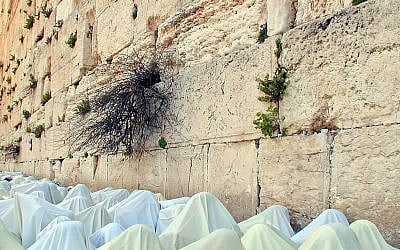
The Jewish people have never been a smooth surface. We are a mosaic of differences — languages, melodies, customs, doubts, and devotions — each tile carrying the memory of a people who have walked through exile and revelation, often in the same breath. To speak of unity, then, is not to imagine sameness. It is to recognize the deeper structure beneath our uneven ground — the shared foundation that holds when everything else shakes.
Torah and history are our bedrock. They are not relics of a vanished past, but living frameworks — the shared breath of a people who have survived by interpreting, questioning, and returning, again and again, to the same covenantal fire. Halakha, in this sense, is not a fence that separates us, but the scaffolding that allows us to build and rebuild across generations.
The cracks in our pavement are not signs of decay. They are reminders that life is still moving underneath. And the work of our generation — of every generation — is to step carefully, to bridge, and sometimes to fill them in, so that those who come after may walk with steadier feet.
I. The Bedrock of Belonging
What truly binds the Jewish people is not agreement — it is belonging. A shared history, a common destiny, and a rhythm of sacred action that transcends denomination. These are the threads that have woven us together since Sinai, where the tribes stood as one body and one soul, even as each carried its own accent and song.
Across centuries and continents, Torah has been our unbroken spine. It is the shared grammar of Jewish life, a language so deep it can be spoken even in silence — through the lighting of candles, the breaking of bread, the rhythm of prayer. The Torah’s power is not in uniform observance but in the way its principles echo through the diversity of practice: Sephardi and Ashkenazi, Mizrahi and Modern, Hasidic and secular — all drawing from the same well.
Halakha — often misunderstood as rigid or restrictive — is, in truth, the architecture of freedom. It gives form to faith. Like the frame of a house, it allows infinite variation in the rooms we build within it. From Marrakesh to Minsk, from Melbourne to Manhattan, the shared cadence of blessing and rest, of sanctifying the ordinary, becomes a quiet assertion of unity across difference.
Our rituals — Shabbat, kashrut, family purity — are not cultural curiosities. They are the ancient statutes that teach us to live with mindfulness and holiness. Observed differently, yes, but always with the same purpose: to connect action to meaning, the physical to the divine. These shared patterns, even when refracted through countless traditions, act as a steady hum beneath our dissonant songs.
Jewish worship, then, is a shared house — a roof under which many voices gather. Each synagogue, each minyan, is a reflection of one larger truth: that our prayers, though sung in many melodies, rise toward the same sky. Beneath the surface variety lies the unifying breath of Torah, binding us not through conformity but through covenant.
When we pray across traditions — when the Ashkenazi melody meets the Sephardi rhythm, when Ladino and Hebrew mingle in the same sanctuary — something ancient stirs. It is the recognition that we are not simply preserving old forms, but renewing the same eternal song. This, more than any ideology, is the source of Jewish unity: shared purpose expressed through infinite form.