Working to protect people and our shared planet.
Jewish Security Is an American Issue — and More Marylanders Must Join the Fight
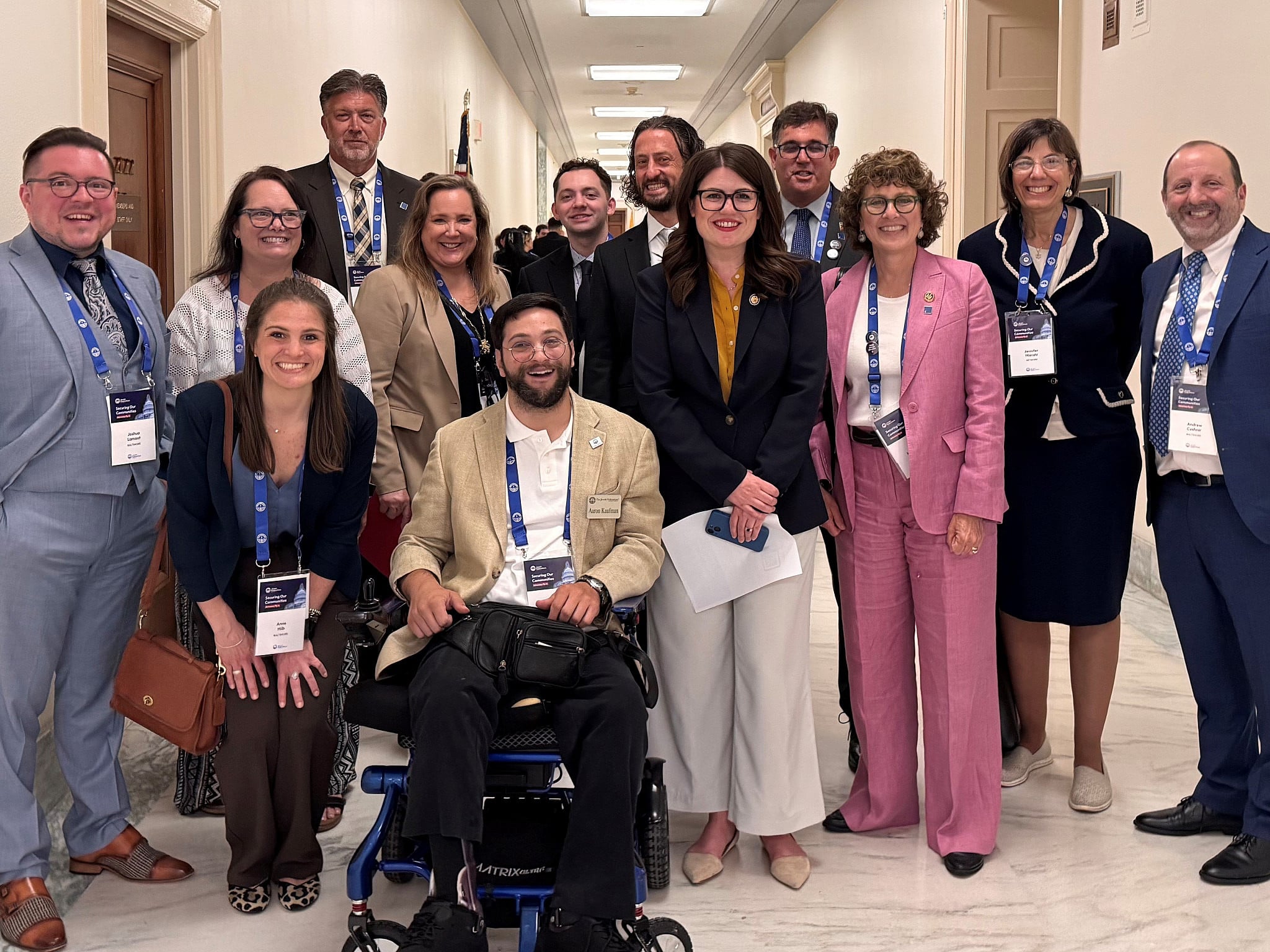
Maryland Jewish activists and leaders meet with Congresswoman Sarah Elfreth to discuss protecting faith and nonprofit organization from hate violence. Photo courtesy of JLM.
This week, as cofounder of the Jewish Federation of Annapolis & the Chesapeake, I had the honor of joining more than 400 Jewish leaders from 82 communities across the United States in Washington, DC, to educate policymakers and lawmakers about the growing threat of antisemitism — and to offer concrete solutions.
Before we went to Capitol Hill to meet with leaders we got to hear from people personally impacted by hate violence. This included a leader from Beth Israel Congregation in Jackson, Mississippi which was recently set on fire in a horrific antisemitic attack. We also heard an emotional panel from Temple Israel near Detroit as recently an antisemite attacked their synagogue – ramming a truck filled with weapons and explosives into an area with more than a hundred children. Without the quick heroism of their security guard, and advanced security training and actions, it could have been the largest terrorist attack since 9/11.
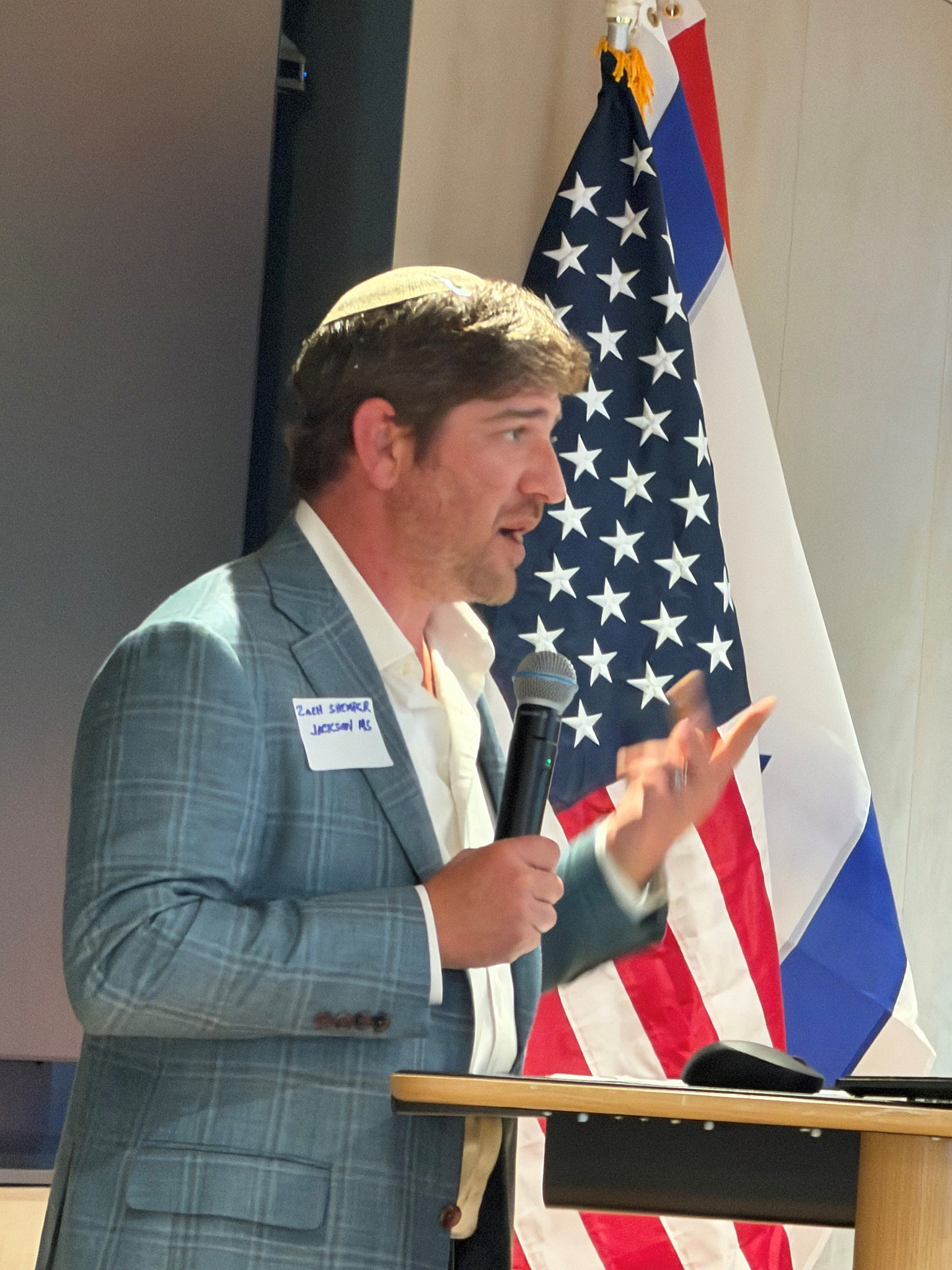
The event was brilliantly organized by the Jewish Federation of North America. In the future I hope many more people from Annapolis & the Chesapeake will join me.
As part of the Maryland delegation, I was proud to stand alongside seasoned leaders from the Jewish Community Relations Council of Greater Washington and the Baltimore Jewish Council. Our group was filled with wonderful activists from first time participants to seasoned leaders including State Delegate Aaron Kaufman and co-chair of Maryland’s Legislative Jewish Caucus, Senator Shelly Hettleman.
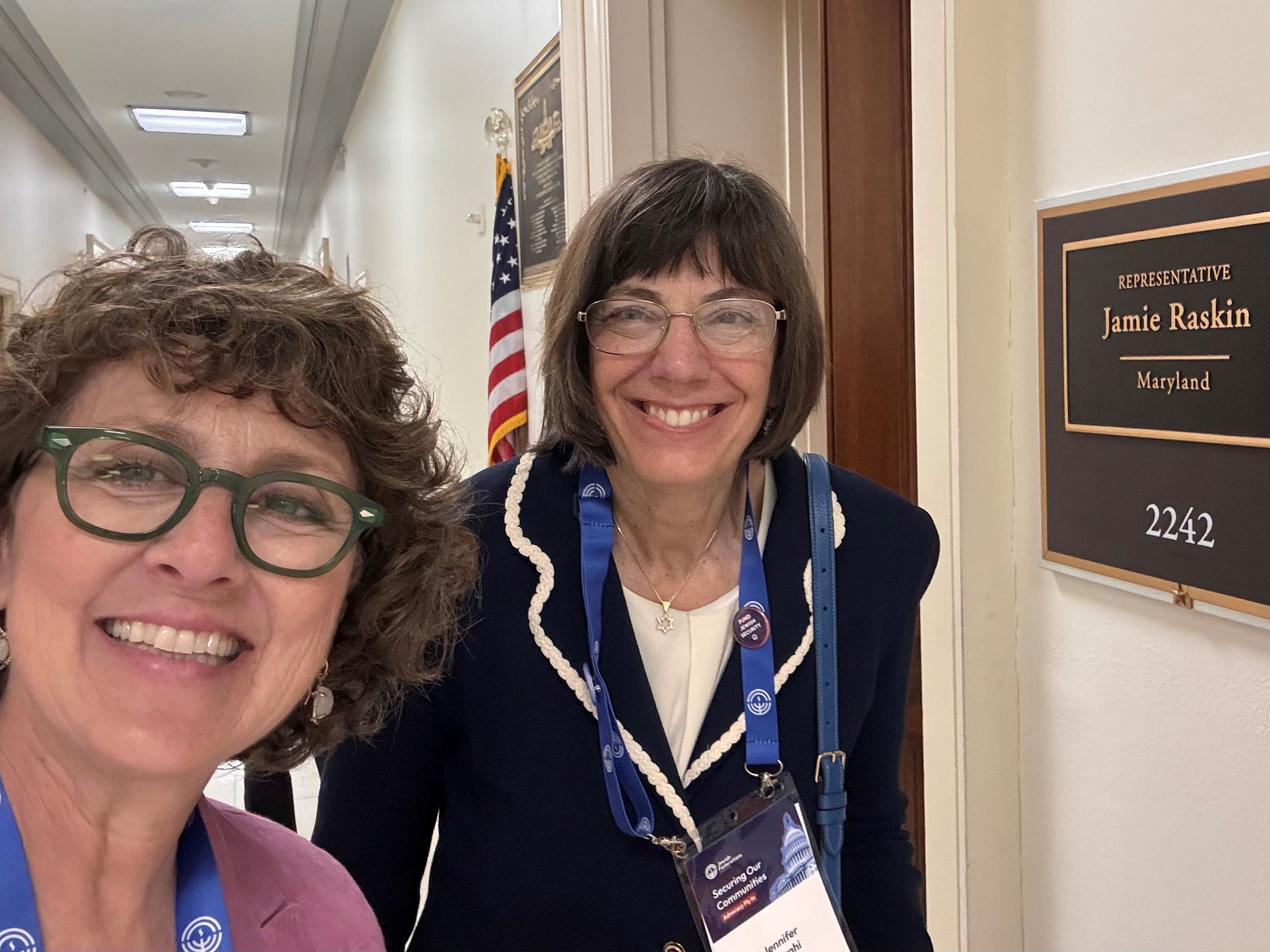
Together, we met with our own Congresswoman Sarah Elfreth. We also got to meet with Congressman Glen Ivy, Senator Chris Van Hollen, senior staff from Congressman Jamie Raskin’s office, policy expert Matt Amitay from the office of Representative April Delaney, and senior policy advisor Jonathan Lord from Senator Alsobrook’s office. Every single meeting was respectful and productive.
We brought three urgent requests:
1. Fund the Nonprofit Security Grant Program (NSGP) at $1 billion in Fiscal Year 2027 to expand access to critical security resources needed to protect vulnerable communities against growing threats.
2. Cosponsor the new bipartisan Jewish American Security Act to strengthen protection for Jewish institutions and communities nationwide.
3. Support protections through the SACRED Act, which safeguards congregants outside houses of worship from intimidation and disruption.
The first request already enjoys broad bipartisan support because lawmakers understand both the urgent need and that hate rarely stops with one community. Security funding helps synagogues, churches, mosques, community centers, schools, and nonprofits of many backgrounds. At the same time, however, it has stalled in Congress and needs to move ahead quickly.
The third request has already become law in Maryland through similar state-level legislation, and we want to see everyone benefit from it across the country.
But the Jewish American Security Act is something new — and deeply important.
The bipartisan legislation was introduced by Republican Senator James Lankford and Democratic Senator Jacky Rosen, alongside House sponsors including Representative Dan Goldman of NYC. The legislation represents one of the most comprehensive federal responses yet to the rise of antisemitism and targeted violence. The bill was shaped in collaboration with Jewish Federations of North America and major Jewish organizations across the ideological spectrum. It was created in response to deadly attacks, escalating threats, and the painful reality that many Jewish Americans no longer feel fully safe gathering openly as Jews.
As said by JFNA’s top professional leader Eric Fingerhut during the advocacy effort: “Protecting Jewish Americans is not optional — it is an urgent national priority.”
Importantly, this legislation is not only about Jewish safety. It is about protecting the constitutional right of all Americans to worship, gather, learn, and live without fear.
The legislation would:
• Expand and modernize the Nonprofit Security Grant Program by increasing funding to $1 billion annually and improving how quickly organizations can receive support.
• Strengthen cooperation between federal, state, and local law enforcement to better protect houses of worship and vulnerable institutions.
• Require annual federal threat assessments on antisemitism and domestic extremist violence.
• Increase transparency from online platforms regarding how they moderate antisemitic content and extremist activity.
• Strengthen Title VI protections for Jewish students by requiring federally funded educational institutions to improve reporting, training, and grievance procedures related to discrimination and antisemitism.
These measures are urgently needed.
In recent months, Members of Congress have received antisemitic death threats. An Iranian-backed militia commander was charged with plotting attacks on Jewish sites in the United States. Jewish schools, synagogues, and community centers across the country have had to dramatically increase security spending. At the same time, other faith communities are also under attack, including the recent deadly shooting at the Islamic Center of San Diego.
History teaches us that hatred spreads when left unchecked. Protecting Jewish communities ultimately strengthens safety for everyone.
One particularly powerful moment came when Rabbi Jen Lader of Temple Israel in Michigan described how prior security investments helped prevent a potential mass casualty event after a terrorist crashed a weapon-filled vehicle into her synagogue while children were inside. Security preparations, training, and personnel made the difference between property damage and unimaginable tragedy. The same was also true at the Mosque in San Diego as it was their security guard who saved lives before the police could get there.
No congregation should have to choose between funding educational programs, feeding the hungry, serving seniors, or protecting children. Yet many Jewish institutions — and many other faith communities — are increasingly forced into exactly those impossible choices when government cedes its responsibility to protect its citizens.
That is why advocacy matters.
The meetings this week reminded me that democracy is not a spectator sport. Laws do not change on their own. Relationships matter. Voices matter. Showing up matters.
And that is why I hope many more people from Annapolis and across the Chesapeake region will join us the next time we organize these advocacy efforts in Washington. We are already actively doing this at the vital state and county levels and need to do it at the national level as well.
You do not need to be a policy expert. You do not need years of experience. You simply need the willingness to stand up for safety, religious freedom, and human dignity.
At a time when antisemitism is rising globally and divisions often dominate headlines, coming together across communities and political perspectives is itself an act of hope.
The Jewish community cannot — and should not — face these challenges alone. Allies matter. Partnerships matter. Civic engagement matters.
The next time we travel to Capitol Hill, I hope our delegation from Annapolis and the Chesapeake will be much larger and even more representative of the many people who believe that every American deserves the right to gather, worship, and live safely without fear.
Because protecting one community from hate ultimately protects us all.
Related Topics
Related Posts