Jews Are Speaking Back
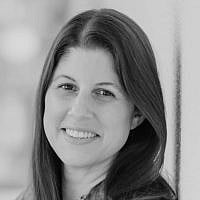
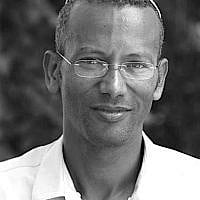
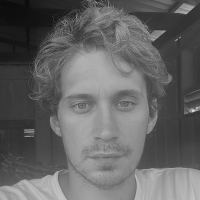
Jews are speaking back. Across dispersed but interconnected spaces—online writing, local study groups, independent publications, and public debate—a new Jewish discourse is taking shape. Figures like Hen Mazzig, Matthew Nouriell, and Izabella Tabarovsky are at the forefront, articulating what it means to speak from the lived experience of Mizrahi and post-Soviet Jewish communities long excluded from both Western liberal and postcolonial narratives. Their interventions arise not from abstraction, but from memory and history: from families expelled from Arab and Persian lands, from traditions suppressed under communism, from direct knowledge of what antisemitism looks like when it wears the mask of liberation. This is not reaction. It is renewal.
Against erasure, against distortion, and against frameworks that do not fit, Jews are reclaiming the right to define themselves. In a time when antizionism functions less as a policy critique than as a logic of erasure, it seeks to overwrite Jewish identity itself—reframing Jews as racialized oppressors, foreign to their own history, and illegitimate as a people. It is a discourse that operates through the power of majoritarian categories—projecting onto Jews the assumptions of race, nation, and state that were never theirs to begin with—while denying them the space or right to speak back, even while using the language of “free speech” to protect itself.
In response, Jews—both scholars and ordinary people—are questioning these imposed logics. They are challenging racial paradigms, theological misreadings, and political frameworks that distort who Jews are. And they are doing so not just defensively, but generatively: re-examining Jewish history through the lenses of archaeology, memory, and anthropology. Not to prove legitimacy in someone else’s terms—but to articulate their own.
A key mechanism of today’s erasure is the racialization of Jews within frameworks that have never fit. In contemporary antizionist discourse, Jews are routinely cast as white oppressors—privileged agents of colonial violence, aligned with the West and alien to the Middle East. This narrative ignores the actual diversity of Jewish communities and histories, reducing a diasporic people to an invented racial position. It is reinforced by the resurrection of the long-discredited Khazar theory, which claims Ashkenazi Jews are descended not from ancient Israelites, but from a medieval Turkic kingdom—an attempt to delegitimize Jewish connection to the land of Israel by portraying Jews as impostors with no Indigenous claim.
These framings project American racial categories onto Jews, flattening identity into “ethnicity” measurable by 23andMe tests or visual phenotype. The complexity of Jewish peoplehood—shaped by exile, legal tradition, theological continuity, and recursive self-understanding—is reduced to the language of blood quantum and whiteness. This distortion is evident even in influential texts like Ta-Nehisi Coates’s Between the World and Me, which maps the Israeli–Palestinian conflict onto a simplistic US racial binary, casting Palestinians as Black and Jews as white—ignoring both the ethnic diversity of Jewish communities and the theological-political stakes of the region.
Jewish identity has never been reducible to race. It is not a biological essence, but a civilizational form—transmitted across generations through lineage, law, memory, and covenant. Across time and space, Jews have practiced multiple systems of descent: patrilineal frameworks in biblical texts, among the Karaites, and within the traditions of Ethiopian Jews and others; matrilineal descent as codified in rabbinic Judaism; and ambilineal models embraced by liberal Jewish movements, which recognize descent through either parent. Jewish peoplehood has also long incorporated outsiders through conversion, adoption, and assimilation—mechanisms not of racial closure, but of civilizational expansion. These are not anomalies but structural features.
Descent in the Jewish sense is not about purity of blood, but about entry into a people organized through obligation, law, and transmitted memory. It is form, not phenotype, that sustains Jewish continuity. Like many Indigenous and diasporic civilizations, Jewish identity is recursive: it survives exile not by freezing itself in time, but by adapting its structures of transmission without relinquishing its core commitments—what Mordecai Kaplan called the evolving religious civilization of the Jewish People.
Alongside this racialized denial is another, subtler erasure: the reduction of Jews to archaeological residue—archaic, superseded, and frozen in biblical time. Jewish presence in the land is acknowledged only as a relic, not a living continuity and return to sovereignty. This gesture mirrors both Christian supersessionism, which treats Judaism as spiritually displaced by Christianity, and the modernist colonial logic that denies Indigenous peoples their ongoing presence by relegating them to the past. Anthropologists have long critiqued such logics when used against Indigenous nations—yet too often fail to see the same structures at work when applied to Jews.
These moves reproduce precisely the colonial frameworks they claim to oppose: measuring legitimacy by blood purity, or treating peoplehood as a matter of past significance rather than present structure.
Yet anthropology, which should be most attuned to these dynamics, has often failed to see them. It has overwritten Jewish voice through categories of majority power, treating Jewish particularity as a symbol of colonial guilt rather than as a people worth thinking-with. It has inverted and reduced Jewish experience to an allegory of victimhood and domination, rather than listening with care to the patterns of survival, transmission, and meaning that animate Jewish life.
Whether recognized or ignored by the mainstream academy, a new Jewish discourse is emerging—one that refuses to be reduced, erased, or ventriloquized. It is a reassertion of peoplehood, of self-definition, of continuity through time. And it is not only the work of scholars. It is unfolding in communities, conversations, and texts—as Jews reclaim the right to speak from within, to define themselves, and to carry their civilization forward.
This is not merely a counter-narrative. It is a form of anthropology in its own right: a symmetric anthropology, in the spirit of anthropologists such as Roy Wagner, Marilyn Strathern, and Bruno Latour—one that listens across difference and takes seriously the capacity of a people to theorize themselves. For too long, Jews have been studied as metaphors for Western power or modernity, rather than encountered as a civilization with its own conceptual architectures.
This resurgence is unfolding in spaces often ignored or dismissed by the intellectual mainstream. It lives in online writing, local study groups, independent institutions, and public debates—animated not by institutional prestige, but by the pulse of peoplehood. We see it in the London Centre for the Study of Contemporary Antisemitism, which hosted a landmark 2025 conference on antisemitism, peoplehood, and Jewish voice; in the work of Ben M. Freeman and others advancing Jewish Pride as a framework of unapologetic self-definition; and in countless dispersed efforts to build a rigorous, living Jewish discourse in the face of hostility and erasure.
Jewish civilization is not a stand-in for empire or modernity. It is a form of life in its own right—continuous, self-theorizing, and irreducible to the categories projected onto it. Like any people, Jews must be heard as those who speak from within—with the full weight of their own history, voice, and civilizational perspective.