Jews need to talk more about breasts and nipples
On a Thursday afternoon, three weeks after I had undergone a bilateral mastectomy with reconstruction, I learned from my surgeon that I needed a follow up procedure as soon as possible. I was scheduled for the next day at 3pm. I left the practice and when I got home I texted two of my coworkers with whom I had shared more details about my surgery journey that had started 6 months ago.
My text message included the word “nipples”.
I stared into the screen. These coworkers, the recipients of my message, were female, had shown nothing but support, and yet, once I finally pressed “send”, I couldn’t help but feel nervous and uncomfortable about using the word “nipples”.
In my life, nipples, breasts and ovaries have been a very Jewish topic of conversation. Ten years ago, shortly before my mother died from ovarian cancer, I learned that I carried the BRCA1 mutation. This mutation increases the risk of developing breast and ovarian cancer in those who carry it. According to the National Cancer Institute at the National Institutes of Health, about 12 percent of women in the general population will develop breast cancer sometime during their lives. By contrast, 55 to 65 percent of women who inherit a harmful BRCA1 mutation and 45-47 percent of women who inherit a harmful BRCA2 mutation will develop breast cancer by age 70. These days, given the scientific investigation, the expansion of cancer-related communications, and the ever faster circulation of information, women in their 20s, 30s and 40s have the option to be tested and to know whether or not they carry a harmful BRCA1 or BRCA2 mutation. However, our Jewish community is still largely unaware of the fact that Jewish women of Ashkenazi descent are especially vulnerable to these gene mutations.
For the past decade, I engaged in genetic consultations, assembled multiple medical teams, learned about preventive and prophylactic care, and consistently evaluated my risk tolerance as I moved from my thirties into my forties and became a mother to the most dreamy children. I underwent a prophylactic hysterectomy and never missed a mammogram or breast MRI.
I had done what any good Jewish girl would have done: I talked about ovaries and breasts. I learned, and learned some more, about the state of preventive and prophylactic care. So, when one suspicious mammogram led to a biopsy that confirmed that I was at high risk for breast cancer, I decided to undergo a prophylactic bilateral mastectomy. For me, knowledge was empowerment, despite it being painful to look in the eye. I never wanted to not know. But what I never realized until it was my turn to go through it all was that I also wanted others to know more, too.
I don’t mean that everyone should be an expert on breast and ovarian cancer or gene mutations. But when we say that Jewish women of Ashkenazi descent are at higher risk of inheriting one of these mutations, we are talking about someone’s mother, sister or daughter. We are talking about a good friend. We are talking about your female Rabbi, Cantor, educator and jewish organization professional. Jewish life yesterday, today and tomorrow, rests upon the shoulders of our women. And, guess what? They all have breasts and nipples. So I decided to compile this list of things that I wish people would know about the procedure known as mastectomy.
What is a mastectomy?
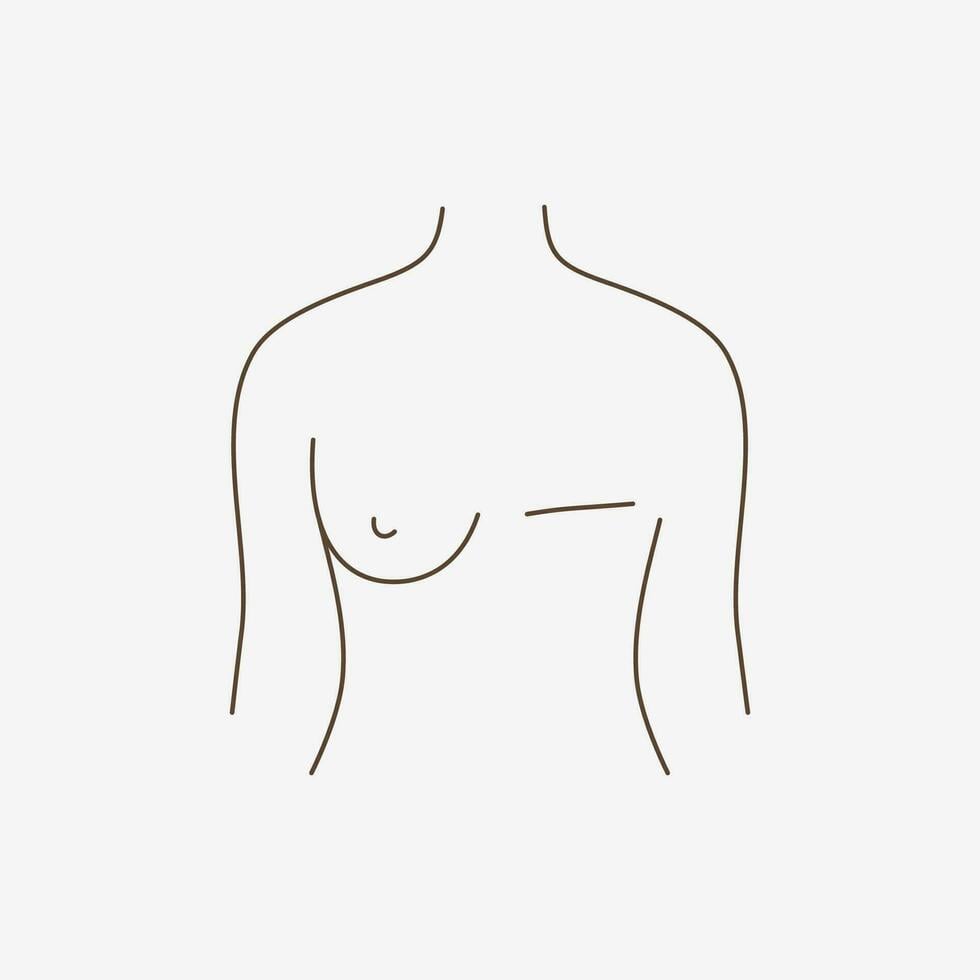
A mastectomy is a surgical procedure that removes the breast tissue. This procedure is a controlled injury where tissue is removed while nerves and muscles are severed. It’s called bilateral when it removes both breasts. It’s called “skin or nipple sparing” when the skin and nipples are left intact. It is called “total” when it removes tissue, nipple and areola.
What choices do women have regarding reconstruction?
Women will often consult with plastic surgeons to determine what type of reconstruction they would like and is possible for their specific case and body. Their options might include a flat closure that creates a flat chest wall, a reconstruction using either silicone or saline implants, or tissue from another part of the body, or a technique called “goldilocks” that uses excess skin to contour the shape of a breast. This is a physically and emotionally challenging procedure and recovery for most women, regardless of the type of reconstruction performed.
What is recovery like?
From a physiological perspective, it includes caring for drainages, the surgical area and monitoring for signs of infection that can arise for up to three months post-surgery. The arms’ range of motion becomes very restricted, and physical therapy is advised beginning 4-5 weeks after the surgery to regain mobility. Tightness, shooting pains and the sensation of fullness on the chest can be present for up to 1 year or more, when implants are in place. Sensation and sensitivity on the breasts are, most of the time, permanently lost.
What can you do or say?
I’m very fortunate to have experienced beautifully overwhelming support from my community: they sent notes, emails, homemade meals and uber eats giftcards for me and my family. You could offer help by creating a meal train for the weeks after their procedure, offer car rides for errands or for school pick ups. You could offer to take the person to get their hair washed at a local salon (they won’t be able to do it themselves for 1-3 weeks) or perhaps purchase them a few sessions with a spiritual director or counselor that can hold their hand during this process. Here are some of the messages that I received and were helpful: “I know this is a gentle and tender time, take good care of yourself”; “I’m sorry that you have to go through this”; “I’m thinking of you and sending lots of love and prayers your way”; “You are in mi Mi Sheberiach list”; “Checking in to say that I’m thinking of you. No need to respond!”; “Are you up for a visit?”; “ So you need anything?”
As I write this, I realize that truly empathizing with someone’s experience of pain and loss can be very uncomfortable. But as we approach the Festival of Passover, I’m reflecting on the fact that this is what Judaism demands of us. During Pesach we ask that each one of us considers ourselves as if we personally left Egypt. What I think this means is that if we want to be carriers of our collective stories of hope and resilience, we also have to be willing to be carriers of each other’s trauma: around slavery, displacement, othering and yes, breasts and nipples, too.