
Historian, Librarian, Educator, and Artist
Jews Sometimes Hurt Each Other More Than Antisemitism Does
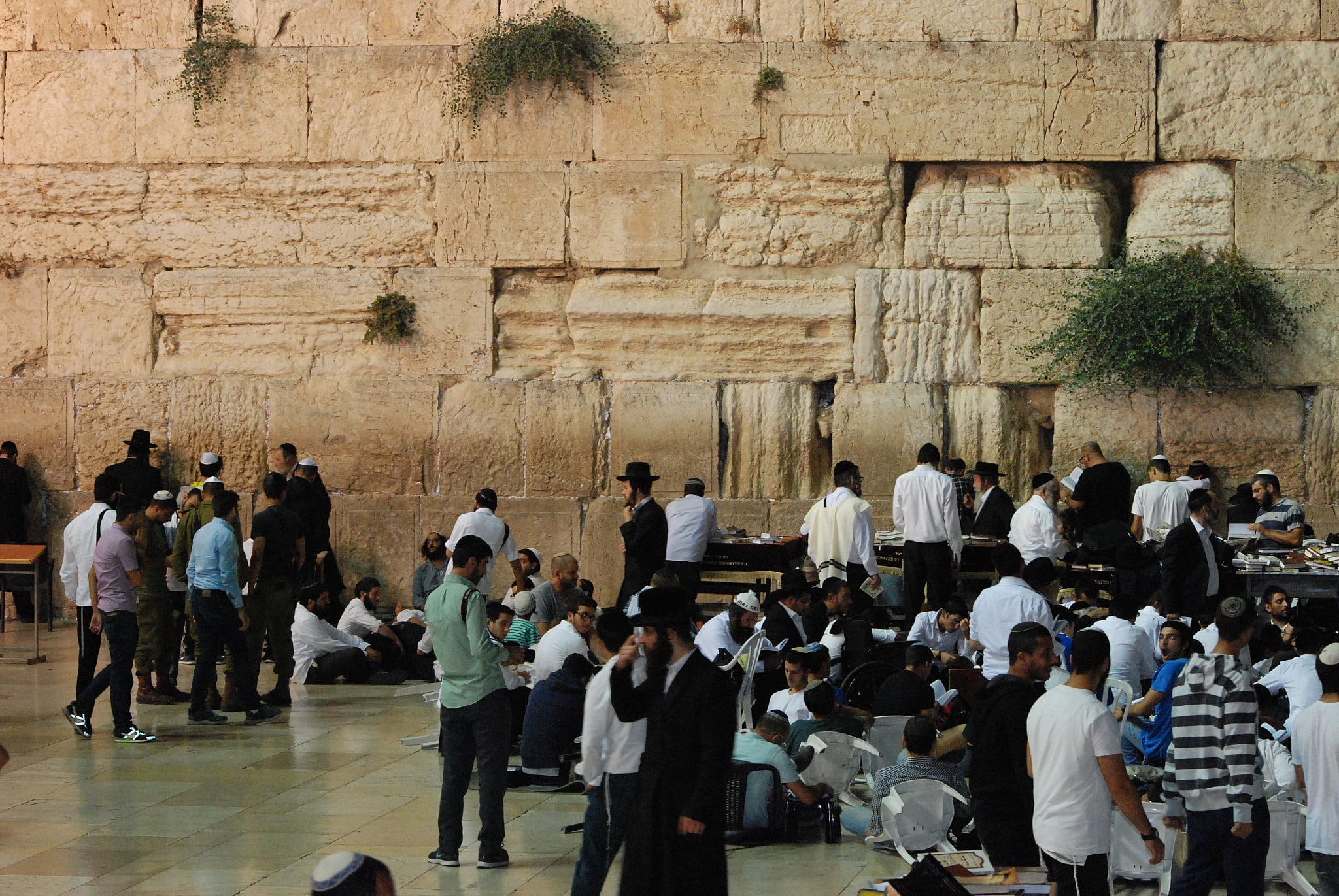
Praying at the Kotel on Tisha B'Av (Source: Wikimedia Commons)
A Tisha B’Av Reflection
Tisha B’Av is the most sorrowful day on the Jewish calendar, a time of mourning for the destruction of both Temples and countless tragedies that befell our people throughout history. We often speak of external antisemitism: pogroms, expulsions, inquisitions, and modern-day terrorism. But less frequently do we turn inward to confront the anguish caused by Jews toward fellow Jews. Jewish tradition teaches that the Second Temple was destroyed not by Rome alone, but by sinat chinam, baseless hatred between Jews. On Tisha B’Av, that lesson should resound as loudly as any lamentation.
Some of the greatest suffering in my life has come not from strangers, but from members of my community, Jews I trusted. Employers neglected to compensate me for my labor. Landlords have misrepresented properties, broken lease agreements, or shown me indifference and disdain. These betrayals have not only caused immense financial strain but also psychological harm, severing my trust in the communal fabric we are taught to rely upon. What hurts most is not that I was wronged, but that I was wronged by people who, like me, pray, fast, and mourn on Tisha B’Av.
The Talmudic story of Kamtza and Bar Kamtza resonates deeply with me. The destruction of the Second Temple, we are told, began with one man being humiliated by another Jew at a feast while the leaders stood by in silence (Gittin 55b–56a). I experienced something similar when I first moved to Israel: a person I had long known, a figure I trusted, turned against me, publicly throwing me out of their synagogue on Tisha B’Av itself. On a day meant for shared mourning and unity, the shame and pain of that rejection mirrored Bar Kamtza’s feelings. I walked away that day with the same hollow question: how can Jews be so hypocritical and cry over ancient baseless hatred while repeating it against one another in the present?
This discussion is not a theoretical reflection. After October 7, I spoke out publicly in support of Israel while completing a graduate independent study in Jewish Studies at McGill University. The professor assigned to oversee my work, ironically, within the Jewish Studies department — discontinued his teaching and arbitrarily altered the course requirements. When I sought recourse by submitting a formal complaint to the dean, rather than resolution, I was effectively pushed out of the program and university. Someone within our tradition silenced my academic aspirations and my right to learn and speak out as a Jew.
Today I face a similar, even more harrowing situation in Israel. As an independent contractor (osek patur), I fulfilled the hours, completed the work, and upheld my end of the agreement. But instead of payment, I have endured weeks of psychological manipulation: delays, gaslighting, intimidation, and threats of legal action merely for recounting my story truthfully. The employer has attempted to redefine the terms unilaterally, as if my documented hours and efforts hold no value. The emotional toll is heavy; the financial toll is devastating. When a fellow Jew, especially a rabbi heading a religious studies institution, weaponizes Torah language and status to harm another Jew, especially one struggling to rebuild their life in a new country, it is not merely a breach of contract. It is a breach of covenant. Many other Olim have similar stories. These patterns of exploitation create a painful experience for far too many new immigrants in the very land we call home, characterized by conditional goodwill that vanishes when it becomes inconvenient.
However, these individual experiences are not unique. They are part of a broader illness that afflicts both Israeli and diaspora communities. We see sinat chinam play out on social media, in synagogue politics, in Jewish institutions where transparency is optional, and among those who wield Torah like a sword rather than a light. In Israel, divisions between religious and secular, Ashkenazi and Mizrahi, and veteran Israelis and olim, rich and poor create hierarchies of worth. In the diaspora, we see Jewish students bullied for supporting Israel or cast out for holding religious or political views deemed unacceptable by their peers. We mourn antisemitism outside our communities, yet hesitate to name the exclusion, abuse, and contempt Jews show one another. This silence perpetuates suffering and desecrates the very values Tisha B’Av calls us to restore.
Jewish law is not silent on this matter. The Torah commands, “Do not wrong one another, but fear your God” (Leviticus 25:17), and the Talmud expands this to include ona’at devarim — verbal mistreatment, deception, and emotional harm. [1] Bava Metzia 58b teaches that verbal abuse is more painful than financial wrongdoing because it “afflicts the soul.” The Torah also commands timely and full payment of wages: “You shall not oppress a hired worker who is poor and needy…you shall provide him his wage on the same day, before the sun sets” (Deuteronomy 24:14–15). [2] Halakhic texts and responsa literature over centuries affirm that failing to pay a worker, exploiting the vulnerable, or engaging in deceit violates not just law but ethics.
This inward collapse is not only metaphorical; it is part of our recorded history. The Talmud tells us that during the Roman siege of Jerusalem, Jewish zealot factions burned the city’s food supplies in order to force resistance rather than surrender. [4] Instead of uniting to protect the people, they turned on each other, and their civil war hastened Jerusalem’s fall. Later, the Romans brutally destroyed the city of Betar, home to the last stronghold of the Bar Kochba revolt. Yet Jewish tradition also notes that the downfall of Betar came after Rabbi Elazar of Modi’in, a pious and respected figure, was betrayed by fellow Jews jealous of his influence. [5] These are not simply stories of Roman conquest. They are cautionary tales of how internal jealousy, factionalism, and cruelty left us vulnerable to enemies. On Tisha B’Av, we must ask ourselves: are we repeating the errors of Jerusalem and Betar, tearing each other down while pretending our shared fate is separate?
Tisha B’Av is not merely about what the Romans did to us or what modern antisemites still do. It is about what we do to each other. Rabbi Abraham Isaac Kook taught that the Second Temple was destroyed due to baseless hatred, but it will be rebuilt through ahavat chinam — unconditional love. [3] The reconstruction goes beyond mere symbolism. It begins with treating our workers with dignity, honoring our agreements, listening to whistleblowers rather than silencing them, and remembering that tzelem Elohim — the divine image — is present in every Jew, not just those we locate agreeable or useful.
I write this letter not as a condemnation, but as a plea. This is a plea to take Tisha B’Av seriously, not just as an annual ritual, but as an ethical challenge. If we truly believe that the Temple was destroyed because of intra-Jewish hatred, then each act of cruelty, indifference, or betrayal is a brick thrown at our own sacred house. And each act of justice, kindness, and accountability is a step toward rebuilding it.
On this day of mourning, let us weep for our sins and those of our enemies. And may our tears water the ground from which a better Jewish world can grow, one rooted in justice, in truth, and in love.
—
Footnotes
1. Babylonian Talmud, Bava Metzia 58b.
2. Deuteronomy 24:14–15; cf. Leviticus 19:13, “The wages of a hired worker shall not remain with you all night until the morning.”
3. Rabbi Abraham Isaac Kook, Orot HaKodesh, vol. III, p. 324.
4. Babylonian Talmud, Gittin 56a: “They arose and burned the storehouses of wheat and barley, and there was a famine.”
5. Babylonian Talmud, Ta’anit 68d and Yerushalmi Ta’anit 4:5 — relating to the fall of Betar and the betrayal of Rabbi Elazar of Modi’in.
Related Topics
Related Posts