John Marston, A Surprisingly Jewish Story
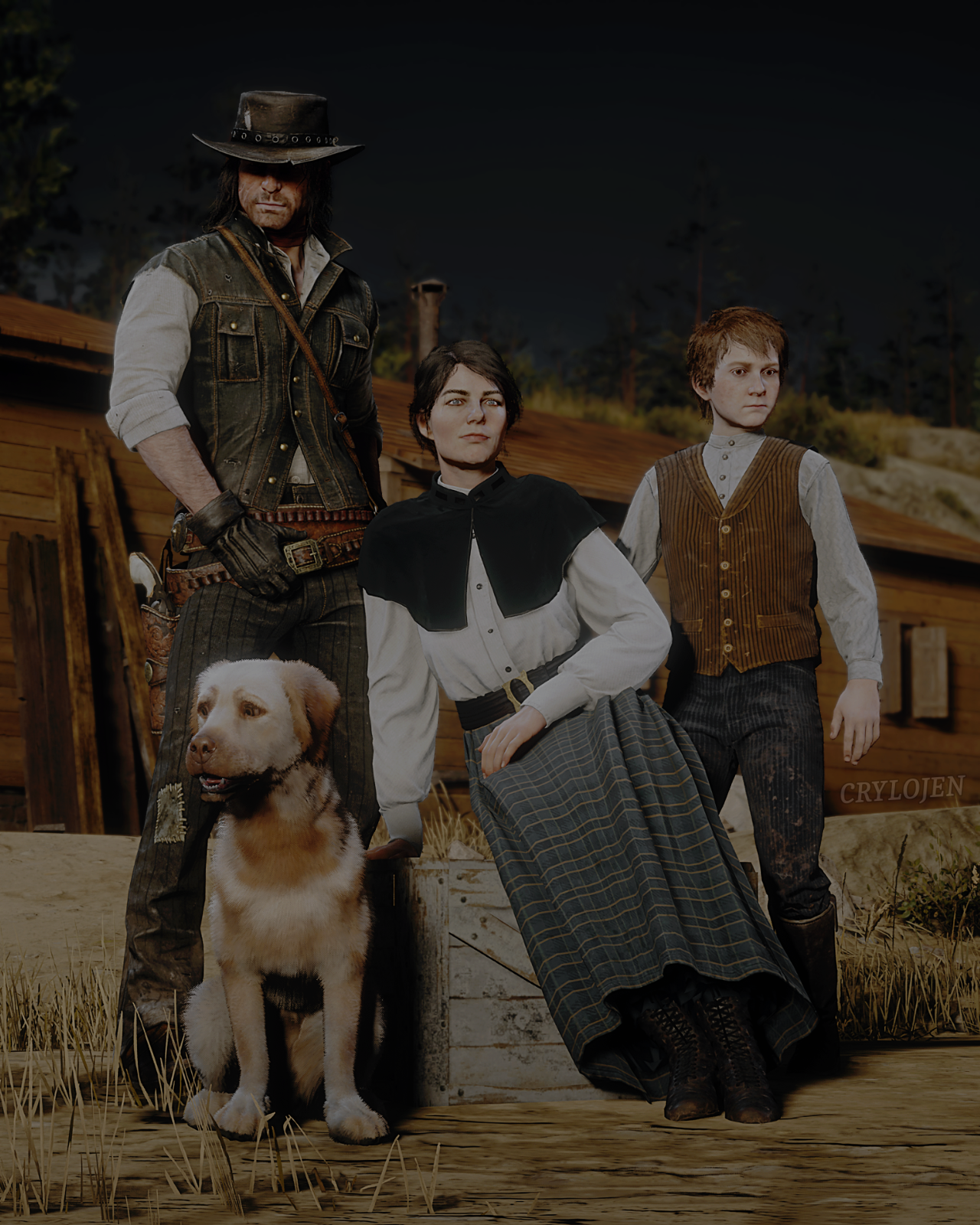
When people talk about Red Dead Redemption, they usually reach for familiar language: tragedy, redemption, the cost of violence, the end of the West. All of that is true—but incomplete. What makes John Marston endure is not that his story is tragic, but that it is anti-narrative. In its refusal of narrative closure, his story becomes one of the most accidentally Jewish works in modern American storytelling.
Not Jewish by identity, ritual, or creed—but Jewish by structure.
Western storytelling, shaped by Greco-Roman heroism and Christian theology, relies on certain moral mechanics: suffering redeems, death completes meaning, the arc resolves. A life is judged by how beautifully it ends. Judaism has long resisted this logic. It locates meaning not in endings, but in the middle; not in salvation, but in obligation; not in cosmic payoff, but in action taken without guarantees.
John Marston lives entirely inside that suspicion.
Unlike his mythic counterpart Arthur Morgan in Red Dead Redemption 2, John is not granted a grand moral awakening or a sanctifying death. Arthur’s arc is explicitly redemptive—confession, clarity, sacrifice. John’s is flatter and more uncomfortable. He does not seek forgiveness or transcendence. He seeks land, family, work, and quiet. He wants to build a house, raise a son, and stop killing people. That is not a heroic quest. It is an ethical one.
Accordingly, John’s most important moments are deliberately uncinematic. He does not explain himself in speeches or prove himself through increasingly virtuous violence. Instead, the game forces the player to inhabit responsibility: hammering nails, herding cattle, breaking horses, paying debts. These sequences are slow, awkward, and resistant to spectacle. They feel smaller than the story the player expects—and that is precisely the point. John’s moral life is no longer symbolic. It is repetitive, domestic, and fragile.
This is not a contrast between words and action, but between mythic action and sustaining action. John does not stop acting; he stops acting symbolically. He exits the economy of gestures and enters the economy of maintenance.
The central temptation John rejects—for most of the game—is narrative itself. Dutch van der Linde offers myth: destiny, freedom, history bending to will. Dutch believes that meaning excuses cruelty, that grand stories sanctify terrible acts. John does not defeat Dutch with a counter-myth. He simply leaves. Walking away from a false god without replacing it with another is one of the most deeply Jewish moves imaginable. Anti-idolatry does not require a better story. It requires refusal.
But that refusal does not hold.
At the end, John chooses wrong.
He does not have to go after Micah Bell. The immediate danger has passed. Dutch is gone. The ranch stands. The work continues. What remains is not threat but residue—the pressure for the story to finish. John convinces himself that one final act will close the account, metabolize the past, and let life proceed cleanly. It is an intelligible mistake. It is also fatal.
In Jewish terms, this is not tragic inevitability but dysregulation. John mistakes closure for responsibility. He treats an old wound as a task rather than as something that must be carried. By hunting Micah and killing him, John re-enters the economy of narrative violence—the very economy he had spent years refusing. He converts memory into action. He turns testimony back into gesture.
That choice makes him visible.
The state, which had been content to let a former outlaw dissolve into domestic obscurity, now sees him again. John resurfaces as a legible figure: armed, capable, mobile, unresolved. Killing Micah does not save John; it exposes him. It puts Edgar Ross back on his trail by reattaching a name to a body the system knows how to process.
What follows is not fate, irony, or moral reckoning. It is procedure. Once the state sees John again, the sequence is mechanical: coercion, extraction of usefulness, and disposal. His death is not punishment for who he was. It is the predictable outcome of making himself trackable. The system does not punish John for his character. It punishes him for re-presenting himself as something it knows how to manage.
Judaism refuses to explain such deaths. There is no theodicy here, no attempt to redeem suffering with meaning. John’s death redeems nothing. It simply happens. The ranch remains. The family remains. The wound remains open.
There is a reasonable counterfactual here, and Judaism allows us to say it plainly: had John refused that final gesture—had he remained inside the unglamorous work of maintenance—he might have lived out his life. Not redeemed. Not absolved. Alive.
From this angle, Red Dead Redemption is not merely sad. It is instructive. It is the story of a good-hearted, dysregulated man and an equally good-hearted, dysregulated wife doing the miserable best they can to remain civilized in a world that actively penalizes restraint. Their failure is not moral corruption but overreach—the belief that the past can be resolved rather than borne.
That belief is the one thing Judaism refuses to grant.
John Marston is not redeemed by dying well. He is dignified by living rightly in a world that offers no closure—and by showing us, briefly, what it costs to mistake closure for responsibility.