Writer, Filmmaker, Citizen
Justice, Justice You Shall Pursue
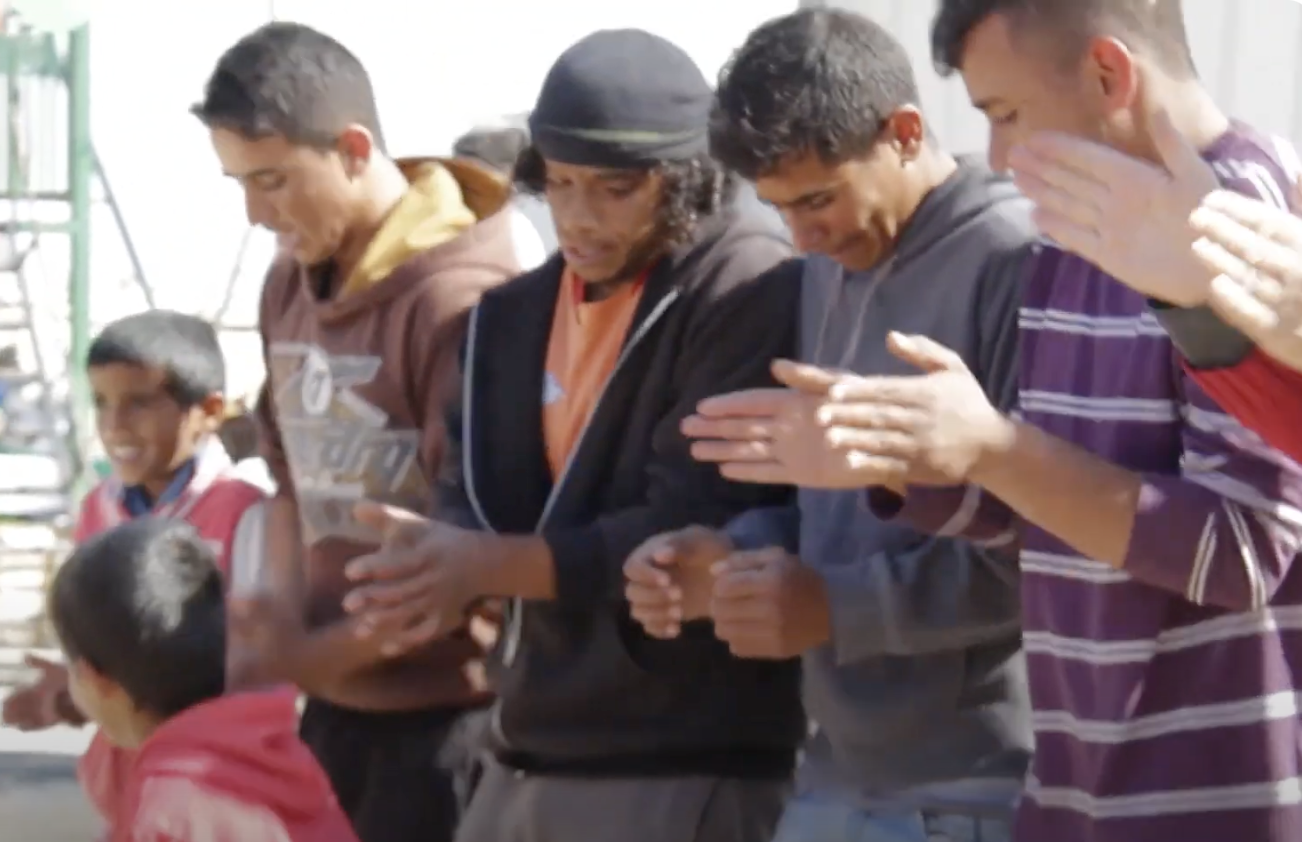
Awdah Hathaleen (wearing hat) dances with his neighbors, ca. 2017 (screenshot from "Territory Stories")
The recent killing of Awdah Hathaleen, a Bedouin activist who lived in the West Bank and was featured in the Oscar-winning documentary “No Other Land,” has taken a heavy toll on Israel. Regrettably, most of the country seems unmoved by the damage.
Hathaleen’s death was covered by some major media sources, including this one. The tragedy took place on July 28. It is now old news.
No surprise, there. The murder of even a prominent Palestinian living in Area C, disputed territory where Israel wields both administrative and military authority, can get lost among the reports that bombard us daily about the war.
A recent survey by the Israel Democracy Institute found that nearly 80 percent of Israelis are not so troubled, or not at all troubled, by reports of famine and suffering in Gaza. The horrors of October 7, coupled with the pictures of Israeli soldiers cut down in their youth and Hamas propaganda videos of gaunt hostages, has hardened many Israelis’ hearts. They don’t have the emotional bandwidth to rise up in fury over the injustice Umm al-Khair has suffered.
As one who counts himself among the roughly 7 percent of Israelis who are very troubled by the reports of famine and suffering in Gaza, I am repelled by the shooting of Awdah Hathaleen.
Before the Israel-Hamas War descended upon us, Israelis spent a year protesting Prime Minister Benjamin Netanyahu’s moves to curb the power of the Supreme Court. At demonstrations, tens of thousands, at times hundreds of thousands, shouted over and over: “Democracy! Democracy!”
A democracy does not gut the powers of its Supreme Court to hold its leaders accountable for breaking laws. A democracy also does not allow people to encroach on their neighbors’ lands, interfere with their farming, intimidate, and kill them.
Though Hathaleen’s murder happened in Umm al-Khair, and not Khan Unis, it is very much a war story. The Gaza conflict has spurred on the messianic fringe of Israeli society to take bolder and bolder measures in the name of a greater Israel.
The Umm al-Khair protestors were objecting to a settler’s bulldozer heading toward a fenced-off grove on their land. The shooter, seen brandishing a handgun in video footage filmed by Hathaleen himself, takes aim at the crowd of protestors and shoots, abruptly ending the video as the videographer/victim falls gasping to the ground. (You can find that video on YouTube.)
A judge in Jerusalem ruled that the man who allegedly killed Hathaleen had prevented the escalation of a conflict where Palestinians were hurling stones. Moreover, police could not find the bullet that pierced Hathaleen’s lung. Case closed, alleged murderer released.
Soon after Hathaleen’s death, Jewish settlers held their Friday night services on the site where he fell. I like to think that had there been no war raging, his case would have been bigger news, and the police investigation would have been more robust. But I know better.
The apparent indifference of the police and court system to protect the rights of Bedouins who bought their land in the South Hebron Hills decades before the Jews of Carmel settled on land next to them, disgusts me. According to Israeli administrative law, Umm al-Khair stands on land not sanctioned by the government. Without a government-approved master plan they cannot build anything permanent and are treated, more or less, like squatters.
Why Umm al-Khair has never been granted a master plan, while the Carmel settlement next door encroaches on its land, is a topic worthy of discussion. But if the rule of law is applied unfairly, if not outright ignored, is serious discussion possible?
Over the eight years since I visited both communities to film a documentary about life in the West Bank, the situation has steadily deteriorated.
The longer the Israel-Hamas War drags on, the more it reminds me of America and Vietnam. In my mind’s eye, I see images of American student demonstrators gunned down at Kent State University by National Guard troops. I see the massacre of South Vietnamese women and children by US soldiers in the village of My Lai. And I see American soldiers fighting a futile war sent home broken, or in body bags.
Israel may not be dropping napalm on Gaza’s civilians, but withholding food from them for months in order to bring the enemy to its knees is also morally repulsive. Such behavior has frayed the moral fabric of Israeli society so dramatically that the death of Awdah Hathaleen is easily forgotten.
The same goes for the divine exhortation in Deuteronomy: “Justice, justice, you shall pursue.”
Related Topics