Kajtek – A Child in Disguise, a Jewish Martyr, and the Name She Carried into War
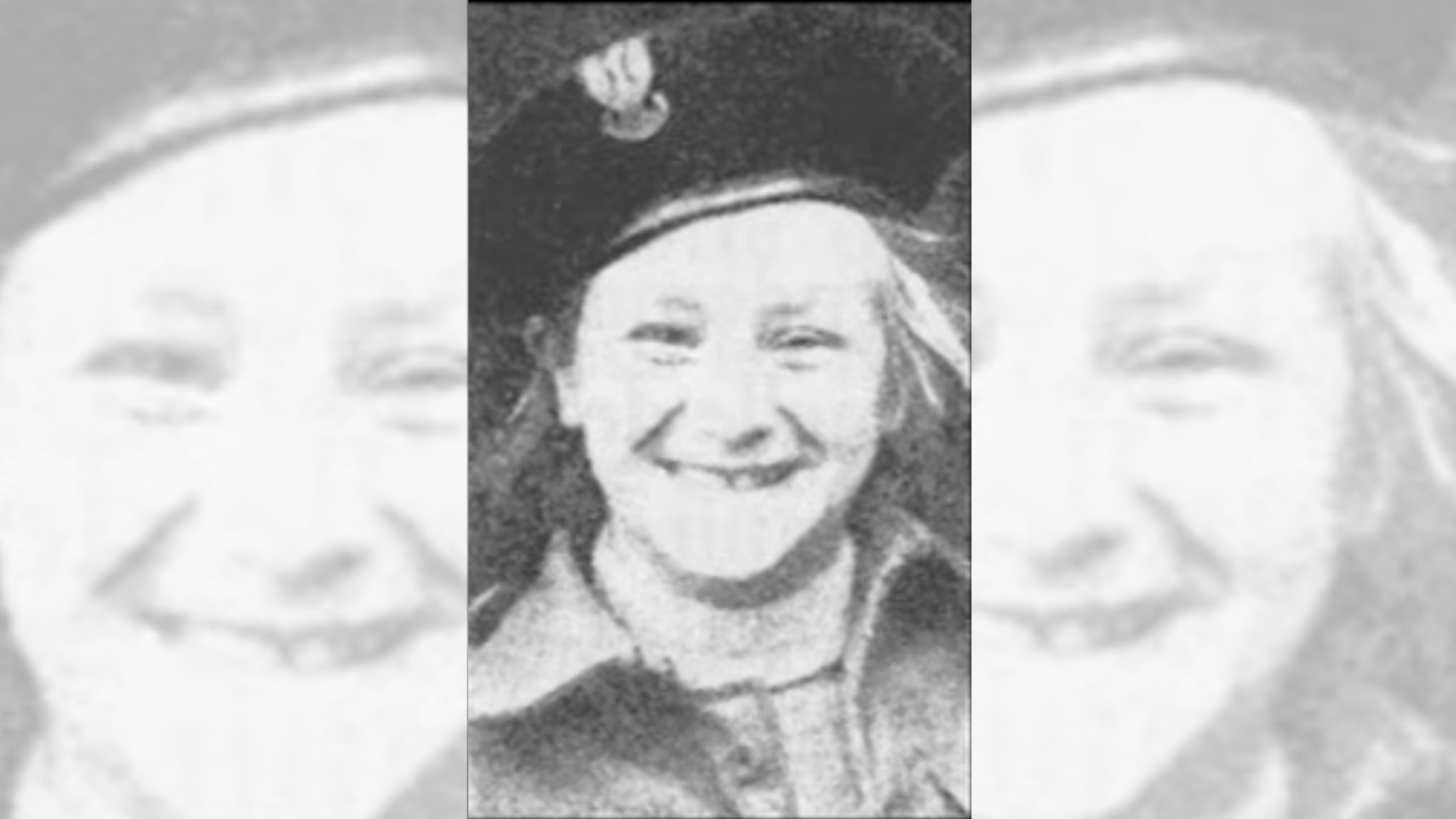
“Kajtek,” age 9 – Warsaw Uprising, 1944 Child courier of the Polish Home Army (Armia Krajowa).
Stefcia (Kajtek), age 9, during the Warsaw Uprising, 1944.
Before she was Kajtek, she was Stefcia.
Before she was Stefcia, she was Edna.
She was not yet 5 years old, small and blonde, standing at a birthday party in Warsaw when the first bombs fell. Before that moment, she had been a child who was read to every night by a family of ten who loved her.
One of those books was Kaytek the Wizard.
She was too young to read it herself. But she remembered the boy, a mischievous Warsaw child who discovers he can do magic and begins to lead a double life. Powerful and hidden, dressed as ordinary.
It was just a story.
In 1944, a 9-year-old Jewish girl hiding as a Catholic Polish child became a courier for the Armia Krajowa during the Warsaw Uprising.
They asked her for a nom de guerre.
She chose Kajtek.
She had no way of knowing what she had chosen.
She chose the name of a fictional boy.
She did not know she was also choosing the memory of a man who had just died with children like her.
The boy in the book had been created by Janusz Korczak, a pediatrician, writer, and one of the most revered advocates for children in Poland.
He ran a Jewish orphanage in Warsaw built on a radical idea that children were not future people, but present ones deserving of dignity, justice, and a voice. He wrote stories for them, including Kaytek the Wizard, to explore power, consequence, and responsibility.
Edna’s family read that book to her before the world ended.
In August 1942, the Germans ordered the deportation of the orphanage.
Korczak led his children in a column to the Umschlagplatz, the square where Jews were loaded onto trains bound for death. They wore their best clothes. Some carried small flags.
He had been offered his freedom.
He refused it.
“They will not go alone.”
They were sent to Treblinka extermination camp.
None returned.
The man who wrote the story died with his children.
The child who carried the story survived.
That same system of deportation took Edna’s family.
Her brother. Her sister. Her aunt and uncle. Her cousins. The people who had filled the long table at 18 Miła Street with noise and life.
They were sent to Treblinka.
She never knew.
She smuggled food through the ghetto walls.
Shortly before her mother starved to death in the ghetto, she sent her two youngest daughters to the Aryan side to be cared for by a gentile former employee.
Their older brother was already hiding elsewhere.
The woman took the money, then tried to betray them.
The girls kicked her and ran.
Two little girls alone in occupied Warsaw.
She learned quickly. Survival meant becoming someone else.
She learned how to pass. How to answer questions. How to disappear into the expectations of others.
She sang and danced for German officers to secure identity papers.
She became Stefcia Skolkowska.
Catholic. Polish. Not who she was.
When the resistance asked her for a name, she chose the boy from the story.
Kajtek.
A child leading a double life. Ordinary on the surface. Something else underneath.
She could not have known that the man who wrote that story had been murdered alongside children like her and alongside her own family.
She only knew the name belonged to something from before.
So she carried it forward.
A name from a story became a name for survival.
As Kajtek, she moved through the burning city.
She carried messages and weapons. She ran through sewers. She survived the Wola Massacre. She was wounded by a grenade.
On October 2, 1944, her tenth birthday, the uprising ended. The resistance surrendered.
She was awarded the Cross of Valor.
No one knew she was Jewish.
He wrote it for his orphans.
Then he walked with them into the dark.
He taught children how to think about power.
She learned what it meant to carry it.
A little girl who had once been read that story by a family who loved her carried it into war.
She gave its name to herself.
She lived inside it.
She lived it.
She carried a name into war that had already been carried into death.
Final Note
This Yom HaShoah, remember Edna.
A child who survived by becoming someone else.
A Jewish girl who fought in the resistance.
A name she chose without knowing who had already died with it.
Remember her.
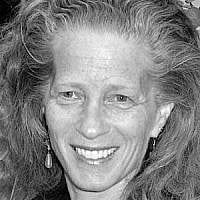
Janet Bond Brill, PhD, is the author of Little Edna’s War, based on her mother-in-law’s Holocaust testimony, published on January 27, 2026, on International Holocaust Remembrance Day.
–