Kathmandu Burned as Rome Once Did, While Nero Played His Fiddle
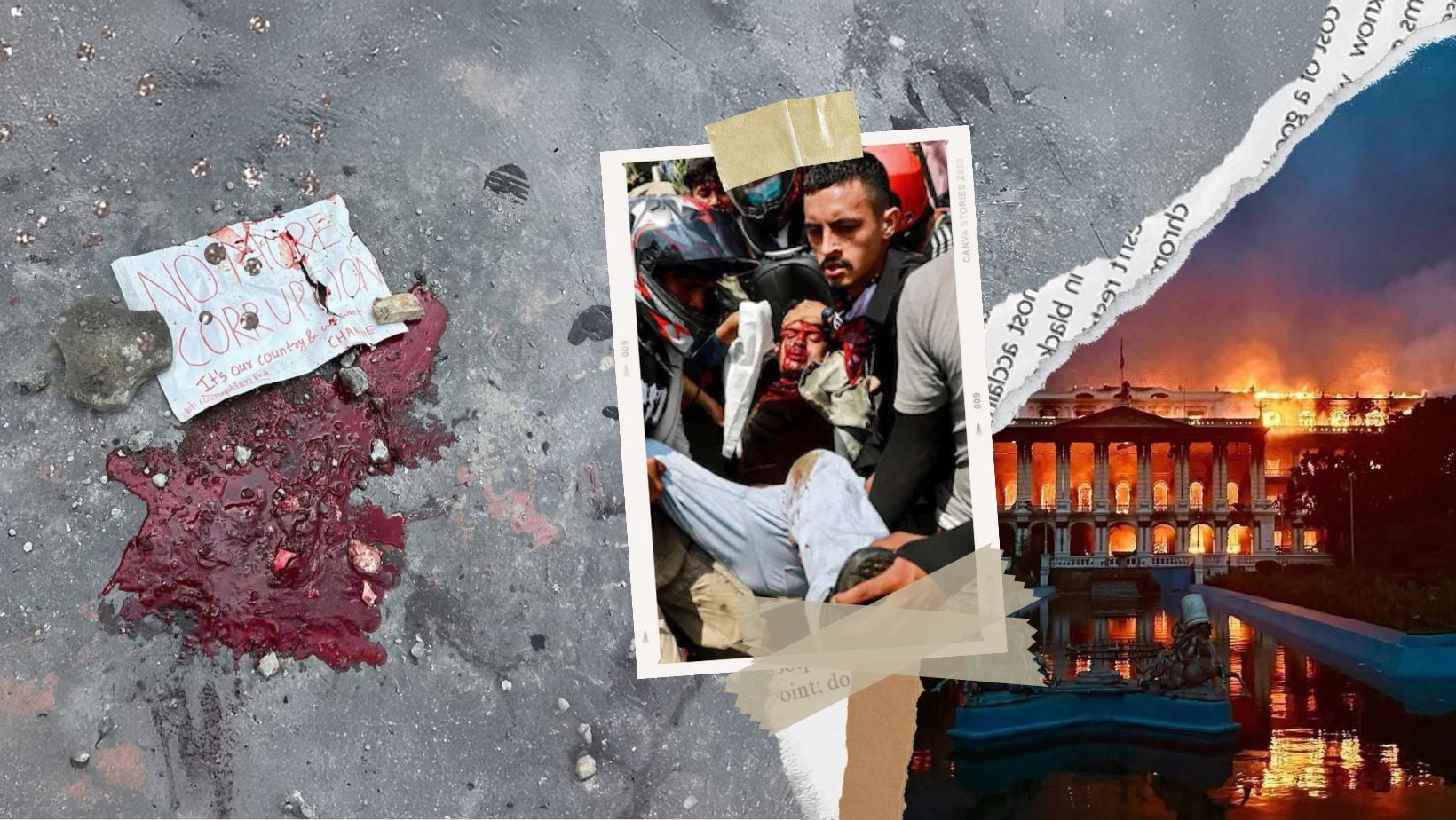
Nepal has arrived at a crossroads of emptiness, fear, and the unimaginable.
From abroad, as I search for news of my homeland Nepal, my eyes meet only images of burned buildings, looted property, and the ashes of once-solid homes—ruins everywhere.
I see it: Kathmandu city ablaze.
The very city where my home and family still live.
My country Nepal itself burns in the protest, just as Rome once burned in ancient times. Once I read a story somewhere, Rome lay in flames, its sky a furious red, while Emperor Nero sat apart, lost in music, plucking his fiddle in eerie calm. As the city’s cries rose with the smoke, he played on—indifferent to the ruin that devoured his empire.
In Nepal, this storm against corruption has consumed and toppled countless things—treasures beyond price, losses too vast to reckon. The prime minister, the home minister, and many other ministers and members of parliament have already resigned. Government has fallen .
The army holds endless talks on forming a new interim government, yet no way out has emerged. From the first day, the streets of that city were stained with the blood of children. Then the city itself caught fire. What will happen next? Questions churn in every heart.
A Protest that Began in Hope
Not long ago, when the Gen Z generation filled the streets of Kathmandu before the parliament building, crying out against corruption, I felt deep happiness and pride.
This resistance was necessary—because their demands and the questions they raised were just. Misrule and corruption had spread everywhere. Young people believed that the government had blocked social media only to hide its own misdeeds.
Nepali politics was riddled with nepotism and favoritism. Ordinary people lived under crushing poverty and despair. Just last year, a half million youths left Nepal for foreign employment because they found no jobs in their country .
The government, drunk on power, rewarded only those who chanted its praises, demanded bribery for every appointment and every transfer, and humiliated those who spoke with reason or independence.
While the families and children of political leaders traveled the world and lived in royal comfort, ordinary people struggled merely to put food on the table. Naturally, public anger and sharp questions grew day by day.
But the movement turned so dark and heart-rending that it claimed the lives of schoolchildren who had stepped onto the streets for freedom, books still in their schoolbags. Nepal witnessed scenes of the wounded crying in hospitals and of bodies lying lifeless on the roads.
Again and again the Nepali people had signaled that they no longer wanted those corrupt leaders in power. Those leaders reformed neither democracy within their parties nor the nation itself. All that they and their circles exploited in the name of democracy must be accounted for.
In the days to come this reckoning must begin. Those leaders were never the true face of democracy, yet they twisted democracy to suit their greed. Because of them, honest and farsighted leaders and workers—those who truly wished to reform the nation—were always pushed aside.
The heart of the Gen Z movement was bound to these very questions.
But the corrupt government turned that movement into a massacre, pushing the country into excruciating pain and uncertainty. The death toll, the human suffering, and the material destruction are still beyond calculation.
It is now plain that, after the massacre, opportunistic predators entered the movement’s troubled waters. A look at Gen Z’s official pages and statements makes it clear the movement has been hijacked. Parliament burned. Singha Durbar burned. The Supreme Court and Commission for the Investigation of Abuse of Authority burned. Dozens of government offices were destroyed. Dozens of business centers were reduced to dust. The financial loss runs into billions.
One after another, hardened criminals escaped from prisons and swept into towns and neighborhoods. Looting ruled the streets. Reports even surfaced of blood-thirsty marauders attempting to assault girls in hostels.
No one remained in control. Security forces stood as mute spectators. Even as Singha Durbar burned—where the nation’s history was stored—security forces watched. The army watched as the office of the supreme commander, the president, went up in flames. The Supreme Court, where thousands of case files were kept, is now ash and rubble. Priceless historical, cultural, and legal records are lost.
A Way Forward
The latest events and the questions rising from their smoke will surface in time. But today, the Nepali people long for one thing above all: that the hard-won constitution and the personal freedoms gained through long struggle and war not be destroyed. They want whatever happens next to follow the rule of law.
The inclusive, people-centered constitution that Nepal wrested from years of conflict is cherished. In this fragile moment, no one must try to rob the people of their freedoms. In such a fluid and sensitive time, forces inside and outside the country could easily interfere—those in power must beware. We sought to bid farewell to the corrupt, not to democracy itself.
The only alternative to democracy is democracy.
In the new dawn of the Gen Z movement, a broad-based government must be formed quickly, with an agreed election date. That government must create a powerful commission to investigate this massacre and bring the guilty to justice. Equally urgent is the creation of a strong mechanism to investigate corruption itself.
Every day of delay deepens the wound. The country needs order, but not at the cost of freedom. We rose to remove corruption, not to erase the rights we fought decades to secure.
Nepal must return to the rhythm of law and order without delay. Restart normal life so people can work, children can learn, and entrepreneurs can rebuild what the fire destroyed. Citizens should be free to resume their work. Industry and trade must revive. Conditions must allow reconstruction of what has been destroyed.
So much has already burned—let democracy not burn with it, let democracy not fall.
Once more I say it: the only alternative to democracy is democracy itself.