
Research Fellow at the Hebrew University of Jerusalem
Kurdish-Jewish Congress in Berlin: Bridging Histories and Resisting Challenges
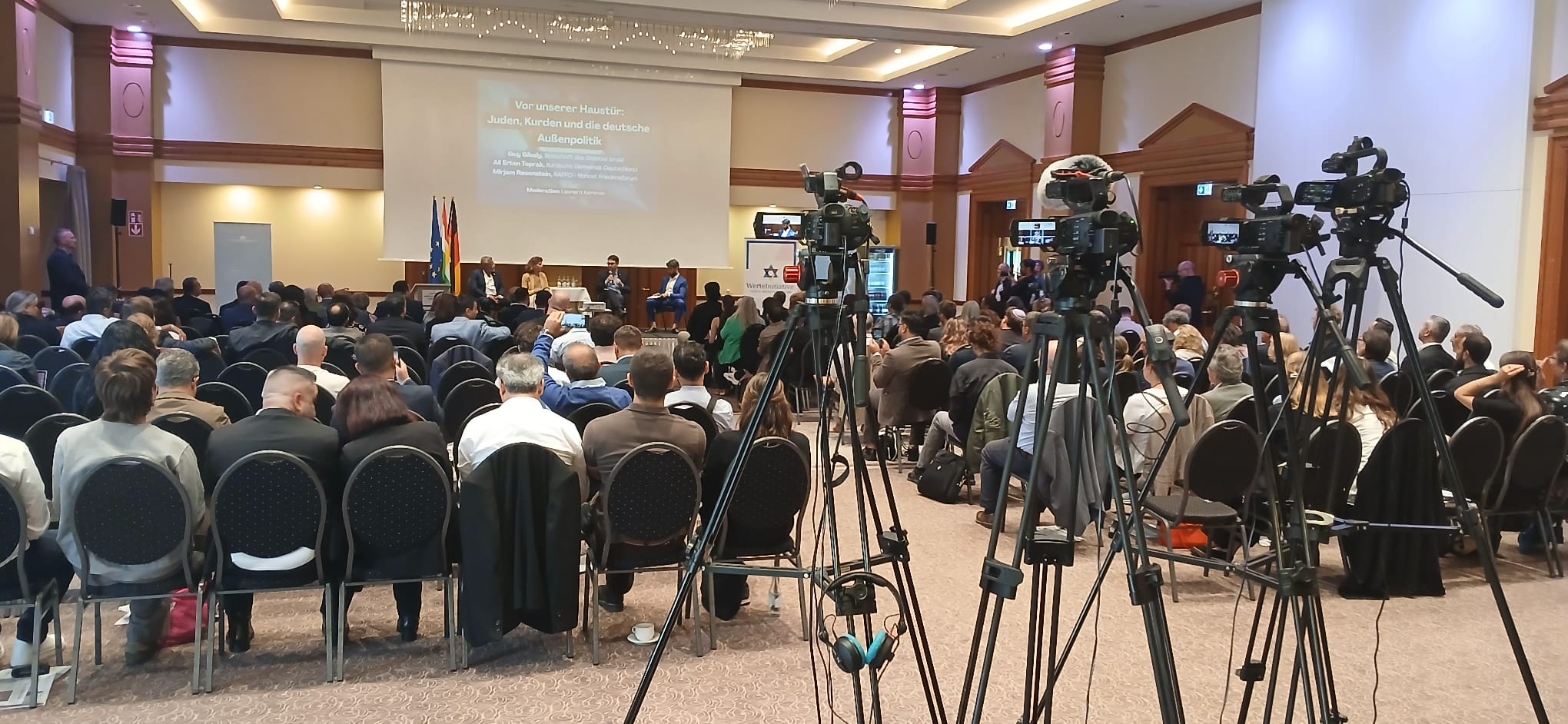
The author captured this image of Kurdish and Jewish participants at the inaugural Kurdish-Jewish Congress, held on September 7, 2025, in Berlin.
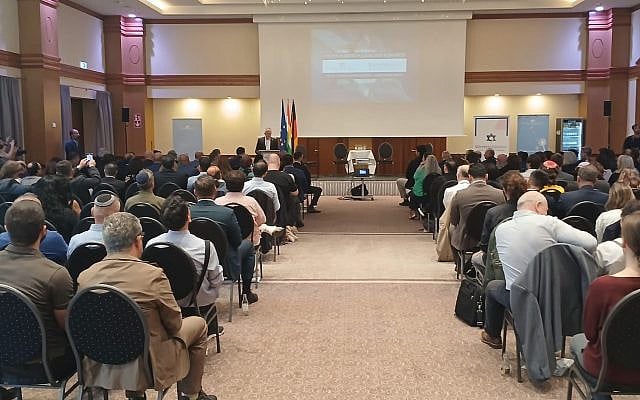
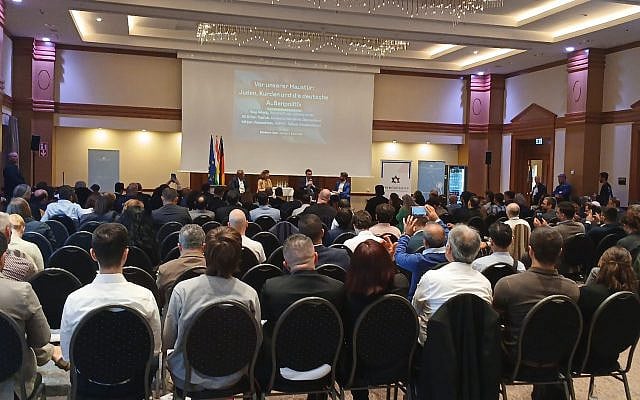
Kurdish and Jewish diaspora civil society organizations came publicly together for the first—but certainly not the last—time in a landmark congress in Berlin on September 7, 2025. This congress—which had a registration list of over 500 individuals but could not accommodate them due to space constraints—brought together more than 150 participants from across Europe. This meeting symbolized a moment of solidarity and shared purpose between two communities with common experiences of persecution and exile, deep historical roots, and pressing contemporary struggles, including an alarming rise in antisemitism and anti-Kurdish sentiments not only in the Middle East but also in Europe. The congress served as a safe platform for members of the Kurdish and Jewish diasporas to engage in critical reflection and to cultivate mutual understanding by openly discussing their respective struggles.
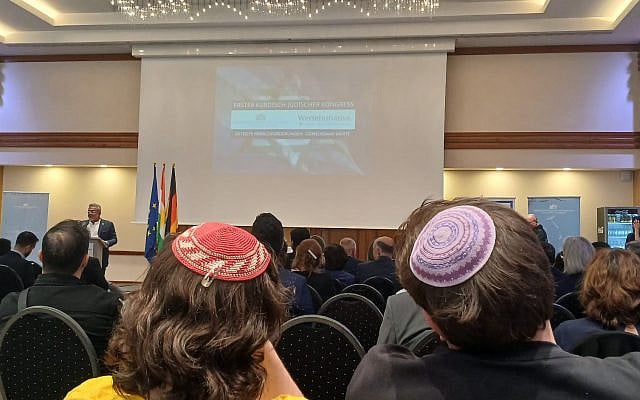
Discussions during the congress also centered on strategies for addressing shared threats and hostilities, for fostering a pluralistic and diverse society in Europe, and for nurturing peace and security in the Middle East. To this end, they explored pathways towards the construction of alliances to confront threats to these goals. Emphasis on collective action underscored the recognition of the deeply interconnected challenges facing Kurds and Jews, which necessitates coordinated, cross-community responses. The congress highlighted the critical role that diaspora civil society organizations play in advocating for their communities and confronting rising hostilities and divisive narratives — often imported by immigrant and refugee communities from the Middle East and from Turkey in particular. Therefore, the congress stood as a testament to the enormous potential of diaspora cooperation at the international level to bridge divides, amplify marginalized voices, and shape public discourse.
Turkish State’s Role in Divisive Antisemitic and Anti-Kurdish Hostilities
Under the leadership of President Recep Tayyip Erdoğan and his ultranationalist ally Devlet Bahçeli, the Turkish regime has aggressively expanded its imperial ambitions across the Middle East in a bid to establish a neo-Ottoman order based on Sunni-Turkish domination of political Islam. These ambitions involve the systematic suppression of Kurdish identity and political aspirations, alongside a multi-pronged campaign to delegitimize Israel’s efforts to ensure its security and survival. Turkish media outlets, such as Yeni Şafak, Takvim, Aydınlık, and Yeni Yaşam—ranging from Islamist to left-wing yet united in their alignment with the Turkish regime—actively promote narratives that reinforce Ankara’s imperialist policy. As part of this agenda, the regime in Ankara seeks to prevent the emergence of independent Kurdish political power, suppress Kurdish identity, and expand Turkish influence through various Sunni Islamist proxies. The Turkish regime also advances genocidal policies targeting the Kurds and other marginalized communities, similar to those previously enacted with Turkey’s backing against the Alewite and Druze populations in Syria.
These outlets strategically connect the two indigenous communities, Jews and Kurds, to rationalize the ongoing hostile Turkish ambitions. Following the Kurdish-Jewish Congress in Berlin, for example, various Turkish media published numerous articles that not only attacked the revival of 2,800 years of Kurdish-Jewish relations but also propagated conspiracy theories historically used to vilify both communities, thereby justifying violence against them. For instance, there is a narrative that Israel seeks to establish an independent Kurdistan as a “second Israel” to counteract the expansionism of Turkey and Iran. Such unfounded claims intentionally misrepresent the historical bonds between the Kurdish and Jewish peoples, legitimize the colonial expansion of Ankara and Tehran, and criminalize the Kurdish quest for self-determination. Jerusalem has never sought to establish an independent Kurdistan but to contain the aggressive ambitions of Turkey’s Sunni Islamist mercenaries and Iran’s Shia Islamist proxies—forces that have directly or indirectly contributed to the atrocities committed by Hamas on October 7, 2023. This being said, it is true that many Israeli citizens support the establishment of an independent Kurdistan due to their shared sentiments and historical experience of statelessness. They believe that Kurdish statehood could alleviate Kurdish suffering. Various academics and ordinary Israelis on the streets of Jerusalem shared with me their curiosity about the Kurdish vision and hope for Kurdish aspirations and asked when the Kurds will establish their state. Therefore, Israel is unlikely to withhold its support for the establishment of an independent Kurdistan.
Urgent Need for Unity and Solidarity among Kurdish and Jewish Communities
The Kurdish-Jewish Congress in Berlin served as a timely and vital response to conspiracy theories and antisemitic and anti-Kurdish rhetoric, as well as the Turkish state’s coordinated attempts to sow division between the Kurdish and Jewish communities and their political decision-makers. The congress was not merely a symbolic event; it represented a strategic effort to forge a lasting alliance between two historically oppressed and indigenous communities. This collaboration not only strengthens ties between Kurdish and Jewish communities but also establishes itself as a political necessity. In this way, the Kurdish and Jewish civil society organizations Europe-wide can more effectively address the complex issues related to today’s political climates affecting their communities in both Europe and the Middle East. They can counter antisemitism and anti-Kurdish racism and influence policy discussions in Europe and beyond. Therefore, the Kurdish-Jewish congress in Berlin should be considered the beginning of a longer process that fosters solidarity and collaboration between the Kurdish and Jewish communities, providing a hopeful model for how historically marginalized communities can unite for a common cause, even amidst geopolitical instability. Their shared experiences, values, and goals provide a solid foundation for this collaboration.
Moving forward, the Kurdish and Jewish diasporas are well-positioned to advance their collaboration and dialogue through collective advocacy efforts. This collaboration might extend beyond Germany and Europe to actively engage diasporas and allies in the Middle East, North America, and beyond. In doing so, it lays the foundation for a more inclusive and equitable future where both Kurdish and Jewish peoples—who have long been denied their rights—can attain peace and freely assert their identities with dignity and mutual respect.
Related Topics