
Kurds in Iran: Autonomy in 1979. What in 2026?
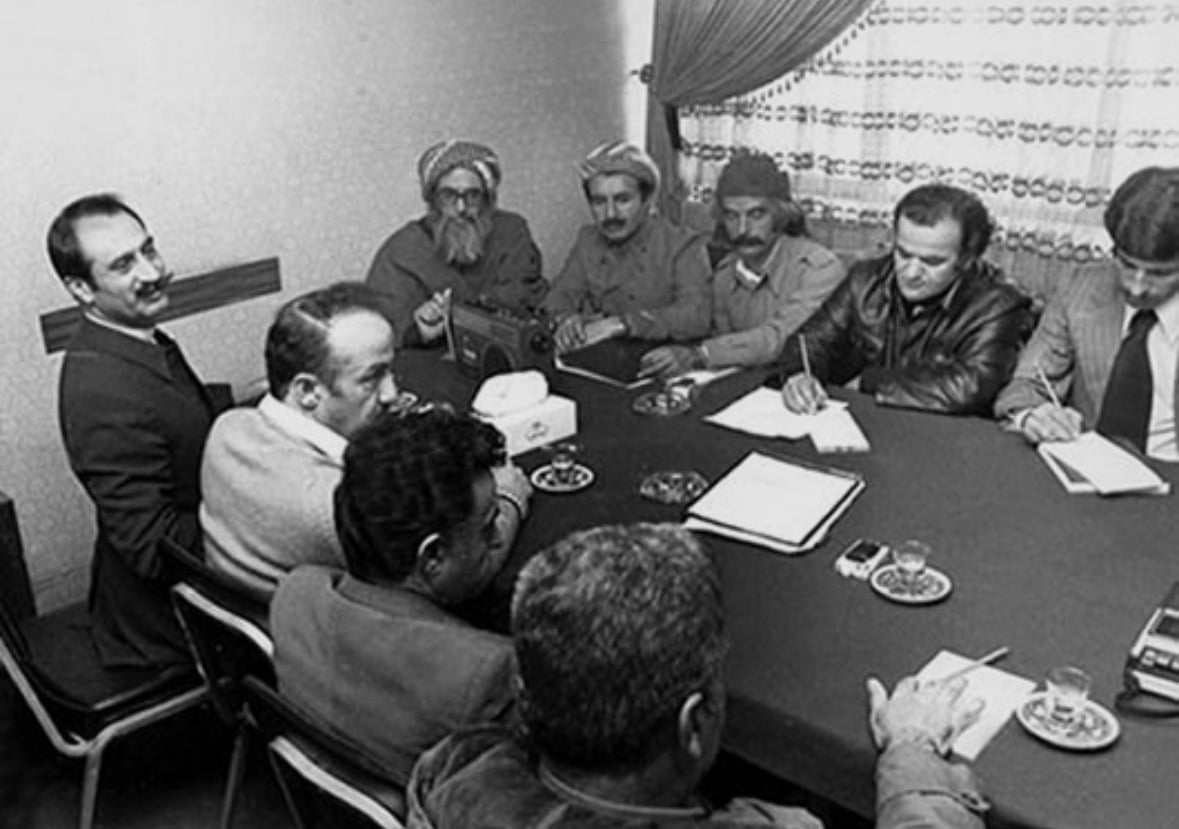
Forty-seven years after Kurdish representatives presented a 26-article plan for self-government, a new coalition has united around self-determination. Yet the constitutional meaning of that demand remains uncertain.
The confrontation between Iran, Israel and the United States has brought Kurdish political movements back into international strategic discussions. Much of the attention has focused on their potential military role, the future of the Islamic Republic and the possibility of Kurdish independence. Yet a more fundamental political question remains insufficiently examined: What constitutional status do Kurds in Iran actually seek?
A comparison between two moments in Kurdish political history reveals a striking paradox. In 1979, amid revolutionary upheaval and profound ideological divisions, Kurdish representatives produced a detailed legal proposal for autonomy. In 2026, six Kurdish parties have established a political coalition committed to self-determination, but without publicly presenting a comparably defined common constitutional settlement.
The distinction concerns something more consequential than political terminology: the difference between asserting a national right and identifying the institutions through which it would be exercised.
In December 1979, the Heyetî Nwênerayetiy Gelî Kurd (Kurdish People’s Representative Delegation) brought together the Democratic Party of Iranian Kurdistan, Komala, the Kurdish branch of the People’s Fedai movement and the influential religious leader Sheikh Ezzedin Hosseini. Their political philosophies differed considerably. Nevertheless, they agreed on a proposed constitutional arrangement for Kurdistan within Iran.
Their 26-article proposal, published in Kayhan on December 31, 1979, went beyond a general demand for national recognition. Article 3 envisaged Kurdish autonomy within Iran’s territorial integrity. Article 4 reserved foreign affairs, external defence, monetary policy and certain other responsibilities to the central government. Article 5 then established a particularly significant principle: all governmental powers not expressly reserved to Tehran would fall within the competence of Kurdistan’s autonomous institutions.
The proposal envisaged an elected Kurdish National Assembly, an accountable executive, legislative and budgetary powers, Kurdish-language education and administration, independent courts and locally controlled internal security. Articles 25 and 26 proposed a national council representing Iran’s different peoples, with authority over legislation affecting their collective rights.
The delegation therefore formulated a recognisable constitutional demand: territorial autonomy within Iran, supported by a defined distribution of governmental authority. It did not seek an independent Kurdish state.
The document was certainly imperfect. It lacked adequate safeguards against unilateral interference by the central government and clear mechanisms for resolving constitutional disputes. Its territorial provisions raised difficult questions concerning mixed-population areas, while aspects of its treatment of personal-status law would be controversial under contemporary equality standards. Nor did the delegation possess a directly elected constituent mandate.
These deficiencies should not be overlooked. But the proposal’s historical significance lies in the fact that representatives from different political traditions agreed on a legal framework sufficiently specific to be examined, contested and negotiated.
The Kurdish movement subsequently developed other constitutional approaches. In August 2012, the Democratic Party of Iranian Kurdistan and the Komala Party of Iranian Kurdistan signed a cooperation agreement explicitly endorsing national-geographic federalism within a democratic and secular Iran. This represented an important development from the earlier autonomy formula towards a constitutionally protected distribution of authority between central and regional governments.
Yet this remained a bilateral commitment rather than a common constitutional programme for the wider Kurdish movement.
The latest political initiative emerged on February 22, 2026, when five Kurdish parties announced the Hawpeymanî Hêze Siyasîyekanî Kurdistanî Êran (Coalition of Political Forces of Iranian Kurdistan). A sixth party joined in March.
Its founding declaration identifies three principal objectives: ending the Islamic Republic, achieving Kurdish self-determination and establishing a national democratic entity reflecting the political will of the Kurdish people. It also commits to democratic elections, gender equality and protections for national and religious communities.
This political convergence is significant. The coalition has brought together organisations with different ideological histories and established a framework for coordinating their activities. Representatives of some member parties have also publicly advocated federalism within Iran.It would therefore be inaccurate to suggest that Kurdish parties lack constitutional ideas or that the coalition has no political programme. The more precise problem is that its common declaration does not establish whether federalism, territorial autonomy or another arrangement constitutes the coalition’s agreed constitutional objective.
The difference has become increasingly visible within Kurdish political debates themselves.On October 30 and 31, a public disagreement emerged between two coalition members, the Komala Party of Iranian Kurdistan and the Kurdistan Free Life Party (PJAK), over the concept of “democratic integration.” PJAK defended the concept as a reciprocal process requiring structural transformation of the state rather than Kurdish accommodation to the existing political order. Komala questioned whether this approach adequately recognised Kurdish self-determination or provided concrete guarantees for national rights, territorial authority and political representation.
The disagreement is revealing because it concerns more than political vocabulary. It exposes different understandings of how Kurdish self-government should relate to the future Iranian state. Their democratic objectives may overlap, but their institutional implications are not necessarily identical.
Admittedly, an alliance formed to coordinate opposition to an authoritarian government is not obliged to produce a complete draft constitution. The 1979 delegation was established specifically for negotiations with the revolutionary authorities, while the 2026 coalition has broader political and transitional objectives. The two initiatives cannot be judged as though they performed identical functions.
Nevertheless, when a coalition identifies self-determination and the creation of a national democratic entity as common objectives, the constitutional meaning of those commitments becomes a legitimate subject of scrutiny.
Under Common Article 1 of the two principal United Nations human-rights covenants, peoples possess the right to determine their political status. But international law does not automatically translate that principle into a particular federal constitution, autonomous region or independent state. These arrangements have different legal consequences and require different institutional guarantees.
If the coalition proposes federalism, what constitutionally protected powers would Kurdistan possess? Who would control legislation, taxation, education, internal policing and natural resources? Which institution would resolve disputes between Kurdistan and the federal government? Could regional powers be withdrawn unilaterally by Tehran?
If its preferred model is autonomy, what would distinguish that arrangement from ordinary administrative decentralisation? And how would the coalition reconcile different interpretations of sovereignty, territorial authority and democratic integration within its membership?
These questions are not merely technical. They determine whether Kurdish self-government would rest on enforceable constitutional guarantees or remain dependent on the political discretion of a future central government.
There is also a question of democratic legitimacy. Neither the 1979 delegation nor today’s coalition was elected as a constituent assembly. Political parties can formulate demands and negotiate agreements, but the permanent constitutional status of Kurdistan would require an inclusive democratic process involving its inhabitants, including women, political minorities and non-Kurdish communities.
For Israeli observers, the distinction between Kurdish military potential and Kurdish constitutional objectives deserves particular attention. Strategic cooperation against Tehran and the long-term political status of Kurdistan are different questions. External support cannot substitute for a clearly articulated political settlement, just as opposition to Iran’s existing government does not establish what constitutional order should replace it.
The same challenge confronts Iranian opposition movements that emphasise national unity. Preserving Iran’s territorial integrity is a political position, but it does not explain how Kurdish national rights would be constitutionally recognised and protected. Any future democratic settlement would have to address both the distribution of state authority and the rights of communities living under it.
The comparison between 1979 and 2026 therefore suggests a more immediate task than drafting an entirely new constitution. What remains missing is a publicly articulated constitutional minimum of Kurdish self-determination: an agreement defining the political status being sought, the essential powers and legal guarantees that would give it effect, and the democratic process through which such a settlement could acquire legitimacy.
Such an agreement would not require Kurdish parties to abandon their distinct ideologies or resolve every feature of a future Iranian state. It would clarify the institutional commitments that their common demand entails. Forty-seven years ago, Kurdish representatives produced 26 articles describing the autonomy they sought. Their proposal was flawed, but its political demand had a recognisable legal form.
The coalition of 2026 has achieved political coordination under markedly different circumstances. Whether it can also establish a common constitutional position remains an open question.
The Kurdish question in Iran has never suffered from a shortage of political demands. Its unresolved challenge is transforming those demands into an agreed constitutional framework capable of democratic authorisation and lasting legal protection.
The question is no longer simply whether Kurds in Iran demand self-determination, but what constitutional order their political representatives propose to give it effect.