I believe in independent, clear, and courageous journalism – especially where injustice is being silenced
Lailashi: Georgia’s Mountain Oasis of Tolerance
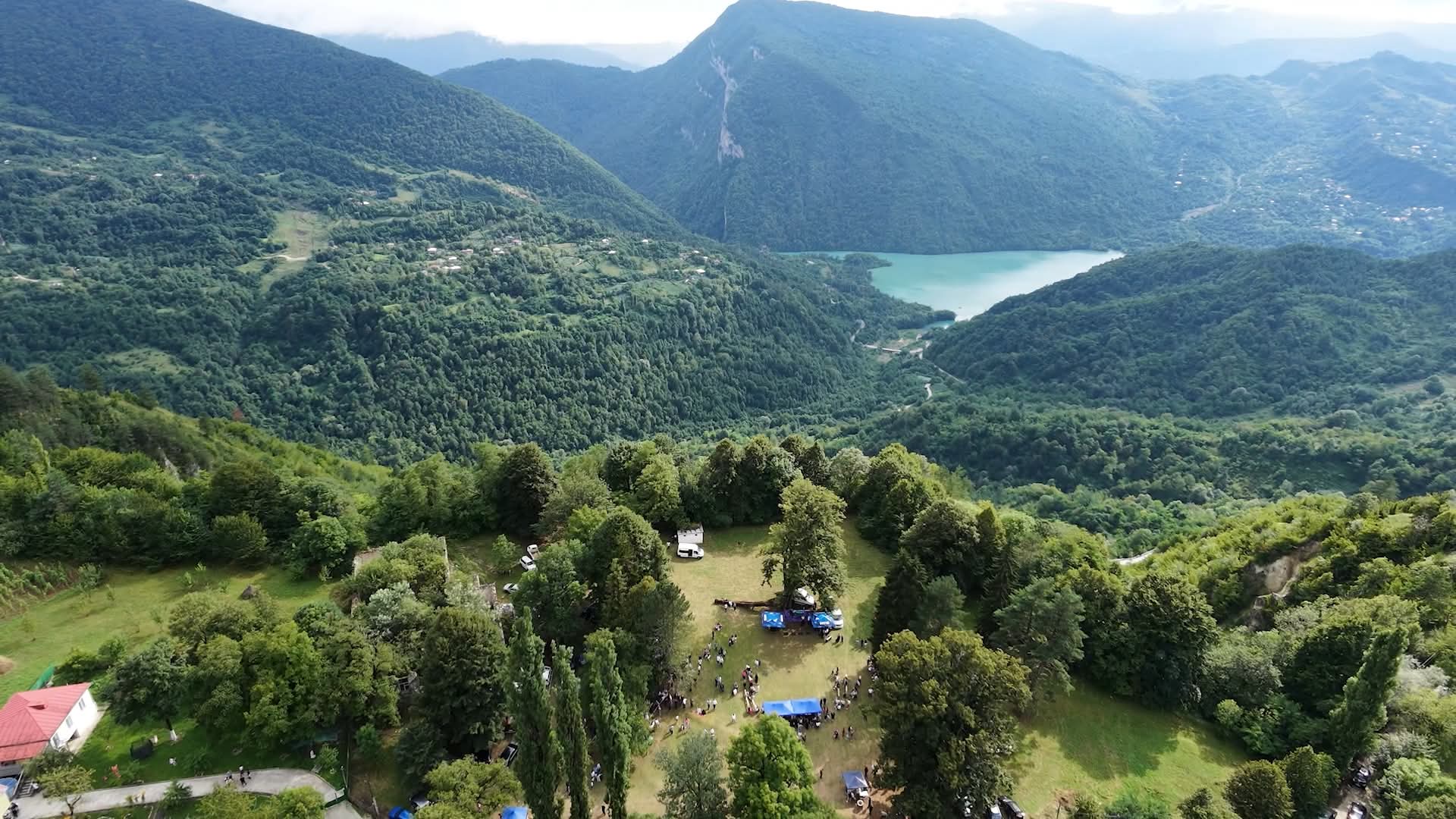
A drone view of the mountain village of Lailashi in Georgia’s Lechkhumi region, overlooking a community gathering in a forested clearing with the turquoise Lajanuri Reservoir nestled in the valley below. (Photo: Lasha Mamulashvili)
High in the mountains of Lechkhumi in northwestern Georgia, 850 meters above sea level, sits Lailashi – a quiet village with a history that feels remarkably urgent today. A new short documentary, “Lailashi, an Oasis of Tolerance and Humanity”, revisits this remote corner of the Caucasus where Georgian, Armenian, and Jewish houses of worship stood side by side for centuries, and where neighbors shared both sorrow and joy regardless of faith.
Directed and produced by Mikheil Khachidze and Imeda Darsalia, with journalism by Giorgi Manjavidze, cinematography by Lasha Mamulashvili, and editing by Giorgi Janezashvili, the 11-minute film traces how difference in Lailashi never served as a wall between people – instead, it brought them closer together.
A Shared Mountain Home
In the first half of the 19th century, Lailashi was a bustling commercial hub of the Lechkhumi region. Its central trading quarter, still known today as the “Bazaar,” was home to Georgians, Jews, Armenians, and Greeks living in close-knit proximity. By the early 20th century, the village counted roughly 120 Georgian and 100 Jewish households, alongside Armenian and Greek families.
That coexistence was tested – and proven – in daily life. Local memory still preserves the story of a 1913 fire that broke out at the Jewish market on Shabbat. Because observant Jewish residents could not work on the Sabbath to rescue their goods, it was their Georgian neighbors who rushed into the flames to save their property.
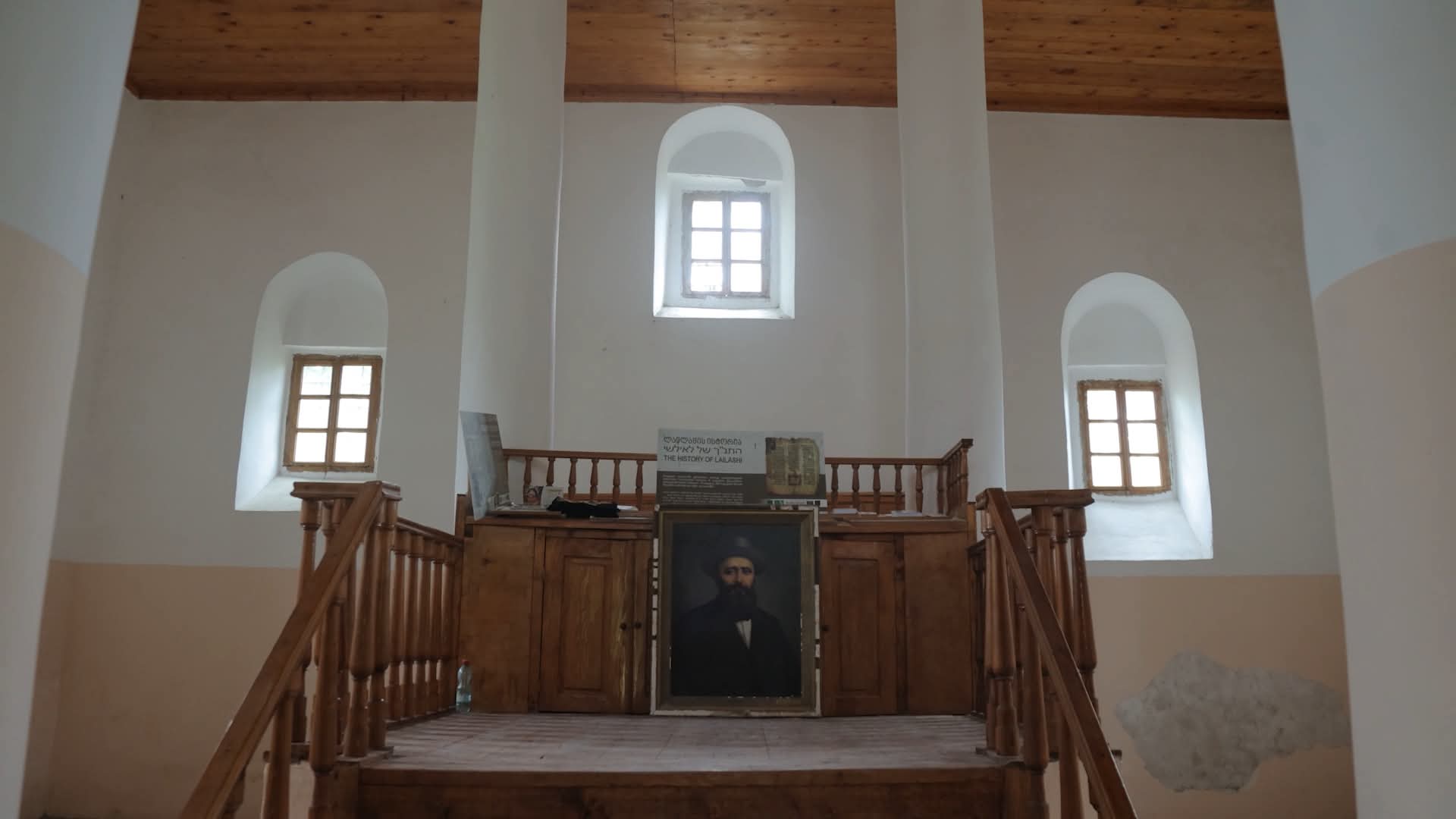
Today, the physical imprints of that shared past remain visible across the village. Near the old Bazaar stands the Lailashi Synagogue, alongside the 19th-century Georgian Church of St. George and the surviving ruins of an Armenian church. Even the stone pool known as “Okronishi Water,” built by the village’s Jewish community, remains in use.
The Crown of Georgian Jewry
Lailashi’s name is also etched into Jewish textual history through the Lailashi Codex (often called the Lailashi Bible), one of the oldest and most significant surviving medieval Masoretic manuscripts of the Pentateuch. Written on parchment in the 10th or 11th century and adorned with intricate micrographic geometric designs, the manuscript was safeguarded by the Jewish community of Lailashi for generations.
Confiscated during the Soviet era, the main body of the codex is now preserved at the Georgian National Centre of Manuscripts in Tbilisi, while several leaves are housed at the National Library of Israel in Jerusalem – a quiet physical bridge between Georgia and Israel.
Memory That Outlasts Borders
By the late 20th century, emigration to Israel and elsewhere meant that no Jewish residents remained permanently in Lailashi. Yet the bond has never faded. Georgian Jews from Jerusalem still return to visit the mountain village, walk through the synagogue, and reconnect with local families – an enduring relationship recently honored through the revival of the annual Lailashoba celebration.
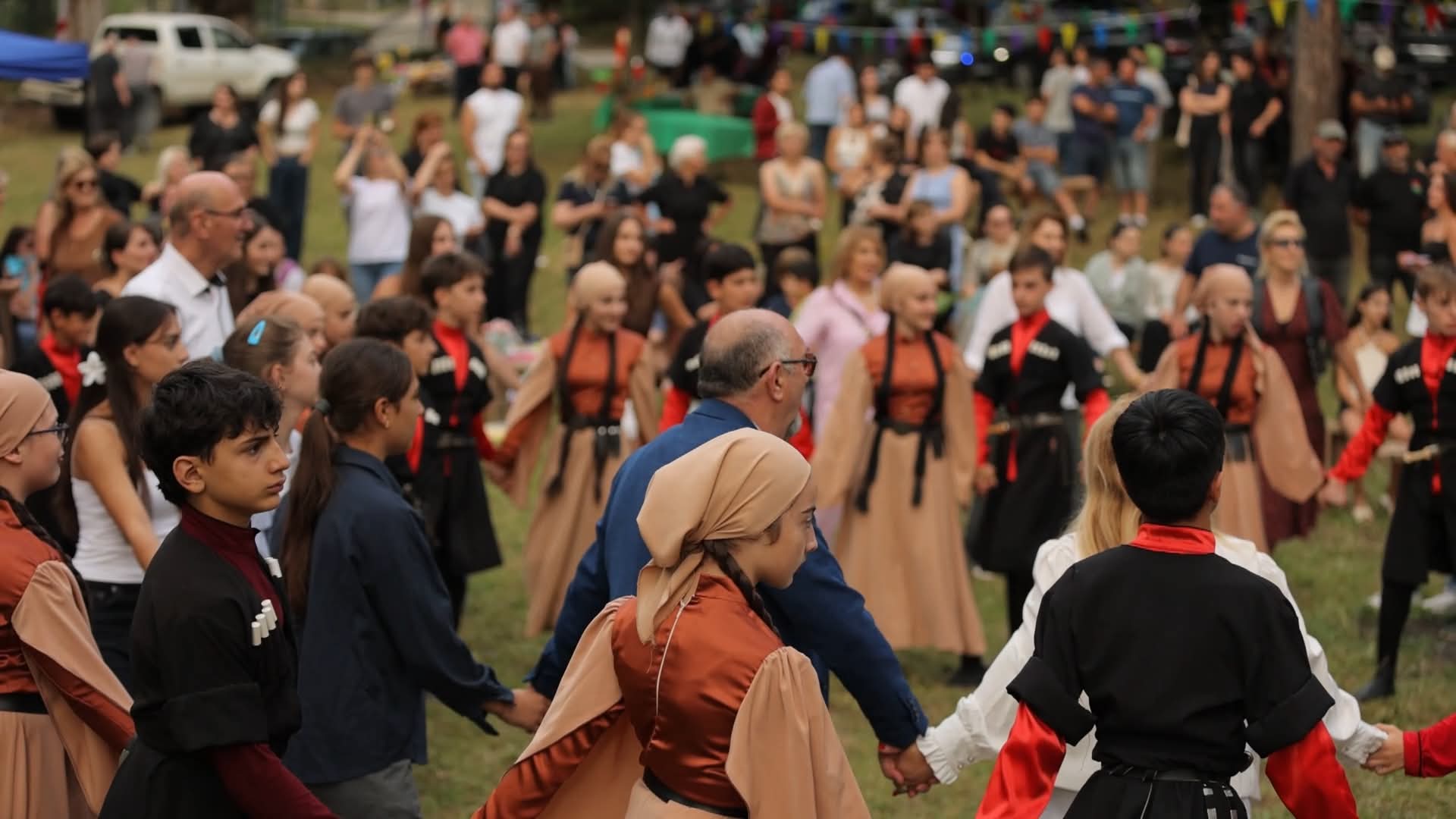
As the filmmakers note in introducing “Lailashi, an Oasis of Tolerance and Humanity”, time passes, borders shift, and generations move on – yet places endure where mutual respect and humanity stand the test of time. In a world often defined by division, Lailashi’s story offers a rare and needed reminder of what coexistence looks like in practice.

Special thanks to the Ambassador of the State of Israel to Georgia, His Excellency Walid Abu Haya, for his support and trust in this film project.
Related Topics
Related Posts