


Laurent Joly Interview | Alexandre Gilbert #285
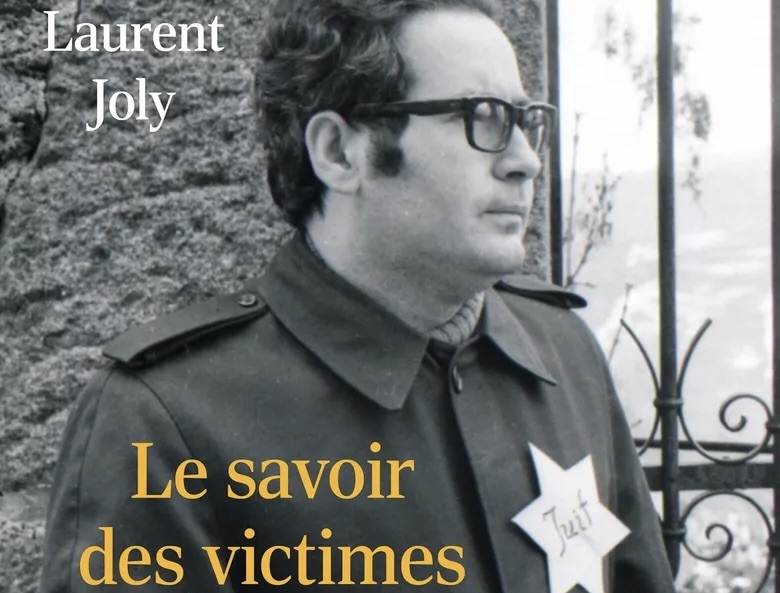
Laurent Joly, CNRS research director and expert on Vichy France, recently became the focus of a high-profile defamation trial after an article in Le Monde brought underlying tensions into the public eye. He published Comment on a écrit l’histoire de Vichy et du génocide des juifs, de 1945 à nos jours (Grasset, 2025).
On July 17, 2025, Le Monde published an article titled “Antisemitism of Vichy: a conflict between historians taken to court,” highlighting that Jean‑Marc Berlière and René Fiévet filed a lawsuit for defamation, against historians who emphasized the xenophobic and antisemitic nature of Vichy’s policies.
The article covers how the trio’s 2023 pamphlet Histoire d’une falsification sparked backlash for portraying the Vichy regime’s actions as overly complex and not directly antisemitic—prompting Joly and the CVUH to publicly critique it.
The dispute escalated when the CVUH article praised Joly’s 2023 essay, “Anatomy of a historical falsification…”, describing the pamphlet’s authors as “revisionist historians” who frame “the Jew” as the enemy—language deemed defamatory .
The trial opened in Bobigny on March 20, 2025, with courts facing questions over the limits of academic critique versus defamation and the potential chilling effect of such legal actions on historical research .
Le Monde’s reporting underscores the broader societal implications: examining how memory, interpretation, and judicial power intersect when revisiting France’s wartime past.
Extract from “Le Savoir des victimes. Comment on a écrit l’histoire de Vichy et du génocide des juifs de 1945 à nos jours” (Grasset, 2025):
Who could have imagined that revisionist rhetoric—becoming ever more absurd and detached from historical scholarship—would find a renewed audience in the 2010s, amidst the rise of populism and a growing underground challenge to “official science,” sheltered by the Internet and social media?
Even Count de Chambrun himself, always on the lookout for supporters, likely never imagined that the only author claiming his legacy would be a certain Alain Michel, a young historian whom he briefly received on August 9, 1988, at his home on Place du Palais-Bourbon.
A specialist in Jewish scouting who later became a rabbi, Michel retained a vivid memory of that singular meeting, which he almost considers the starting point of his study Vichy and the Shoah: An Investigation into the French Paradox, published in 2012 (CLD Editions).
Building on Chambrun’s assumptions (that Laval was not antisemitic and his policies were driven by a desire to protect French Jews), using biased statistical analyses and virtually no archival research, Alain Michel concluded that Vichy was “the main factor explaining how 75% of France’s Jews survived,” and that the actions of its leaders “ultimately had more positive than negative consequences.”
This book, which left specialists dismayed, delighted far-right circles despite the author’s somewhat erratic statements. In an interview with Causeur magazine (November 2021), Michel shared his opinion of Zemmour as a “historian”:
“His only mistake is in how he presents the subject. When he says: ‘Pétain saved the Jews of France,’ that’s incorrect. It wasn’t Pétain, it was Laval, helped by Bousquet!”
As early as 2014, in his bestseller The French Suicide (Albin Michel), Éric Zemmour pounced on the rabbi’s book to attack Paxton: Vichy France, in Zemmour’s view, marked a key moment in France’s decline since 1968, culminating in President Chirac’s 1995 speech.
The goal of such historical revisionism—reiterated in other books and TV appearances? To free the right from its supposed guilt complex, which allegedly prevents it from stemming the “flood of immigrants from the south, out of fear of being accused of sending the ‘Jews’ to extermination camps.” More broadly, it sought to condition public opinion to accept, unflinchingly, the drastic measures proposed by the polemicist-turned-far-right presidential candidate in 2021, such as deporting one million foreigners in five years.
By publicly challenging some of the most solidly established historical facts—facts deeply woven into France’s national memory—Zemmour appears stuck in the cultural universe of the 1960s, and the red volumes of Historia magazine, which was particularly sympathetic to Lavalist revisionism (see pp. 168–169), while waging a deeply personal intellectual crusade, with the mad hope of unifying the right. In doing so, he single-handedly reactivates the Vichy syndrome, of which he is a near-perfect embodiment, revealing that a segment of the French far right has still not broken with the shameful legacy of Pétainism.
Even during the 2022 presidential campaign, when Le Figaro Histoire and Causeur tried, by promoting Alain Michel, to lend some credibility to the candidate’s historical distortions, Zemmour ultimately ventured down a path leading straight to political isolation.
The Gayssot Law (July 13, 1990), which criminalizes denial of crimes against humanity, allows prosecution of any form of Holocaust denial, including the “gross minimization” of the consequences of Vichy’s anti-Jewish policies. Under this law, in 2018, former Club de l’Horloge president Henry de Lesquen was convicted for calling the Vel d’Hiv roundup a “minor episode of the deportation, which itself is a minor episode of World War II.” Similarly, Éric Zemmour was prosecuted for remarks made on CNews on June 26, 2020, in which he denied the criminal nature of Vichy’s anti-Jewish policy (initially acquitted, he was later referred to the court of appeals following a ruling by the Court of Cassation, and is expected to be retried in 2025).
This revisionism has thus become more than ever a hallmark of the doctrinaire far right, while also reflecting the rise of “alternative knowledge” disseminated online—a space where the best and worst coexist, offering extraordinary resources on Vichy and the Shoah (online testimonies, accessible primary sources, high-level scholarly content), while also denouncing “official history” and peddling counter-theories akin to those opposing “official science” on COVID-19 or climate change.
Jean-Marc Berlière, a recognized expert (but evidently not recognized enough in his own eyes) on the Vichy police, born in 1948, has drifted into this new form of scientific populism by teaming up with two amateur historians—retired senior executives Emmanuel de Chambost and René Fiévet—to publish a dense pamphlet in 2023, strangely titled A History of Falsification: Vichy and the Shoah in Official History and Commemorative Discourse. The publisher, L’Artilleur, specializes in “anti-conformist” essays that deny the IPCC’s climate findings or challenge the reality of the Tutsi genocide.
According to the authors, “the protection of French Jews” was central to the negotiations led by René Bousquet with the heads of the SS police—especially during the infamous July 2, 1942, meeting. The supposed “compromise” reached there—this “pact with the devil” (a phrase borrowed from Zemmour)—would have ensured the survival of “over 90%” of them.
This is the thesis defended by Berlière and his colleagues: a pseudo-scientific repackaging of old revisionist theory. And anyone who disagrees with them—that is, the entire historiography of the past decades, dismissed as the “Klarsfeld-Paxtonian orthodoxy”—is accused of ideological and inquisitorial bias.