
Leaving the Timeline Behind: A New Spin on Israel Education
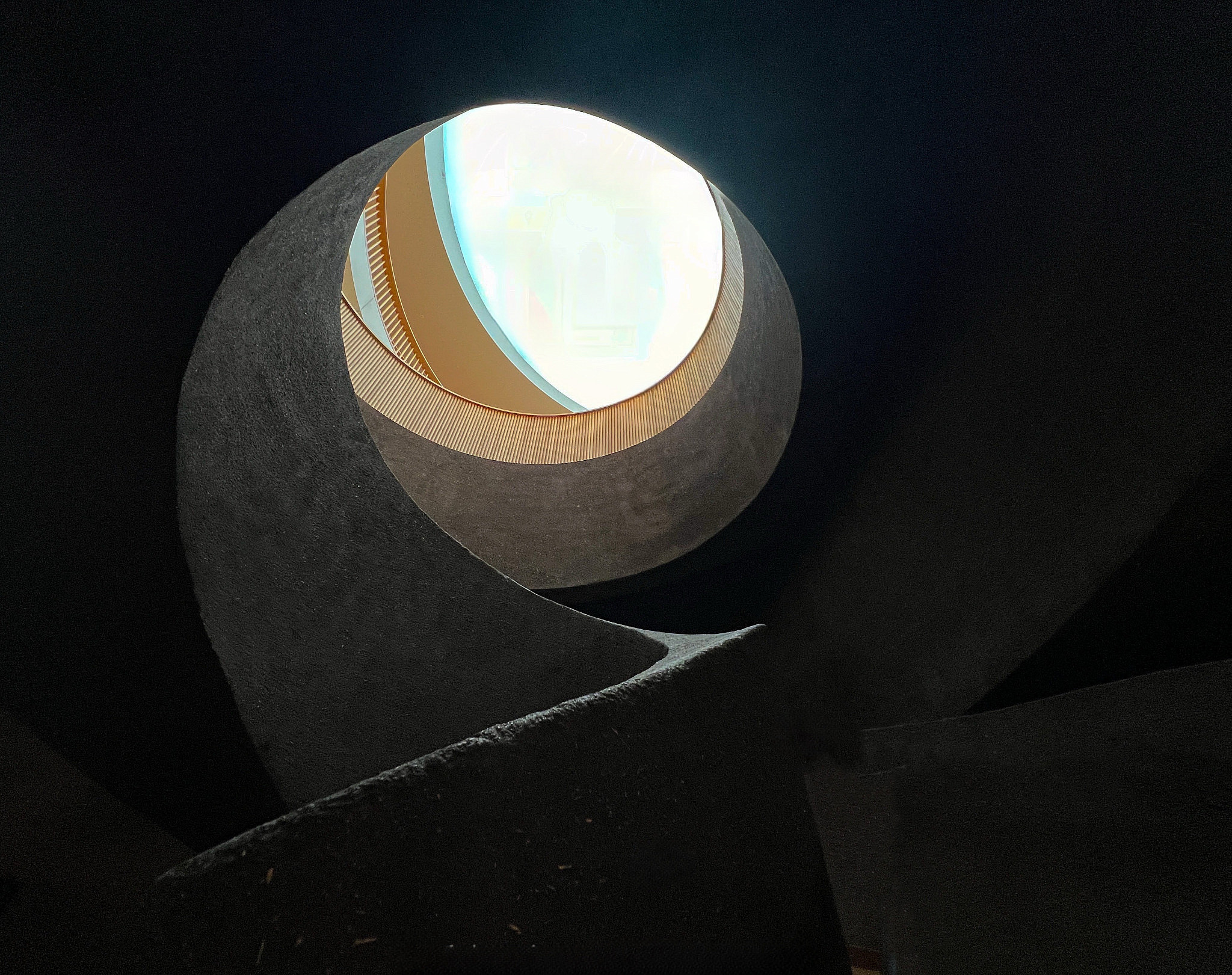
Jewish education has long relied on a linear model of teaching history – a timeline that begins with our foundational narratives and moves sequentially toward the present day. This approach offers clarity and order, helping students contextualize events and discern patterns of cause and effect. Many beautifully crafted resources follow this format, chronicling the Jewish people’s journey from our patriarchs and matriarchs through exile, redemption, struggle, and renewal, ensuring the modern-day benchmarks of ’48, ’56, ’67, ’73, and beyond are thoroughly addressed.
But is a linear view of our history enough to instill in students a holistic understanding of who we are as a people? Are these few milestones the full measure of our story, or do they leave out essential threads of Jewish life and identity? As Dr. Zohar Raviv, a leading voice in the field of Israel Education notes in his article, The Story of the Ever-Living People, these benchmarks are not who we are: “These are the interruptions to our story.” He continues: “For a healthy identity, Judaism should be celebrated, not defended. I am here to celebrate my Judaism, and I will defend it if need be. As educators we must realize that defending Judaism should never be a goal, but an outcome; we need to forge a Jewish identity based on the inner mechanisms of Jewish life, rather than based on external threats to Jewish living.”
Raviv reminds us that a steady diet of tragedies does not foster a healthy view of what it means to be a Jew. “We need a paradigm shift to build a Jewish identity based on Jewish life, not Jewish death.” This call resonates deeply with a framework that had already been taking shape – one designed to move beyond a strictly linear model toward an approach that reflects the interwoven nature of Jewish memory and identity. The vision came into sharper focus during a recent professional development session conducted by the StandWithUs IsraelLINK team, when educators were invited to integrate personal narratives into the established timeline. What began as a structured exercise soon gave way to a more profound inquiry: Are we merely teaching history, or are we inviting students into a living tradition of memory? And do our students see themselves not just as learners of history, but as participants in it?
A compelling model for this approach begins not with content delivery, but with a familiar ritual: the Passover Seder. When students are asked whether they attend a Seder each year, every hand goes up – though fewer remain raised when asked if they complete it. And when prompted to recall what is said at the very end, there is often a pause before one student finally remembers: “Next year in Jerusalem.”
That simple phrase becomes a gateway.
From there, students reflect on how long Jews have been celebrating the Seder and what it means to say the same words their ancestors said. Slowly, a realization takes shape: the Seder is not just a ritual, but a bridge. Its words, melodies, and symbols have been passed down from generation to generation, binding each new participant to a much larger story. The past is not distant, but alive – in their voices, in the songs they sing, and in the stories they know by heart. This ritual becomes a living example of how tradition carries memory forward.
Drawing on the perspectives of Avraham Infeld, a prominent educator in the field of Jewish Peoplehood, we can understand this as more than tradition – it is an act of memory. A transmission of identity that takes place not just across time, but within time. The goal here is not only to transmit knowledge, but to nurture a holistic connection. When Jewish memory is framed not as a subject to study, but as something students already hold – something they’ve sung, tasted, heard, and lived – it becomes real – personal and immediate. This insight reshapes how we think about history. Consider the names many of our students carry: Jacob, Isaac, Sarah. These are not just names; they are echoes of inheritance. Each one links a child to grandparents and great-grandparents, going all the way back to biblical ancestors, forming an unbroken chain that stretches across time.
We must, therefore, shift our pedagogical lens. Instead of viewing history as linear, we should embrace a model of interwoven strands, each representing a foundational theme of Jewish experience. The Helix Method illustrates that our collective history is not simply a collection of events strung along a timeline, but a shared memory that connects us across generations. In this model, history becomes alive with movement, where past and present continuously inform one another. Each generation does not merely inherit history, it shapes and extends it. And when we step back, we see that certain themes repeat, re-emerge, and bind our story together across centuries.
Some themes remain constant throughout this unfolding story:
- Connection: From the covenant with Abraham to the founding of the modern State of Israel and beyond, our bond with the Land remains a defining thread in Jewish identity.
- Self-Determination: We are living through the third era of Jewish sovereignty in Israel – a powerful expression of agency and resilience.
- The Struggles of War and the Hope for Peace: From the Babylonian exile to October 7th, Jewish history has been marked by displacement and return, sorrow and aspiration. Yet hope, rooted in divine promise and moral vision, has never been extinguished.
- The Indescribable Spark of Jewish Inspiration: The ineffable force of ethos, culture, and faith that has allowed Jewish life to persist, evolve, and thrive across the centuries.
Each spiral is more than a sequence of images or words; it is a layering of meaning, beginning in biblical times and spiraling through the present, with every element building upon the last. The spiral draws the viewer inward, transforming them from a passive observer into a participant in history as it unfolds.
When these spirals converge, they form an enduring helix of memory, each strand retaining its distinct origin while carrying the colors, textures, and rhythms of the Jewish journey. Our students step into the heartbeat of generations, following the interwoven paths that wind through time and shape the living, breathing DNA – the history helix – of our people. Each learner is invited to interlace their voice with this unfolding story, carrying it forward in the eternal rhythm that links our people from one generation to the next.
And in that turning of the helix, metaphor becomes mission: teaching our magnificent past as collective memory. In doing so, we imbue our students with a profound sense of belonging. They come to see that they are not simply learning about their ancestors; they are standing on their shoulders, inheritors of a sacred continuum and contributors to its enduring future. They are not only studying the Jewish journey; they are walking through it every day.
In this light, history is not the past – it is presence, identity, and purpose.
And it is ours to carry forward.
—
* StandWithUs IsraelLINK Educational Strategists Deborah Peretz and Sarah Weiss-Poland created The Helix Method, referenced in the above article.