Lebanon’s Golden Moment or Not?
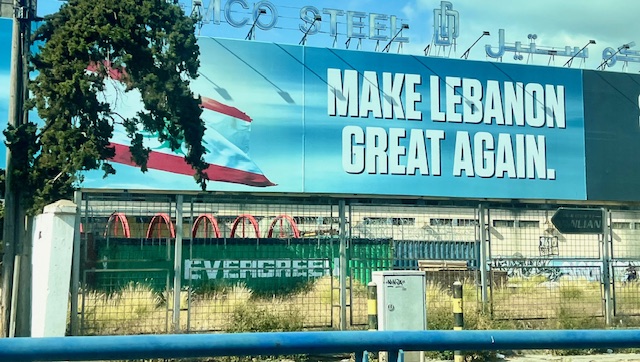
Recent events have dealt Lebanon a generational opportunity, historic even. After decades of victimization at the hands of Hezbollah and its patrons in Tehran, the question now is whether the Lebanese will be allowed to savor the fruits of the moment. Just days after the Lebanese cabinet – absent its Hezbollah ministers – approved an army plan to decommission the Party of God’s weapons, the answer is not yet clear. Until it becomes so, well-wishers might be advised to temper expectations, as the limits of what Lebanon and its government (or part of it), alone, can or will achieve under prevailing economic and political circumstances should be evident.
A case in point is, in fact, Hezbollah’s arsenal. Leveraging the group’s reduced status, including the decapitation of much of its leadership, to force its decommissioning is a no-brainer, supported by the bulk of the country’s war weary population. And time, of course, is of the essence before Hezbollah can effectively regroup. But attrition of their political and military posture has created a broader vacuum in society that neither the state nor any other actor in the country is equipped to fill at this time without external assistance. This alone is likely informing concessions being considered by the government that could provide Hezbollah both a political life line and a face-saving out in return for its cooperation – cooperation that would surely impact the potential upsides for Lebanon, as a whole, resulting from the group’s diminished capacity.
Too resource deprived to fill the role previously played by Hezbollah within the one third of the population that makes up the group’s core constituency, the government appears leaning toward the ultimate concession in return for decommissioning; namely, acceptance of Hezbollah’s (and Amal’s) continued political monopoly/oppression of the Shia population, along with all its associated benefits, including the much-desired reconstruction portfolio for the South and its opportunities for graft and the personal enrichment of its leaders. How else should one read the appointment of a former Hezbollah minister as presidential advisor for southern reconstruction?
That such a political deal could be in the making should come as no surprise; it is the Lebanese elite’s way of dealing with uncomfortable things – perhaps a bit unsavory but better than all the other options. On the plus side, it would likely avoid the very real potential of civil strife, including the fracturing of the one state institution admired above all others — the Lebanese Armed Forces, whose rank and file reflect the composition of the country as a whole: Christian, Sunni and Shia.
A deal that leaves Hezbollah intact, politically, would also allow other Lebanese communal leaders to absolve themselves of responsibility for conditions in the South and the situation specifically within the Shia community, which would remain a purely Shia matter. This outcome is acceptable to those who are slow to recognize the responsibility of the state to serve all Lebanese equally, as opposed to just guaranteeing the apportionment of state resources, according to sect. There is nothing new here as this is the basis of the National Pact enacted in 1943 that relegated the Shia community to third place on the political and economic pecking order, and we know how that has turned out.
Lebanon’s supporters in the West may not be entirely opposed to a political arrangement, either, if push comes to shove. If the threat to Israel and regional stability posed by Hezbollah’s arms is removed in the bargain, then a Lebanese deal sacrificing the freedom of the Shia to rid itself of the Party of God’s toxic guardianship would be well worth the price in return, right? At the very least, it would obviate any potential Lebanese government request for foreign military assistance, likely not in the offering, in enforcing decommissioning, assuming that the LAF were to attempt it, a prospect that still hard to envision. But is this the extent of the opportunity currently on offer?
A year after the worst of the post October 2023 hostilities in Lebanon, but with little to no mitigation to date of the conditions prevailing in the South, where a million were initially displaced, any quiet Shia satisfaction with Hezbollah’s (and Iran’s) comeuppance at the hands of Israel that could have been leveraged for the good is fading. With issues of daily subsistence dominating the Shia street and existential fears about the future increasing, given the plight of minorities in neighboring Syria, the more significant opportunity here, the one with longer term implications for Lebanon’s stability and prosperity may be slipping away.
By conflating Hezbollah’s arms with dire humanitarian and reconstruction imperatives in the South, Lebanon’s external supporters risk squandering the opportunity for the Lebanese state to demonstrate its inclusivity and for its constituent parts to begin the process of long overdue reconciliation. Capitulation to Hezbollah’s continued tutelage of the Shia population in exchange for the former’s weapons may be the only option – absent immediate unconditioned assistance – but it will only paper over a symptom, albeit significant, of Lebanon’s systemic weaknesses as a state, with underlying disparities and built-in prejudices that sustain them remaining intact for another generation. If this proves the case, external expectations of the possibilities for Lebanon, therefore, may need to be adjusted.