
Practical Spirituality - Slow and Steady
Lech Lecha: The Journey to Yourself
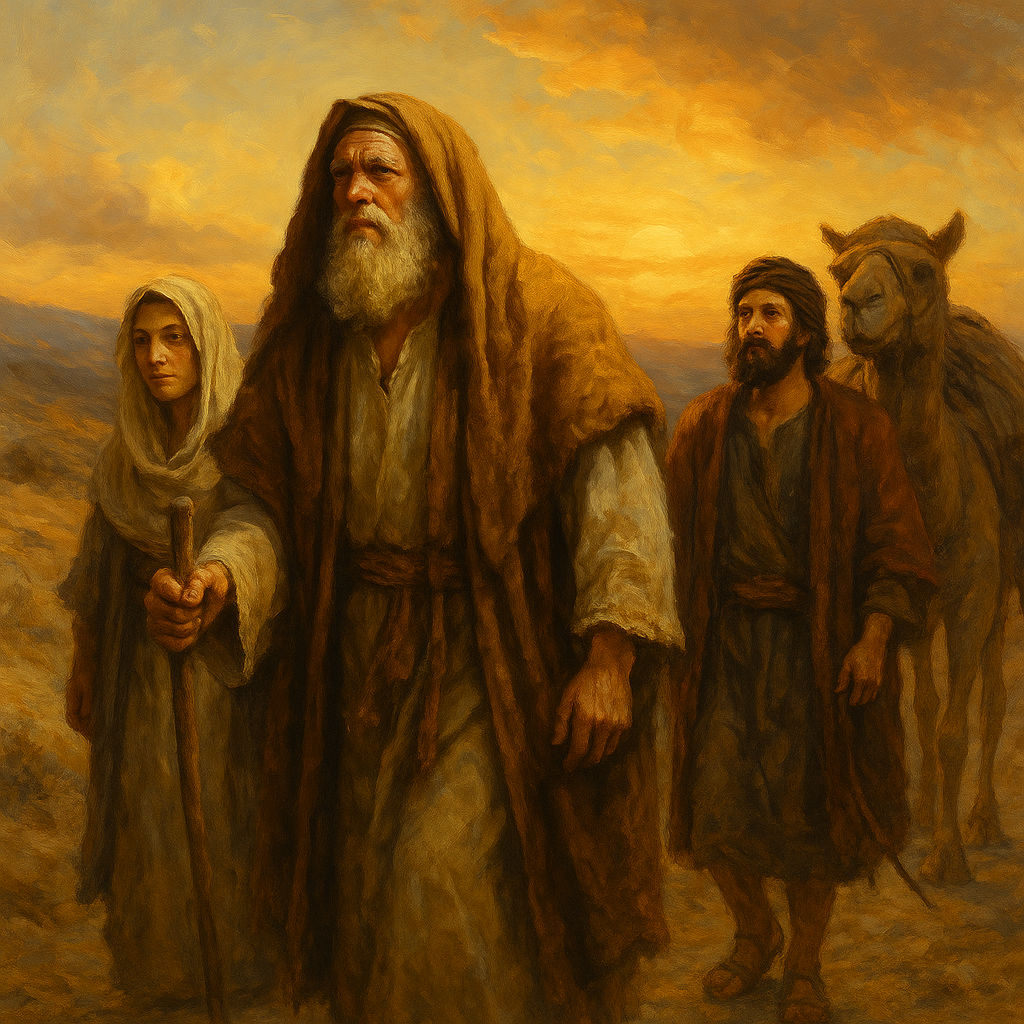
Avraham Begins His Journey - Image by ChatGPT
The Beginning of Faith is Fearless Self-Discovery
When you look closely at the opening words of this week’s Torah portion, Lech Lecha, something remarkable happens.
The words themselves — לֶךְ לְךָ — look identical. The first, lech, means “go.” The second, lecha, literally means “to yourself.”
It’s an odd phrase if we translate it literally: “Go to yourself.”
The Malbim and many of the classical commentators explain this as a journey inward — not away from self, but toward it. Rashi refines the meaning further: “Go for yourself,” meaning for your own good, for your benefit. But these interpretations, while clear, barely touch the poetic mystery of the phrase. The Torah is not only telling Abraham to leave his home; it is instructing him to walk into the uncharted geography of his own soul.
The Command That Creates a Nation
“Go from your land, from your birthplace, and from your father’s house, to the land that I will show you.”
(Genesis 12:1)
In this one sentence, God uproots a man from everything familiar — his geography, his tribe, even his inner map of self — and sends him toward something that cannot yet be described. Abraham is asked to begin without destination. The commandment is an existential one: Go, and I will show you along the way.
Every authentic spiritual life begins with that same unsettling instruction. You cannot know the end before you begin. You cannot see the land until you step into the wilderness.
The Bookends of Abraham’s Life
The words Lech Lecha appear only twice in the Torah — here, and again at the Binding of Isaac.
That repetition is not incidental. It’s a perfect symmetry, a mirror that reflects the journey of Abraham’s soul.
The first Lech Lecha calls him to leave behind everything external — his country, his birthplace, his father’s house. The second Lech Lecha, decades later, calls him to go inward beyond everything internal — to transcend even love, fatherhood, and reason in the test of the Akeidah, the Binding of Isaac.
From the first command to the last, Abraham’s journey is framed by the same words: Go to yourself. In between, he discovers what the Torah calls yirat shamayim — the fear of Heaven — which is not terror but clear perception. The capacity to see God as He is, not as we imagine Him to be.
Leaving What Is Good
It’s tempting to think Abraham’s father’s house must have been evil, idolatrous, corrupt — and therefore leaving was easy. But the Torah does not say that. In fact, Abraham later insists that Isaac marry from his own family, proof that there was goodness there, roots worth returning to.
So what is God really asking?
To leave not only what is bad, but even what is good.
To step beyond even healthy patterns when they become cages of identity.
To meet God, Abraham must first meet the self that exists beyond comfort, culture, and inherited truth.
Lech Lecha is not a rejection of the past; it is the transformation of it. It teaches that even holiness, if it stays still, becomes stale. Growth demands motion — and motion requires leaving.
The I–Thou Beginning
This is the beginning of the I–Thou relationship — the encounter between finite self and infinite presence. When God speaks to Abraham, it’s not a command in the legal sense; it’s an invitation to relationship. To move is to trust. To go without knowing is to love.
Each of us hears this Lech Lecha in our own way. The voice may not thunder from the heavens. It might whisper during a sleepless night, a sudden loss, or the quiet pull to change direction in life. The message is always the same:
Leave what you know. Walk toward what you are not yet. Go to yourself.
For Reflection
- What would you have to leave behind to meet your truest self?
- What “land” of identity, comfort, or habit is God calling you to walk away from?
- And could it be that the destination has been within you all along?
Lech Lecha — Go to yourself.
That’s the Torah’s first whisper of faith. The story of humanity begins, not with belief, but with a single step.
Related Topics