Spotlight on Civil Society
Let’s have a hope researcher chime in….
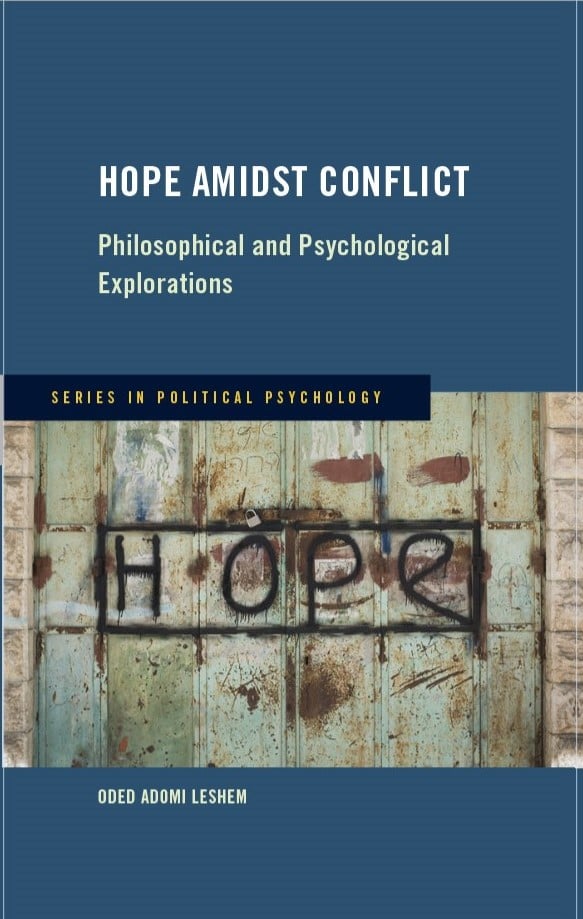
The book -Hope Amidst Conflict: Philosophical and Psychological Explorations- includes a scan of philosophical and psychological examinations of the concept of hope.
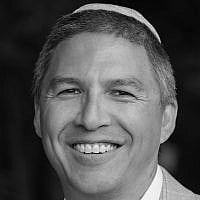
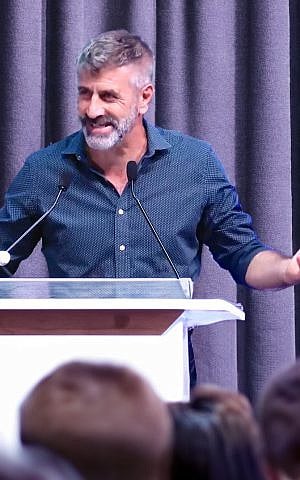
For those of us involved in civic activism, even while sorrow seems to have taken up a permanent place in our hearts, we still get to witness the dailyness of hope here in Israel. To help make sense of this, and to understand how we all keep moving forward with everyday life that has become barbed with so many jagged edges, I have thrown myself into the scholarship of Oded Adomi Leshem. Dr. Leshem is a “hope” researcher, based at Hebrew University and has spent over a decade studying philosophical, psychological, and political aspects of hope. His book, Hope Amidst Conflict, came out just weeks after October 7th. I will leave you to decide whether this was timely or not. I can only tell you that a closer examination of hope did me nothing but good.
Oded navigates the dual roles of scholar and peace activist, steeping himself in both the study and practice of hope-driven initiatives to build a better future here. His message seems essential right now, especially if it can help those in civil society fighting the good fight. So here’s a rapid-fire Q&A as a holdover until you are able to read Oded’s book or see him speak in person. Both are highly recommended.
It’s easy to anticipate everyone’s first question… Is hope even relevant anymore?
As Oded explains, it is in the bleakest of times that hope matters most. He provides a great analogy to illustrate his point. A small flame is hardly noticeable when the room is full of light. But when it’s dark, the spark of the candle shines extra bright, giving essential light. With our own generations of trauma, we have Victor Frankel’s work – cited by Oded – to remind us of the need for meaning even in the darkest hours. And this is the case even when hope can disappoint. Indeed, hope can be a miserable business. But we have to stay with it, as it’s the best option we have.
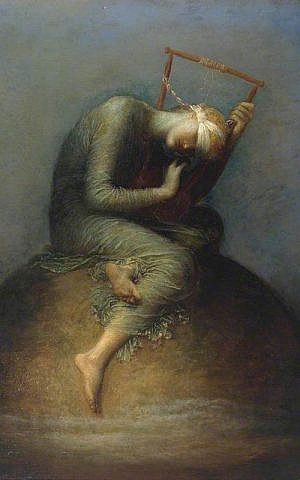
But if hope has pitfalls, one may ask next… Why do I need hope if I am only setting myself up to be let down again?
So here is the thing- there are the shortcomings and the merits of hope. We have to acknowledge both, leading to what Oded terms ‘optimal hope’. By carefully keeping our naivete and blind spots in check, we can consider both the tools and discipline required to walk the line of hopeful thinking versus magical thinking. Then we can harness our imagination, and channel our energy towards a better vision of what is now in front of us. And when things don’t work out? We don’t have to worry. Our grief will always be there waiting for us either way … we can easily pick it back up whenever we’d like to.
Still, why do I care about staying hopeful? Does it even matter?
It turns out that it matters for all of us. The research tells us that hope is good for our wellbeing, for our own longevity and our ability to set goals and score achievements. To add to the case for hope, as Oded also points out, scientific, technological, and social progress over the centuries is hope-driven. The greatest achievements of all time have been based on humankind’s overestimation of success. In short, it’s an evolutionary survival instinct.
Isn’t hope just an emotion though? What’s the point of unpacking it more?
This part was interesting. Oded, while surveying philosophical and psychological thought over time, also explored the everyday language used in popular dictionaries around the world. It turns out there is a common definition. Hope has two dimensions– our desire for something, and our belief that it is actually possible. The first component is about our dreams and our wishes, a motivational one. The second component is more cognitive, and it is the degree to which we believe that these aspirations have a chance, the possibility that these dreams will come true.
Okay… so then what is the difference between false enthusiasm and hope? Fair question. This is again where Oded’s research provides clarity. Once hope becomes observed, it can take on a coherent shape. And for better or worse, there is no such thing as passive hope. Hope may be a language that we all want to speak, but as Oded points out, there’s no hope without action. It is not just wishing for something. Hope must be manifested in some kind of behavior, even if it’s in small steps.
But really, is anybody still hopeful? Go look around. We don’t really have a choice to opt out. It turns out hope is a practice like any other – that the very act of being hopeful is generative. Civil society actors, who have been the topic of my own research over the past two decades, continue to show us the way. We all can see the countless volunteers, activists, and professionals who have been operating in full force since October 7th, miraculously managing to coax hope out of hiding each time.
And does even this include activists working on building cooperation and partnership between Arab and Jewish communities? Why yes, they are going strong, shared society efforts within Israel and peacebuilding initiatives too. Oded’s extensive survey of attitudes in conflict zones can help give insight into how individuals manage to keep working for a better future amidst violence and destruction. I have seen it myself – every initiative I’ve written about and researched over the years has had the thumbprints of hope on it. And they still do, holding out lanterns in front of us to imagine an alternative future.
So, I guess I will offer my last question and turn it back to you. What’s your takeaway? Hopefully, you are also buoyed by the thousands of volunteers, activists and professionals who quietly keep rebuilding and working towards progress, often operating in the background with little fanfare. They should remind us that hope is more durable than we may think. Find them, support them, volunteer when you can. And just like a small flame, you can be one of those helping to change the darkness simply by entering the arena and carrying the light of hope within yourself.
Related Topics
Related Posts