

Libyan Jews Refuse to Die
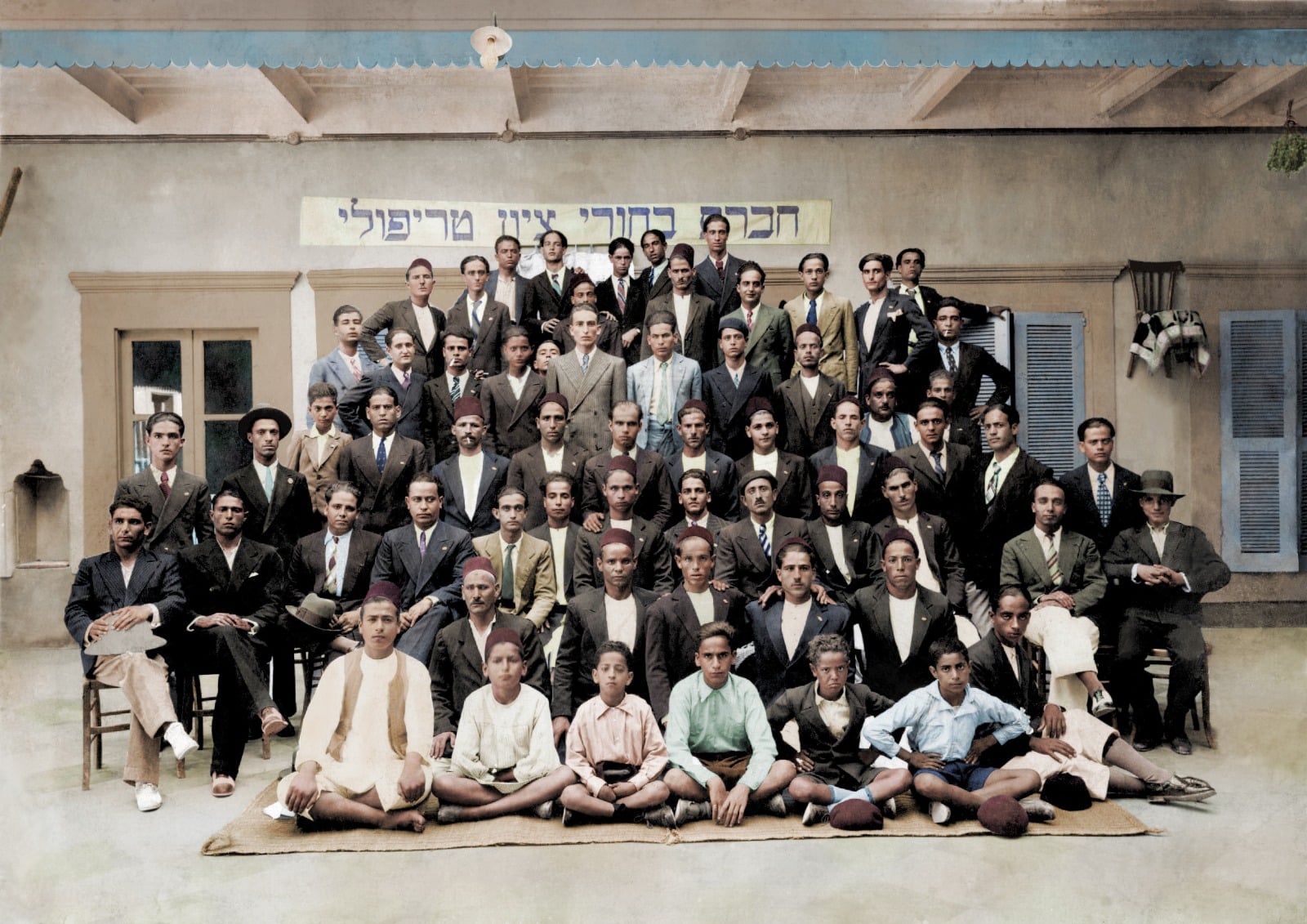
And maybe, they will even give life to the Abraham Accords for Libya?
Sometimes it takes a few generations to turn the lowercase – h – of history into History with a capital – H.
The almost complete extinction of 835,000 Jews from Arab and Muslim countries within just a few decades, is a testimony to this phenomenon. The Jews of these countries had inhabited these lands for thousands of years, long before the Islamic conquests. They could avoid death or expulsion in only two ways: adopting the Muslim faith or by accepting submission to the –dhimmi- status. Those who chose the latter became second-class citizens but were protected by the political authorities: discriminated against yet protected.
On the eve of World War II, Libya’s 35,000 Jews were more or less safeguarded. But in 1938, Mussolini’s colonial Fascist regime in Italy, adopted racial laws targeting Jews. These laws came into effect in 1940. Suffering under this legislation, many Jews supported the British troops fighting the Fascist Italian forces. Using this support as a pretext, the colonial Italian authorities deported thousands of Jews to the Giado (or Jado) concentration camp located about 200km south of the capital, Tripoli.
Whereas some foreign Jews was deported to Nazi camps in Europe, Libyan Jews and other foreign Jews were deported to concentration camps within Libya, including Giado. Under Italian command, the guards were either Italian or Arab Libyans. The appalling living conditions (or rather survival conditions) caused the deaths of 562 Jews. They were buried in Giado.
When the war ended, the situation of Libyan Jews did not improve. During a three-day pogrom in November 1945, 133 Jews were murdered and hundreds were wounded. The massacre was carried out by local Arab people, while British authorities allowed it. They were administering Libya at the time and wanted to demonstrate to the United Nations, that the country was not ready for independence[i].
This pogrom was the first in a long series of post-war outbreaks of violence. In 1948, another wave of attacks against Jews took place, but this time, the Jewish people were prepared to fight back. Thirteen Jews were killed. Synagogues and Jewish-owned properties were destroyed or converted into mosques. Libyan Jews realized that a new danger threatened them. They took measures to protect themselves…and to leave.
On the eve of the Six-day war in1967, only 5,000 Jews remained in Libya. A new pogrom erupted during the first hours of the war killing 17 Jews. The entire Jewish population had to flee immediately with the help of King Idris. Since becoming king in 1951, Idris had protected the Jews from the local population. Thanks to his assistance Libyan Jews who had resisted the pogroms of the previous 22 years, were able to escape, most of them to Italy or Israel. By 1967, Libya was Judenrein[ii] or almost (see below).
After 1967, there were no more Jews left to kill, so the Libyan population attacked the dead Jews. With the consent, perhaps even at the request of the new country’s leader, Muammar Gaddafi who seized power in a coup in 1969, a ruthless campaign of expropriation of Jewish property and destruction of Jewish cemeteries, was launched. The victims of the Giado concentration camp who had rested in peace in the town’s cemetery, were killed a second time. Synagogues were destroyed or converted. The rage of the Arab population had not been appeased by the departure of all the Jews three years earlier. It would now be directed at Jewish remains.
Thirty years later, Gaddafi was still in power. Libyan Jews had built new lives in Italy, Israel or elsewhere around the world. Among them was David Gerbi, who was 12 years old when he and his family fled Libya in 1967. He became a well-known psychoanalyst…and decided to protect the Jewish remains in Libya, those that the angry crowds had failed to destroy.
First, he helped the last living Jew remaining in Libya. His aunt had withdrawn into a kind of mutism for more than 30 years as a means of protecting herself from hostile population. She became the subject of a deal proposed by Gaddafi. After being ostracized because of his involvement in the bombing of Pan Am flight 103 over Lockerbie, Scotland, in December 1988, the Libyan dictator wanted to restore relations with the United States. In 2002, he asked Dr David Gerbi to help him achieve this. If he succeeded, Gaddafi would allow his aunt, the last living Jew in Libya, to leave the country.
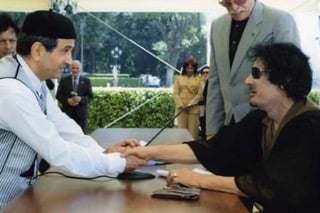
After lengthy diplomatic efforts led by Dr Gerbi, normalization between Libya and the United States took place. Dr. Gerbi’s aunt was finally allowed to leave, travelled to Italy, and passed away 40 days later. She now rests in peace in Israel. Libya had then then truly become Judenrein.
In recent years, Dr. Gerbi has not slowed down. Following Gaddafi’s fall in the aftermath of the Arab Spring, and despite Libya’s continuing chaos, Dr. David Gerbi has returned to Libya several times. With the help and the protection of the local Amazigh[iii] population, he has carried out remarkable work identifying the remnants of the last pogroms: bones from destroyed Jewish cemeteries (including Giado), tombstones, walled up synagogues, and more.
Dr. Gerbi’s latest struggle focused on transferring to Israel the bones that remain from these desecrated Jewish cemeteries. The remains from Giado in particular, including those of the concentration camp victims, should finally be allowed to rest in peace in Israel. Out of respect for their memory, and to allow today’s Jews to pray for the elevation of their souls in the only country that, we know, will always oppose any attempt at desecration, returning these remains to Israel is both a Jewish humanitarian and a historical imperative. Libyan Jews have been killed twice. Dr. David Gerbi is struggling to prevent it from happening a third time. He will turn history into History.
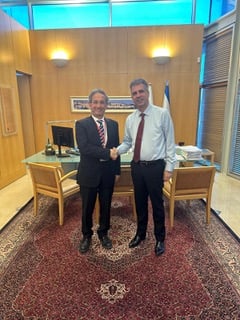
But how do you turn history into History? Through relentless work, meetings and intellect, all qualities that Dr. Gerbi possesses in abundance.
Let us recall the meeting between Eli Cohen, Israel’s Foreign Minister and Najla Al-Mangoush, Libya’s Foreign Minister, which took place in Rome in August 2023. This unprecedented meeting caused such an uproar among both the Libyan public and political establishment, that Al-Mangoush was immediately dismissed from office[iv].
More recently, Libyan social media has seen reports about possible reconciliation between Libya and Israel, Libya’s potential participation in the Abraham Accords, and the restitution of Jewish property. Unlike in 2023, these reports did not provoke public outcry. Could this be a positive sign, even a small one?
We will see what happens, and in particular, my interview with Dr. Gerbi which will be published here shortly.
[i] Source : Dr David Gerbi
[ii] German word used by the Nazis describing a zone whom they had “purified from Jews”.
[iii] Also called the exonym word: « Berbers ». The Amazigh people in Libya are culturally close from the Kabyle people. Read my piece on the Declaration of Independence of Kabylia at: https://blogs.timesofisrael.com/declaration-of-independence-of-kabylia/
[iv] https://www.reuters.com/world/israel-says-its-fms-meeting-with-libyan-counterpart-was-pre-agreed-2023-08-28/