
Russian-American-Israeli Palestinian. Palestine is Israel.
Life Remaining

Life is finite. Its passage can be seen. That is all. Image © Ivan Bassov, 2026. Licensed under CC0 (public domain dedication).
“People live as they will never die, and die as if they have never lived.”
— attributed to the Dalai Lama
Rethinking Time and Perspective
When asked what surprised him most about humanity, the Dalai Lama described a simple, yet sobering pattern: people sacrifice their health for money, then spend that money to regain their health, all the while worrying so much about the future that they fail to truly live in the present.
This observation captures a universal truth: we often forget that life is finite. We live as if there is endless time ahead, yet every month, every day, every hour is a resource that we cannot reclaim.
Life Remaining: Shift Your Perspective
Instead of asking, How old am I?, what if you asked, How much life do I actually have left?
By focusing on years, months, or even the percentage of life remaining, you gain a new perspective on time. It is no longer an abstract concept; it becomes something measurable and concrete.
Of course, none of us knows exactly how long we will live. But we do have very good statistical estimates. Life expectancy tables—compiled from large population datasets—allow us to estimate the typical lifespan for people of different ages and sexes. These tables are widely used by governments, insurers, and health researchers.
Using those estimates, we can approximate how much of our life has already passed and how much likely remains.
But numbers in tables are not always easy to internalize. To make this perspective clearer, it helps to visualize life in concrete terms.
The Life Remaining Calculator
To explore this idea, I created a small Python program called the Life Remaining Calculator, which makes the concept of remaining life tangible.
It calculates for any age and sex:
- Expected lifespan
- Years remaining
- Percentage of life remaining
- Percentage of life already lived
It also includes an interactive mode, showing your personal life progress as a visual bar — a concrete representation of time passed and time left.
The program prints life expectancy tables for every age in 5-year increments, in both verbose (detailed) and short (glanceable) formats. You can see the expected total lifespan, years remaining, and the percentage of life remaining—allowing you to compare your personal life progress with statistical norms. The interactive mode, shown in the example below, displays my own life progress as a 52-year-old male.
Sample Output:
$ python3 life-remaining.py
Male life expectancy (WHO life tables, verbose):
M Age 5:  Expected 77 yrs; Years left 72 (93%),  7% lived
M Age 10: Expected 77 yrs; Years left 67 (87%), 13% lived
M Age 15: Expected 77 yrs; Years left 62 (80%), 20% lived
M Age 20: Expected 77 yrs; Years left 57 (74%), 26% lived
M Age 25: Expected 77 yrs; Years left 52 (68%), 32% lived
M Age 30: Expected 78 yrs; Years left 48 (61%), 39% lived
M Age 35: Expected 78 yrs; Years left 43 (55%), 45% lived
M Age 40: lifespan 79 yrs; Years left 39 (49%), 51% lived
M Age 45: Expected 79 yrs; Years left 34 (43%), 57% lived
M Age 50: Expected 80 yrs; Years left 30 (37%), 63% lived
M Age 55: Expected 81 yrs; Years left 26 (32%), 68% lived
M Age 60: Expected 82 yrs; Years left 22 (27%), 73% lived
M Age 65: Expected 83 yrs; Years left 18 (22%), 78% lived
M Age 70: Expected 85 yrs; Years left 15 (17%), 83% lived
M Age 75: Expected 87 yrs; Years left 12 (13%), 87% lived
M Age 80: Expected 89 yrs; Years left  9 (10%), 90% lived
M Age 85: Expected 91 yrs; Years left  6  (7%), 93% lived

Female life expectancy (WHO life tables, verbose):
F Age  5: Expected 82 yrs; Years left 76 (94%),  6% lived
F Age 10: Expected 82 yrs; Years left 72 (88%), 12% lived
F Age 15: Expected 82 yrs; Years left 67 (82%), 18% lived
F Age 20: Expected 82 yrs; Years left 62 (76%), 24% lived
F Age 25: Expected 82 yrs; Years left 57 (69%), 31% lived
F Age 30: Expected 82 yrs; Years left 52 (63%), 37% lived
F Age 35: Expected 82 yrs; Years left 47 (57%), 43% lived
F Age 40: Expected 83 yrs; Years left 43 (52%), 48% lived
F Age 45: Expected 83 yrs; Years left 38 (46%), 54% lived
F Age 50: Expected 83 yrs; Years left 33 (40%), 60% lived
F Age 55: Expected 84 yrs; Years left 29 (35%), 65% lived
F Age 60: Expected 85 yrs; Years left 25 (29%), 71% lived
F Age 65: Expected 86 yrs; Years left 21 (24%), 76% lived
F Age 70: Expected 87 yrs; Years left 17 (19%), 81% lived
F Age 75: Expected 88 yrs; Years left 13 (15%), 85% lived
F Age 80: Expected 90 yrs; Years left 10 (11%), 89% lived
F Age 85: Expected 92 yrs; Years left  7  (8%), 92% lived

Male life expectancy (WHO life tables, short):
M Age  5: Years left 72; 93% life remaining
M Age 10: Years left 67; 87% life remaining
M Age 15: Years left 62; 80% life remaining
M Age 20: Years left 57; 74% life remaining
M Age 25: Years left 52; 68% life remaining
M Age 30: Years left 48; 61% life remaining
M Age 35: Years left 43; 55% life remaining
M Age 40: Years left 39; 49% life remaining
M Age 45: Years left 34; 43% life remaining
M Age 50: Years left 30; 37% life remaining
M Age 55: Years left 26; 32% life remaining
M Age 60: Years left 22; 27% life remaining
M Age 65: Years left 18; 22% life remaining
M Age 70: Years left 15; 17% life remaining
M Age 75: Years left 12; 13% life remaining
M Age 80: Years left  9; 10% life remaining
M Age 85: Years left  6;  7% life remaining

Female life expectancy (WHO life tables, short):
F Age  5: Years left 76; 94% life remaining
F Age 10: Years left 72; 88% life remaining
F Age 15: Years left 67; 82% life remaining
F Age 20: Years left 62; 76% life remaining
F Age 25: Years left 57; 69% life remaining
F Age 30: Years left 52; 63% life remaining
F Age 35: Years left 47; 57% life remaining
F Age 40: Years left 43; 52% life remaining
F Age 45: Years left 38; 46% life remaining
F Age 50: Years left 33; 40% life remaining
F Age 55: Years left 29; 35% life remaining
F Age 60: Years left 25; 29% life remaining
F Age 65: Years left 21; 24% life remaining
F Age 70: Years left 17; 19% life remaining
F Age 75: Years left 13; 15% life remaining
F Age 80: Years left 10; 11% life remaining
F Age 85: Years left  7;  8% life remaining

--- Your Life Progress ---
Enter sex (M/F): M
Enter your age: 52

You are Male Age 52.

Expected lifespan : 82 years (984 months)
Life remaining    : 30 years (360 months)
Life already lived: 52 years (624 months)

Life progress:

[⣿⣿⣿⣿⣿⣿⣿⣿⣿⣿⣿⣿⣿⣿⣿⣿⣿⣿⣿⣿⣿⣿⣿⣿⣿⣀⣀⣀⣀⣀⣀⣀⣀⣀⣀⣀⣀⣀⣀⣀]

64% already lived, 36% life remaining
Why It Matters
Visualizing life remaining changes perspective:
- You stop counting years lived and start counting time left.
- It encourages prioritization of meaningful experiences over trivial distractions.
- It fosters mindfulness, as every month becomes a visible, tangible unit of your life.
These are not arbitrary numbers. They are based on WHO life tables, widely used by governments, doctors, insurers, and pension funds. While your individual lifespan may vary, these averages provide a reliable benchmark to guide your choices.
Life in 900 Months
Another way to visualize this perspective is the 900-month concept. An average 75-year lifespan consists of roughly 900 months (75 × 12). Each month becomes a discrete unit of life:
- The Lifetime Grid: Imagine a 30×30 grid. Each square represents one month of a 75-year life. Filled squares are months already lived; empty squares are months remaining.
- Time Management: By visualizing life in months, it becomes clear that every month counts. At 25 years old, you have already “spent” 300 months, leaving 600 in your personal “life bank.” By age 50, you have already “spent” 600 months, leaving just 300.
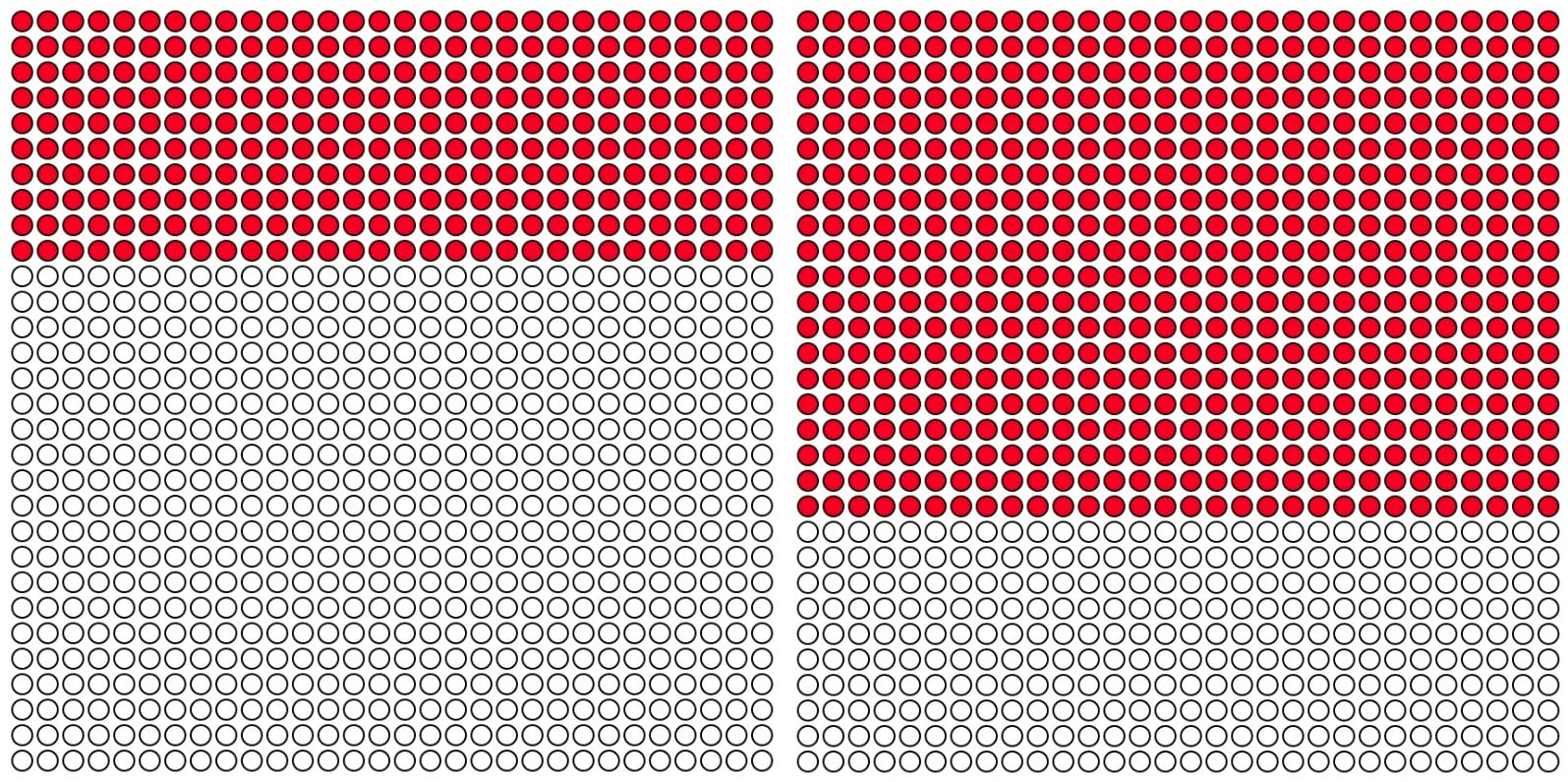
This visualization is not meant to scare — it is meant to awaken. Life feels long, but in reality, it is made up of a limited, countable number of months, each one precious.
And yet, later months are not the same as earlier ones. Time seems to accelerate as we age; life passes faster with each year. This makes the perspective even more striking — a reminder that every moment matters, not in fear, but in awareness.
The Finite View
Your life is finite, and the months are countable. The Life Remaining Calculator makes this concrete, showing:
- How much of your life has already passed
- How much likely remains
- How to visualize it in both years and months
Each month is a small, discrete unit of time — and yet something that can slip away unnoticed. Every measurement is just that: a measurement, a way to see what is, without judgment.
This is not advice, not a prescription, not a lecture, not motivational coaching.
It is not about changing your choices. It is about knowing them. It is simply a way to see your life differently.
By combining life remaining calculations with the 900-month visualization, both the scale and the detail of life become visible. What once felt abstract now has structure.
Not fear. Not urgency. Not morality. Just clarity.
Life is finite. Its passage can be seen. That is all.
Related Topics
Related Posts