
Light, Steel, and Sovereignty
How Israel entered 2026 redefining modern defense
There are moments in history when a country does not merely respond to events but quietly resets the rules of the game. The final days of December 2025 felt like one of those moments for Israel.
In the space of a single week – between the closing of one year and the hesitant opening of another – three developments unfolded that I have not witnessed together in all my years of watching the Israeli military and its innovation ecosystem. Not drills. Not declarations. Not promises. But delivery.
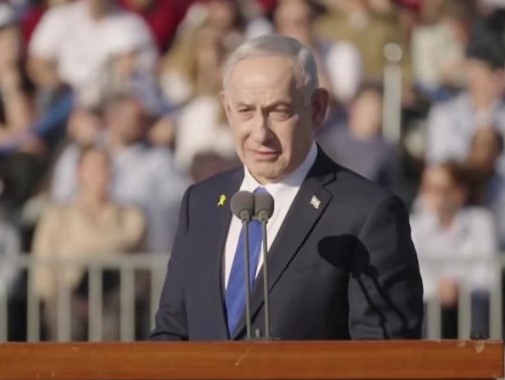
First, the long-anticipated Iron Beam laser-based air-defense system was formally handed over to the Defense Ministry and deployed in the field. Second, the IDF quietly received its first domestically produced Ro’em (Thunderous) wheeled self-propelled howitzer – a generational leap in artillery. And third, Prime Minister Benjamin Netanyahu announced a 350-billion-shekel ($110 billion) decade-long investment to secure Israel’s self-sufficiency in arms production.
Taken together, these are not isolated headlines. They are chapters of the same story – a story about resilience and renewal, and about innovating the future of Israel not as slogan, but as strategy.
Iron Beam matters not because it is futuristic – though it is – but because it is practical. For years, Israel has lived with the paradox of tactical brilliance paired with economic strain: interceptors costing tens or hundreds of thousands of dollars fired to stop rockets that cost a fraction of that to build.
Iron Beam changes that equation. Interception at the speed of light. Cost measured in electricity, not missiles. A system that does not replace Iron Dome, David’s Sling, or Arrow, but completes the architecture.
What strikes me most is not the engineering – remarkable as it is – but the philosophy behind it. This is a defensive technology designed to stop death, not project it. It neutralizes trajectories. It buys time. It protects civilians. In a region where offense dominates the imagination, Israel continues to invest heavily in defense.
There is something profoundly Israeli in that choice. Constraint has always been Israel’s teacher. Pressure its accelerator. Iron Beam is not a luxury. It is necessity refined into innovation.
If Iron Beam represents light, the Ro’em howitzer represents steel—fast, smart, and unapologetically modern.
After decades of relying on the aging M109 Doher, the IDF has finally crossed a threshold. The Ro’em is not just a replacement; it is a redefinition. Mounted on a wheeled chassis rather than tracks, digitally networked, and fully automated, it reflects the lessons of Ukraine, Gaza, and Lebanon all at once.
A crew of three instead of seven. Eight rounds per minute instead of two. Shoot-and-scoot speed that acknowledges the drone-saturated battlefield of today. And critically, it is Israeli-made – developed by Elbit Systems after years of patient engineering.
There was no grand ceremony. No triumphal press conference. Just a low-key handover in Yokne’am and the beginning of live-fire tests.
That quietness matters. It signals maturity. Israel no longer needs to announce every capability with fanfare. Some things speak loudest when they arrive without noise.
Then came the third announcement – the one that ties everything together.
Netanyahu’s commitment of 350 billion shekels over the next decade to build an independent Israeli arms industry is not about isolation. It is about insurance. Recent years have taught Israel a hard lesson: even friends can hesitate, delay, or condition support when pressure mounts.
This investment is a return to first principles. David Ben-Gurion understood that sovereignty without self-defense is fragile. Today’s version of that insight is industrial, technological, and systemic.
The goal is not to abandon alliances. Israel will continue to rely on strategic partnerships, especially with the United States. But dependence is not partnership. Independence is.
What impressed me most was the clarity of intent. This is not panic spending. It is long-term alignment – funding research, manufacturing, workforce development, and supply chains that ensure Israel can fight, deter, and defend on its own terms.
There is another layer to all this, often overlooked. While these systems are being deployed at home, foreign militaries are watching closely. Delegations from across Europe, North America, and Asia are studying Israel’s battlefield integration – how lasers, artillery, drones, sensors, and command systems fuse into a single operational language.
Some come to shop. Others to learn. Many to recalibrate their assumptions.
Israel is no longer just adapting to modern warfare. It is shaping it.
I often write about resilience in abstract terms – social cohesion, civil society, national spirit. But resilience is also hardware. It is logistics. It is production capacity. It is the ability to look at tomorrow’s threats without waiting for permission to respond.
Iron Beam. Ro’em. A decade-long commitment to self-sufficiency.
These are not symbols. They are tools. Tools forged in grief, refined under fire, and deployed with restraint.
As the new year begins, Israel does not look like a nation retreating inward or lashing outward. It looks like a country doing what it has always done at its best: learning, building, and quietly preparing for whatever comes next.
This is resilience and renewal in its most concrete form. And this – light, steel, and sovereignty – is how Israel continues innovating the future.