


Lindsey Graham’s white whale
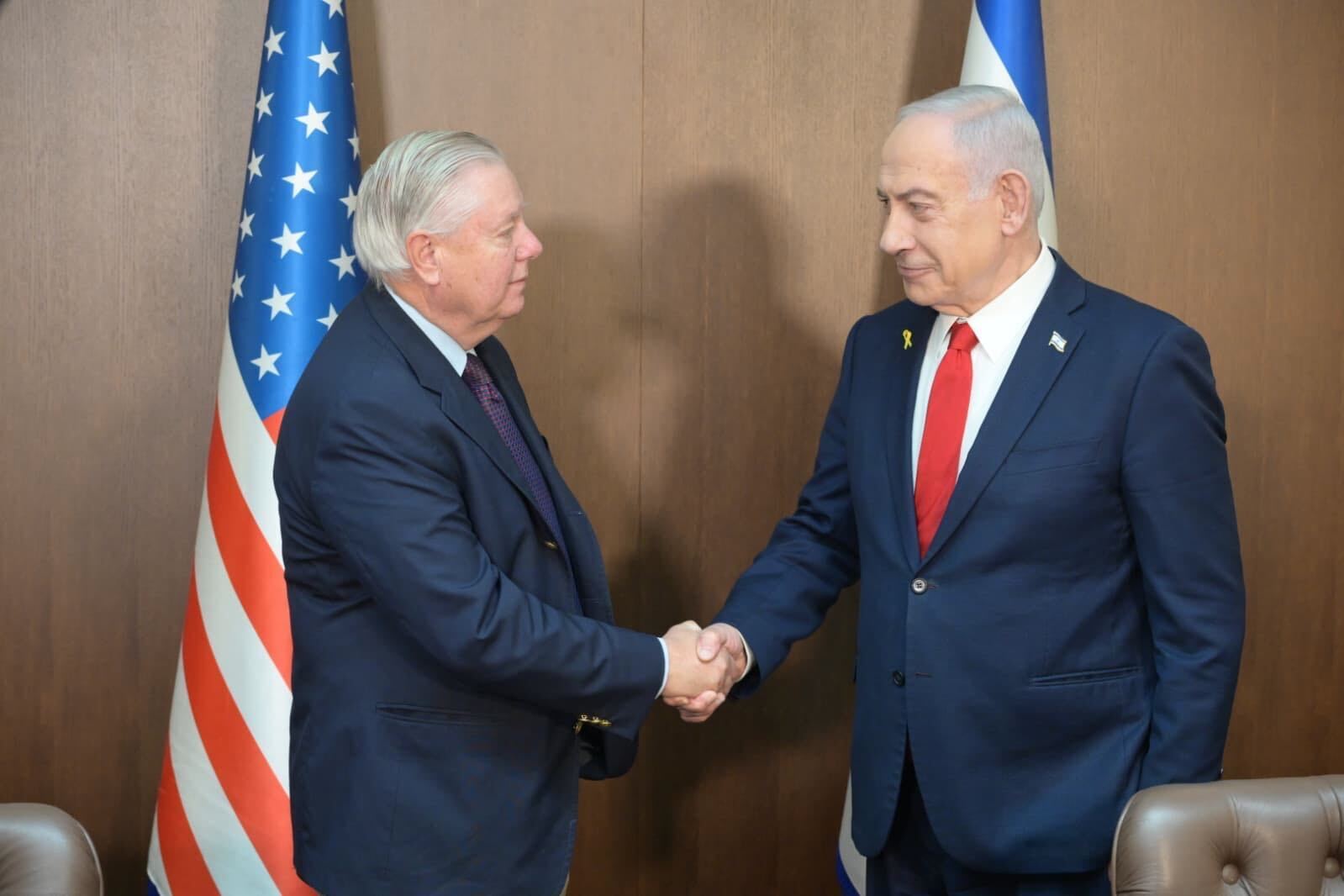
Only hours before Lindsey Graham passed away on July 12, he reportedly joked to friends that he couldn’t die without seeing Israel and Saudi Arabia establish diplomatic relations. Graham’s apparent passion for Israel-Saudi normalization started early in 2023. When I arrived in Riyadh as US ambassador later that spring, he was fast becoming the kingdom’s most frequent visitor from Washington. Graham’s visits were part of a sometimes tempestuous journey he had traveled with the kingdom, a journey which I think he came to believe could culminate in a worthy career-crowning legacy. The visits would end before Graham’s dream was fulfilled.
Support for the US-Saudi partnership had been a staple of Republican policy for decades, and Graham was no outlier. He called the Saudis imperfect but critical partners. He opposed efforts in Congress to block arms sales to the kingdom, even when the Saudi-led war in Yemen had become politically toxic in Washington. But after the 2018 murder of Saudi journalist Jamal Khashoggi, Graham turned as scathing as any American public figure – harsher than even then-candidate Joe Biden, who famously promised to make Saudi Crown Prince Mohammad bin Salman, or MBS as he is widely known, a “pariah.” Graham called MBS a “wrecking ball” who had “tainted [his] country and tainted himself.” He told Fox & Friends that he had been Saudi Arabia’s “biggest defender on the floor of the United States Senate,” adding with a sense of bitterness, even betrayal, in his voice that he now felt “used and abused.”
But then a few things happened to change Graham’s mind, and they were connected.
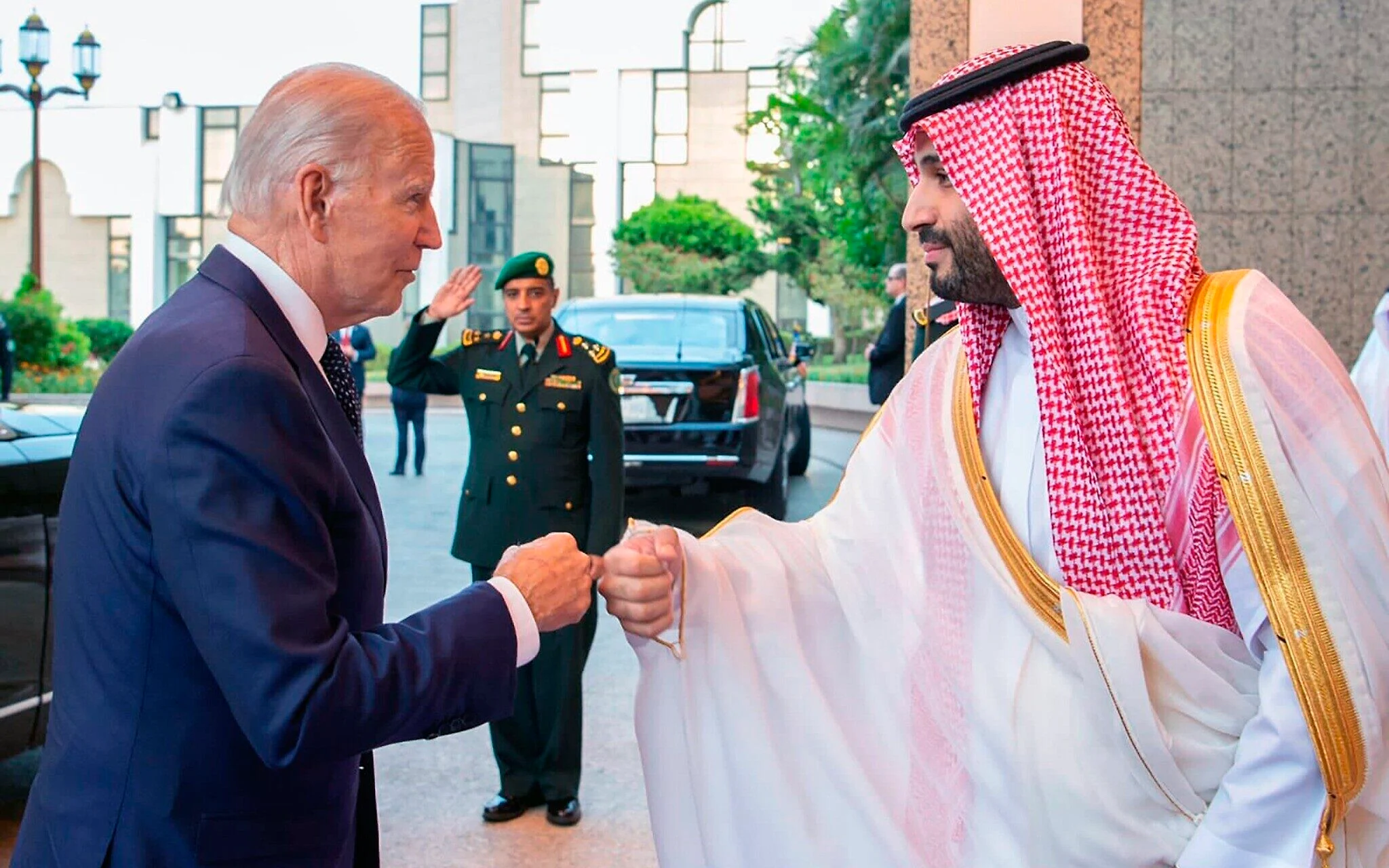
Once in office, President Biden had, by all accounts, been unenthusiastic about patching things up with the Saudis. His staff convinced him to try, but I don’t think his heart was ever in it. His July 2022 visit to Jeddah, now known mostly for an awkward fist bump with MBS, seemed to be one of the rare state visits by a US president that left the relationship – both government-to-government and leader-to-leader – in worse shape.
Things deteriorated further that fall when OPEC was poised to make a decision to cut oil production by two million barrels a day, a move which Washington felt would be ill timed. The disagreement became an acrimonious Rashomon tale: Did Biden want the Saudis to increase oil production to ease gas prices in America and solve a political problem in advance of the 2022 mid-terms? Or was Washington only interested in stabilizing global oil markets and denying Russia the benefit of higher oil revenue after its invasion of Ukraine? The incident left Washington and Riyadh embittered and deeply estranged. White House officials started telling the media that the administration was “reexamining the relationship” with Saudi Arabia. I sensed that people around both Biden and MBS felt this wasn’t just a hiccup in the relationship; it was the last straw in a stream of grievances that began with the Khashoggi episode and had never been resolved, only papered over. Were American and Saudi leaders ready to walk away from a partnership that endured for nearly a century? Saudis I later met who knew America well told me they had never seen things so bad.
In that dark period, almost improbably, discussions began between the Biden team and the Crown Prince about a grand deal that would not only put the relationship back on a sound footing, but could potentially change the trajectory of the modern Middle East.
What MBS wanted
Saudi Arabia was then in the early years of a massive social and economic transformation called Vision 2030, and their plans were threatened by nothing so much as their own volatile region. It was also a period of transition for MBS, from what I came to regard as his age of misadventure – think murder of Khashoggi, war in Yemen, blockade of Qatar – to an age of astonishing ambition, which brought the effective emancipation of Saudi women; investments in technology, AI, and green energy; billion-dollar “giga-projects,” not to mention rock concerts and sporting events inconceivable only a few years earlier. MBS’s goal became protecting at all costs the transformation which he deemed essential groundwork for the kingdom’s post-fossil fuel future. The best protection, he concluded, would be an insurance policy of sorts against his region’s instability and its principal trouble-maker, Iran.
What MBS had in mind was a mutual defense treaty between the United States and Saudi Arabia. At that point, the United States had not formalized a mutual defense treaty in over 60 years – since the 1960 revision to the US-Japan Security Treaty. Such an agreement would require US Senate ratification, meaning 67 Senators – Republicans and Democrats – would have to vote for it. The Saudis knew it was no small ask, and so they put something on the table that was seriously tantalizing: normalized relations between Saudi Arabia and Israel.
From the Saudi perspective, I think it is often underappreciated how Saudi Arabia sees its security fundamentally anchored in its relationship with the United States. Decades of arms purchases, training, joint exercises, and base access agreements meant the US-Saudi military partnership was not easily replaceable. And the relationship had survived, often thrived, across eight decades and through multiple crises, including the 1973 oil embargo and the terrorist attacks of 9/11. The Saudis may have found the United States frustrating and sometimes fickle, but there was no alternative partner, and a mutual defense treaty with Pakistan or Turkey – which incidentally they now have – simply doesn’t carry the same weight. MBS knew only the United States could provide the insurance policy he sought to protect Saudi Arabia’s massive investment in transformation.
On the US side, Biden’s advisors told me the President, despite his neuralgia about MBS, really didn’t want that relationship to blow up. It is also fair to say MBS’s willingness to put normalization on the table gave Saudi Arabia enormous leverage with Biden and his team, who at that point faced a Middle East filled with multiple crises to manage, but no potential legacies to tout. What is more, Saudi Arabia was expected to play a major role in global oil markets for decades more, and the United States believed the partnership would be critical in the event of a regional war. And, by the way, it turned out the United States was wrong about the OPEC+ oil cuts – the decision to cut oil output at the October 5, 2022 OPEC+ meeting didn’t spike oil prices. In fact, prices edged downward for at least the next year. In the end, Biden saw a chance to do something historic that would easily top the Abraham Accords signed by his predecessor. And Lindsey Graham wanted to help.
It didn’t hurt that in the spring of 2023, a few months after negotiations of this grand deal began, the Saudi government announced a multi-billion dollar deal to purchase a fleet of Boeing 787 Dreamliners, to be manufactured in, of course, South Carolina. It was part of a choreographed plan to put the US-Saudi relationship on a sounder footing after that turbulent first year of the Biden Administration. Graham said the announcement “validates the quality of the South Carolina workforce,” and called the Saudi decision “a game changer in so many ways.” He meant it was a game changer for South Carolina, for Boeing, and for the US-Saudi relationship. But the Boeing deal, and the emerging prospect of Saudi-Israel normalization, also stood to be a game changer for Senator Graham personally.
By the time I got to Riyadh in April, the normalization negotiations were happening largely in the background. But in the foreground, the tenor of the relationship had changed. Saudi officials and ordinary citizens seemed pleased to see a US ambassador in their country – the previous one had left nearly four years earlier. The Saudis who had been the most nervous about the relationship now seemed the most relieved. Visitors from Washington, including members of Congress from both parties, were visiting the country more frequently.
Saudi Arabia was still a long way from formal relations with Israel, but in those first months of 2023, until the horrific events of October 7, the temperature on things Israeli was turned down ever so perceptibly. The administration’s envoy for combating antisemitism visited the Kingdom in 2022 on her first international trip in that position and was even featured positively in Saudi Arabia’s English-language newspaper, Arab News. I remember meeting with a delegation from the American Jewish Committee – not their first visit to the Kingdom, but in this one I could feel their optimism that the region was finally headed in the right direction. The Saudis historically had not permitted Israeli citizens to travel there, but they began hosting major UN events and now had an obligation to allow Israeli officials to visit.
In September, I met in my official residence with Israel’s delegation to the UN World Heritage Committee, who we believed were the first Israeli diplomats ever to travel to Saudi Arabia on their official passports. In October, an Israeli delegation, including their communications minister and a member of the Knesset, visited the kingdom for the annual meeting of the Universal Postal Union. They were staying at the Riyadh Ritz-Carlton – the very same Ritz-Carlton where a few years earlier MBS had “hosted” hundreds of Saudi businessmen and rival Royal family members as he consolidated power. It was the Jewish holiday of Sukkot, and I remember their delegation head, an observant Jew, wanted help getting a room with a balcony so he could build a sukkah and sleep outdoors. That is when I discovered that none of the rooms at the Ritz-Carlton had balconies.
Keeping normalization alive
But after October 7, the only news coming out of the Middle East was the Gaza war. The plight of the Israeli hostages in Gaza, and the gruesome Israeli war on Gaza that ensued, seized the attention of the Biden White House and of governments throughout the region. That didn’t stop negotiations of the grand deal, though, and didn’t slow Graham’s enthusiasm for it. On October 21, just a few weeks after the October 7 attacks, Graham brought a delegation of ten US Senators, five Republicans (including himself) and five Democrats, to Riyadh. It was ten percent of the US Senate, Graham proudly told MBS, and maybe one of the largest Senate delegations overseas ever.
Graham, by his own account, saw his role as building Senate support for ratification of an eventual normalization deal. By my estimation, he was succeeding. Except for Graham, none of the other nine Senators had been to Saudi Arabia before, and none would state explicitly that they supported a deal they had yet to see in writing. But after our meeting with MBS at Al-Yamama Palace in Riyadh, the nine senators Graham brought to the kingdom all seemed favorably impressed – with MBS personally, with the transformation Saudi Arabia was undertaking, and with the value of the US-Saudi partnership.
Many of our official visitors to Saudi Arabia were surprised to discover how disarmingly informal MBS could be, even in the exaggeratedly formal surroundings of a Saudi royal palace. American officials nonetheless treated MBS – then the Crown Prince but already Saudi Arabia’s effective monarch – with great deference. Senator Graham was deferential, too, seeming to make a special – though not totally successful – effort to curb his well-practiced profanity.
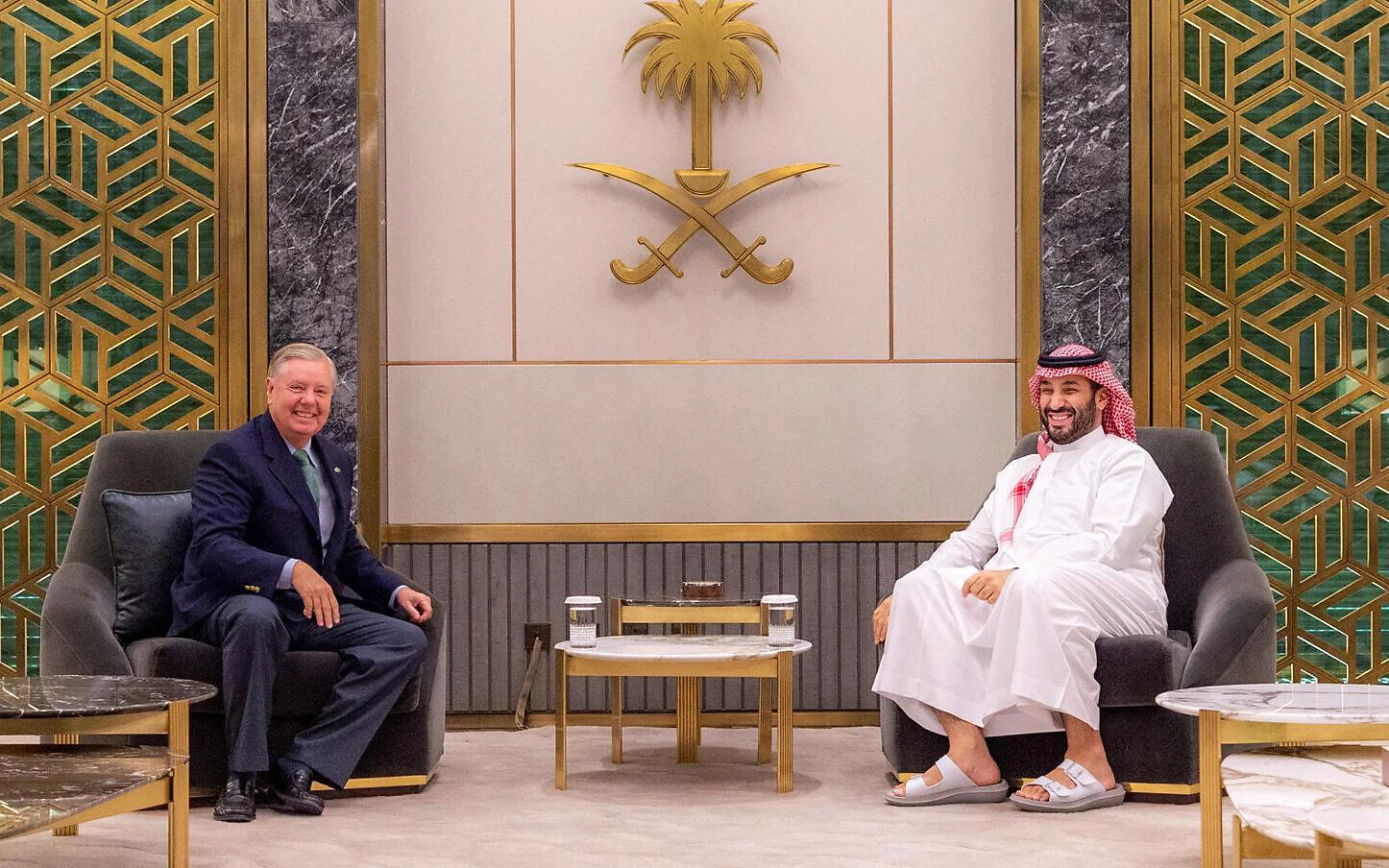
Whatever you thought of his politics, I found Graham to be a natural diplomat, formal when he needed to be, and a folksy and sometimes irreverent southern gentleman when it suited the occasion. An obsessive golfer, Graham often tried to fit 18 holes in his Saudi itineraries. He certainly wasn’t the only official visitor to do so, but he was the only one to end a meeting with MBS by telling him, “Thanks for listening, now let’s play golf.” No, MBS was not at that point a golfer, but Graham’s mix of formal and folksy made for an unexpectedly easy rapport with the Crown Prince.
For me, the quintessential Lindsey Graham moment came in January 2024 at the Crown Prince’s tent encampment, deep in the hill country of AlUla in Saudi Arabia’s northwest. MBS would spend several weeks a year there on a sort of working vacation, occasionally receiving official visitors in traditional Saudi style. Sitting on cushions on the floor of a Bedouin tent, sipping tea and Arabic coffee, it was quite unlike the normal visits in the ornate and high-ceilinged reception rooms of Saudi palaces. In that setting, I saw even the stiffest visitors relax.
After the official part of the meeting was over, MBS, Graham, and their entourages all moved to an adjacent Bedouin tent and sat down on cushions around a large, low dinner table. There were about 15 of us around a table laden with enough food for 50, including roast lamb and chicken, platters of rice, and traditional Saudi dishes like kebsa and jareesh. I had seen a lot of food-laden tables in my three decades of Foreign Service assignments in the Middle East, but this one won the prize for abundance.
Senator Graham sat across from MBS, and the conversation over dinner turned from Israel, Gaza, and Iran to a comparison of American and Saudi politics and societies. Graham and MBS both seemed to be in their element. At one point, Graham began lauding the Crown Prince for his vision and leadership: “Your Royal Highness, all I can tell you is that you are the right man at the right time, and President Trump believes the same thing” – then a beat for comedic effect – “about himself.”
MBS’s English is quite good, and he clearly got the joke. In my experience, not many American visitors joked with MBS, and I think he appreciated Graham’s relaxed informality. At one point, in a classic gesture of Arab hospitality, MBS stood up and started ladling food onto Graham’s plate. Graham was delighted. “If this Crown Prince thing doesn’t work out,” he told MBS, “you should open a restaurant.”
What drove Graham
I am not a Lindsey Graham expert (Washington has plenty of those), but I had my own theory about why Senator Graham was such a determined advocate of normalization, willing even in our bitterly polarized politics to give the Biden Administration credit if it succeeded. By the time discussions of normalization were underway in late 2022, Graham was already years past his biting criticism of Donald Trump, whom he once called a “race-baiting, xenophobic, religious bigot.” After John McCain’s passing in 2018, Graham seemed adrift. Senator McCain had been Graham’s long-time friend, political ally, and traveling companion. Like many Foreign Service Officers, I remember hosting the two of them – in my case, in Jerusalem a decade ago – and found myself captivated by their camaraderie. But with McCain gone and Trump firmly in control of his party, Graham eventually concluded that a partnership with Trump was his only path to political relevance. From that point onward – with a short break over the January 6 insurrection – Graham’s fate was inextricably tied to Trump’s.
Again, this is just my theory, but I think Graham felt he was at risk of becoming a tragic figure in American politics – he was basically a Senator for life, still committed – like McCain had been – to a muscular foreign policy and the defense of Israel. But he was otherwise thoroughly beholden to Donald Trump. A grand deal in the Middle East, one that strengthened Israel, cemented the US role in the region, and even advanced the cause of Middle East peace, could be the defining foreign policy achievement of Graham’s career. On one visit to Riyadh, he brought a film crew to follow him around. You don’t bring your own film crew, I thought, if you don’t believe they are there to document your legacy.
The logic of the deal under discussion – and this was Graham’s logic, too – was that there was something in it for everyone. Saudi Arabia would get a mutual defense pact with its long-time security partner, bolstering its defense against Iran. Israel would get diplomatic recognition by the Custodian of the Two Holy Mosques, the ultimate gesture of acceptance in a region where it was still treated by many like an alien presence. The Palestinians would get support – including from Israel – for a pathway to statehood. The United States would get a strengthened security, energy and commercial partnership with an ambitious and wealthy country in a volatile region. Only the something-for-everyone approach would ensure the support of 67 senators.
Graham also had a theory – really a certitude – about the politics of a normalization deal, and it lent urgency to his efforts. He thought it could only be done with a Democratic president and a Republican Senate. Enough Republicans and Democrats could be found to ratify a normalization and treaty deal if it were a Biden project. But Graham was certain Trump would win back the presidency in 2024, and after that no Democrat (or too few) would support the same deal if it were put forward by President Trump. I wasn’t sure I agreed with Graham’s analysis. What was working against eventual passage, I thought, was not neuralgia about Trump among Democrats, though that is obviously intense. It is the waning support for Israel among the US electorate. The idea that a deal would be worth ratifying because it was good for Israel was becoming an anachronism faster than many then realized.
One last window
Graham visited Riyadh on November 26, 2024, exactly three weeks after Trump’s victory in the US presidential election. It was Thanksgiving week – Graham often traveled overseas during the congressional recesses around US holidays, which was never great for the Embassy staff who dutifully support these visits. In an odd coincidence – and it really was a coincidence – Brett McGurk, President Biden’s senior advisor on the Middle East, was visiting at the same time, and part of the meeting with MBS that evening combined both of them in the room together. This was now more than a year after the October 7 attack and Brett had been utterly consumed with Gaza. There was a vague hope that a definitive end to the Gaza war could be somehow leveraged into a much bigger deal – Israel-Saudi normalization and the US-Saudi mutual defense treaty had been under negotiation for almost two years at that point. It seemed fantastical to me, but Graham was determined to try.
Graham felt there was a window until January 20, 2025, with a Republican Senate and a Democratic president. In that period, Graham explained a deal was still possible even with a lame duck Democratic president. If Trump came out in support of the deal – which would mean Trump supporting a Biden achievement – it would maximize Republican votes. The question was whether the Israeli prime minister could meet Saudi requirements on a two-state solution within the limited time left to seal the deal. Graham was traveling the next day to Israel and planned to test the proposition that a deal was still possible.
For many months, the Saudis had been clear, and very public, about their requirements for normalization with Israel. The full deal under discussion was a complicated collection of political, economic and military agreements – political, economic, military – and the details of what we called the “Palestinian component” had never been fully fleshed out internally, much less agreed to by Washington, Riyadh, and Jerusalem. But the Saudis made clear, vehemently so after the ferocity of Israel’s response to October 7, that at a minimum they would need an end to the war in Gaza and full Israeli withdrawal, and an explicit Israeli commitment to a pathway – they sometimes called for an “irreversible pathway” – to Palestinian statehood. I remember thinking that neither seemed likely to materialize. Netanyahu and his government had shown zero inclination to withdraw from Gaza, at least as long as Hamas retained its weapons, and had repeatedly pledged to the Israeli public to prevent the emergence of a Palestinian state.
Ultimately, I think Graham misjudged the gap between what Saudi Arabia (or Washington, for that matter) would need and what Netanyahu could offer. Graham told us as we were leaving that evening that he thought it was just a matter of “wordsmithing,” that Netanyahu and his team could come up with some rhetorical formulation that would satisfy Saudi Arabia and not cross the political allies who were keeping him in office. It would mean somehow bridging a Saudi demand for an “irreversible pathway to Palestinian statehood” with an Israeli government that was ideologically committed to obstructing Palestinian statehood. And it would mean doing it in the few weeks before Trump was inaugurated, or Graham’s political construct for passing a normalization deal would no longer be functional.
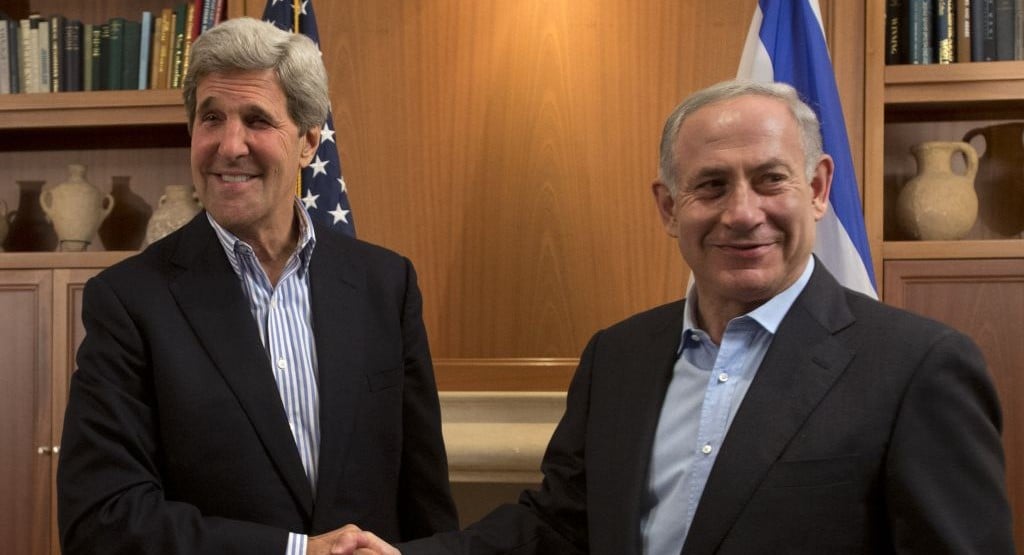
“Wordsmithing” in the Israeli-Palestinian context has had a long and unhappy history, and I suspect the Saudis understood that. In a famous speech in 2009 at Bar-Ilan University, Netanyahu – then under pressure from President Barack Obama – gave a heavily caveated endorsement of a two-state solution. In the subsequent months and years, he steadily edged away from even that wordsmithed vision of Palestinian statehood, until 2015 when he announced that the whole idea was “no longer relevant.” His Likud party called the Bar-Ilan speech “null and void.” During my time as US Consul General in Jerusalem, when Secretary of State John Kerry made his last stab at Israeli-Palestinian peace in 2013, it was clear that Netanyahu wanted no part of a peace process, but didn’t want to come out publicly opposed to Kerry’s effort. Their tactic was wordsmithing every proposal to the point of meaninglessness. Ask any negotiator who has ever waded into Israeli-Palestinian negotiations under Netanyahu, I discovered, and they will tell you all about wordsmithing.
It seemed unimaginable to me that Netanyahu, after decades of waning Israeli support for a two-state solution and his own repeated pledges to thwart it, and just a year after 1,200 Israelis were murdered on October 7, could utter words that would, in all likelihood, have had to be more forward-leaning and less wordsmithed than the Bar-Ilan speech. But Lindsey Graham seemed undeterred. The US Congress, after all, is where some of the toughest problems are solved by wordsmithing.
Graham was heading to Israel the next day and hoped to convince Netanyahu to announce an end to military operations in Gaza. That didn’t happen. Even now, with the Gaza ceasefire, Trump’s 20-point plan, and the Board of Peace, Israel still hasn’t announced an end to military operations there.
The narrative we often hear is that the brutal terrorist attack by Hamas on October 7 and the unrelenting and disastrous Israeli war on Gaza that followed conspired against normalization. But I don’t think October 7 was the sole reason for our inability to get a normalization deal across the finish line, or even the principal one. The biggest reason was and remains the unwillingness of the Netanyahu government and its constituents to support Palestinian statehood. Whether Lindsey Graham fully appreciated that, I can’t say.
The reality is that Saudi Arabia simply couldn’t be seen abandoning the Palestinian cause in pursuit of a relationship with Israel. For MBS’s own citizens, the Palestinian issue already had resonance, and it gained visibility with the Gaza war that showed little sign of waning. Saudi Arabia is the home of Mecca and Medina, and as such the kingdom plays a global role for Muslims in the Arab world and beyond who care strongly about the Palestinian cause. In fact, Saudi Arabia stood to benefit by being seen to advance the Palestinian cause in ways that Israeli normalization with other Arab states, including under the Abraham Accords, had not. MBS gives few public speeches, but addressed the Palestinian issue head-on at his September 2024 speech before Saudi Arabia’s quasi-legislature, the Shura Council: “The kingdom will not cease its tireless efforts toward establishment of an independent Palestinian state, with East Jerusalem as its capital; indeed, we affirm that the kingdom will not establish diplomatic relations with Israel without that.”
Senator Graham did know the Palestinians were key to a deal, and he acknowledged as much to me and to the Saudis during that November 26 meeting. But a major factor would always be Netanyahu’s priorities, which were Israeli security and his own survival, not necessarily in that order. Graham said Netanyahu needed “to convince his people there wouldn’t be another October 7.” But Netanyahu was a “survivor,” fixated on his own future, Graham told us, adding in a very Lindsey Graham turn of phrase: “when the world ends, two things will be left: cockroaches and Bibi.”
While Graham was never an actual participant in any of the negotiations, he remained their biggest supporter, cheerleader and Senatorial whip for the whole endeavor. It is easy to dismiss a politician like Graham as cynical, and I don’t doubt he craved the personal legacy he thought normalization could bring him. But I also think he saw that he could be part of something truly consequential – building a united bulwark against Iran, a regionally integrated engine of technological development, a unified market for tourism and investment, the beginning of the end of Israel’s ostracism in its own region, and maybe even the last best hope for Palestinian statehood. For a US Senator, that wouldn’t be a terrible legacy.
After three years of war in Gaza and now Iran, the West Bank on the brink of chaos, and the unyielding words from Israel about Palestinian statehood, the climate for normalization has become profoundly inauspicious. But I doubt Graham would have given up. Before he died, Graham was reportedly planning another trip to Saudi Arabia. I am sure it would not have been his last.