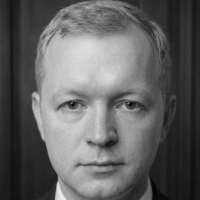
Lithuania has put itself, not Artur Fridman, on trial
Lithuania is prosecuting Artur Fridman for a Facebook post. In doing so, it did not merely target one Jewish citizen. It opened a door it cannot close. Case No. 02-2-00512-24 is not a prosecution of Fridman. It is a proceeding in which Lithuania’s entire Holocaust memory apparatus is now subject to judicial examination — because Lithuania itself created the forum.
No foreign government forced Lithuania to do this. No international body compelled it. Lithuania chose, voluntarily and of its own initiative, to deploy its criminal justice system against a Jewish citizen for speech about the Holocaust. That choice carries consequences Lithuania either did not foresee or did not care to consider. A criminal proceeding is not a press conference. It is not a parliamentary resolution. It is a forum governed by rules of evidence, rights of the defense, and obligations of disclosure. And the defense in a criminal case has standing to challenge the evidentiary and institutional basis of the prosecution.
That is where Lithuania’s problem begins.
To understand what Lithuania has placed at risk, it is necessary to understand what Lithuania built.
What Lithuania did between 1941 and 1944 did not end with the war. It embedded itself into the structure of the state. The houses stolen from murdered Jews became the homes of the next generation. The businesses seized under blood became the foundations of postwar commerce. The silence imposed on survivors became the narrative architecture of national memory. Lithuania built its post-Soviet independence on a foundation of unprosecuted theft, undisclosed collaboration, and unconfronted mass murder. The witness record — 121 signed survivor testimonies compiled by Koniuchowsky, documenting not only killers but spectators, beneficiaries, inheritors, and a wider social field of visible complicity — has been examined elsewhere.[^1] That record makes any claim of broad national innocence impossible. It describes a society in which Jews were humiliated in public, abused in public, robbed in public, murdered in public and replaced in public.
Lithuania never confronted that record. Instead, it constructed an institutional apparatus to manage and hide these existential obligations.
The Genocide and Resistance Research Centre of Lithuania — the LGGRTC — is that apparatus. It operates under parliamentary authority. Its director is appointed and dismissed by the Seimas. Its institutional purpose, as demonstrated by three decades of conduct, is not to investigate what happened but to control what the public is permitted to know. Lithuania’s own Seimas-created expert council described the institution as “de jure a research center, de facto a bureaucratic institution.”[^2] That description, published by LRT on March 22, 2026, came from within Lithuania’s own legislative framework. It is not a foreign accusation. It is a domestic finding.
The LGGRTC’s record of conduct supports that finding without ambiguity:
- In 2018, the LGGRTC published a public threat against a Holocaust accountability researcher — a act without precedent at any comparable institution in the European Union.[^3]
- The LGGRTC fabricated a claim that the United States Congress had exonerated Juozas Ambrazevičius-Brazaitis, a wartime head of the Lithuanian Provisional Government under Nazi occupation. Congressman Brad Sherman exposed that fabrication in letters to Lithuania’s prime minister in 2019 and to Lithuania’s ambassador in 2021, documenting the LGGRTC’s misuse of US Congressional records to construct a false exoneration that no American official had ever issued.[^4]
- In letter No. 13R-645, the LGGRTC itself acknowledged that Adolfas Ramanauskas was recruited by the Soviets under the codename “Dzūkija.” Lithuania has never reconciled that acknowledgment with the state funeral it held for Ramanauskas in 2018 or with its continued designation of him as a national hero.[^5]
- The LGGRTC has maintained the heroic designation of Jonas Noreika despite the published findings of his own granddaughter, Silvia Foti, who concluded that Noreika signed orders that sent Jews to their deaths.
- The LGGRTC has maintained the heroic designation of Kazys Škirpa, founder of the Lithuanian Activist Front, whose organization issued calls for the removal of Jews from Lithuania before the German invasion.
In each case, the pattern is identical: designation first, evidence later, and when evidence contradicts the designation, the designation holds. That is not research. It is narrative maintenance enforced by institutional authority.
This is what moral corruption looks like in institutional form. It does not require that every Lithuanian citizen today bears personal guilt for 1941. It requires only that the state — through its laws, its institutions, and its prosecutorial choices — continues to protect the narrative that made the crime invisible. And that is precisely what Lithuania does.
The legacy of what Lithuania did has not faded. It has calcified. It now determines who is prosecuted, who is honored, and who is silenced. It determines that Artur Fridman faces criminal prosecution for a Facebook post while the files on Lithuania’s officially honored national figures remain closed to independent review. It determines that Lithuania spends state resources prosecuting Jewish speech while spending nothing to investigate whether the men it calls heroes participated in or benefited from the destruction of 96% of Lithuanian Jewry.
That is not a country that has confronted its past. It is a country that has institutionalized the denial of its past and now enforces that denial through criminal law.
In 1961, Israel brought Adolf Eichmann to trial in Jerusalem. The prosecution of one man became the vehicle through which the Holocaust entered public consciousness. Survivors testified. Documents were exhibited. The machinery of genocide was exposed to a worldwide audience. The Eichmann trial put the Holocaust itself on trial through the prosecution of a perpetrator.[^6]
Lithuania has now created the structural inverse. By prosecuting a Jew for speech about the Holocaust, Lithuania has handed the world a forum in which Lithuania’s own Holocaust record is subject to judicial examination. The Eichmann trial put a Nazi bureaucrat on trial and exposed the system he served. The Fridman case puts a Jewish citizen on trial and exposes the system that prosecutes him. In both proceedings, the individual case becomes the vehicle for institutional exposure. The difference is that Israel chose accountability. Lithuania chose persecution. And in choosing persecution, Lithuania placed itself, not Fridman, in the dock.
This is not a metaphor. It is a structural consequence of criminal procedure.
If the Lithuanian state’s case against Fridman rests on the premise that its national heroes are legitimate objects of reverence — that speech challenging their honor constitutes a criminal act — the defense has standing to demand the due diligence files that support those designations. That means the LGGRTC’s internal records on Noreika, Ramanauskas, Brazaitis, and Škirpa are potentially subject to disclosure. The files that Lithuania has kept sealed from researchers, journalists, historians, and foreign governments may now be subject to judicial compulsion — because Lithuania itself initiated the proceeding that makes them relevant.
The Brazaitis file alone would be devastating. The fabricated American exoneration — already exposed by a sitting US Congressman — would enter a judicial record. Ramanauskas’s file would force Lithuania to reconcile a state funeral with a Soviet recruitment acknowledgment its own institution produced. Noreika’s file would force Lithuania to reconcile a heroic designation with the documentary record his own descendant assembled. Škirpa’s file would force Lithuania to reconcile national honors with the founding documents of the Lithuanian Activist Front.
Lithuania sealed these records to protect its narrative. By prosecuting Fridman, it created the legal mechanism to unseal them. Out of its own hostility toward a Jewish citizen, Lithuania handed the world the procedural opportunity to force open the files on every figure it has fraudulently honored.
Lithuania as a state stands guilty of Holocaust fraud. For three decades it has operated an institutional apparatus designed to obscure, minimize, and falsify the historical record of its participation in the destruction of its Jewish population. It has honored men whose records contain evidence of collaboration. It has published false claims of foreign exoneration. It has threatened researchers who challenge its narrative. It has refused to open its files to independent review. And it has now deployed its criminal justice system against a Jewish citizen whose speech threatens the structure of that fraud.
The Fridman case is not about Fridman. It is about Lithuania. It is about whether a European Union member state can construct a false Holocaust narrative, protect that narrative through a state-funded institution, enforce that narrative through criminal prosecution, and face no accountability.
The answer, if there is justice, is no. The Fridman proceeding gives the international community the mechanism it has lacked: a judicial forum in which Lithuania’s institutional fraud is subject to evidentiary challenge. Every file the LGGRTC has sealed, every hero it has manufactured, every exoneration it has fabricated — all of it is now within reach of a defense team with the standing to demand disclosure.
Lithuania did this to itself. No foreign government forced it to prosecute a Jew. No external pressure compelled it to use criminal law against speech about the Holocaust. Lithuania chose this. And in choosing it, Lithuania placed its entire Holocaust memory apparatus on trial in a proceeding it initiated, in a courtroom it controls, under a legal system it administers. If the files are opened, the fraud will be exposed. And that exposure will not come from a foreign critic or an advocacy organization. It will come from Lithuania’s own judicial process, triggered by Lithuania’s own prosecutorial decision.
Lithuania will now eat the fruits of its own crimes. It murdered 96% of its Jews. It stole their property. It built a national memory on the graves of 220,000 human beings. It honored the men who helped destroy them. And when one Jewish citizen spoke, Lithuania prosecuted him — and in doing so, handed the world the key to the archive it has spent thirty years trying to keep locked.
The record is now before a court. Lithuania put it there.
–
[^1]: The witness record is drawn from The Lithuanian Slaughter of its Jews: The Testimonies of 121 Jewish Survivors of the Holocaust in Lithuania, Exposed for the First Time, compiled by Rabbi Ephraim Oshry based on the Koniuchowsky testimonies (569 pages, 121 signed accounts). For analysis of the spectator and social complicity evidence, see Grant Arthur Gochin, “The Spectators Lithuania Forgot,” Times of Israel.
[^2]: LRT, March 22, 2026, reporting on the findings of a Seimas-created expert council, which described the LGGRTC as “de jure a research center, de facto a bureaucratic institution.”
[^3]: LGGRTC, 2018 published statement. For documentation and analysis, see Grant Arthur Gochin, Substack, https://grantgochin.substack.com.
[^4]: Congressman Brad Sherman, letters to the Prime Minister of Lithuania (2019) and the Lithuanian Ambassador (2021), challenging the LGGRTC’s misuse of U.S. Congressional documents to falsely claim American exoneration of Juozas Ambrazevičius-Brazaitis. See also Grant Arthur Gochin, “The Brazaitis Fraud,” Substack, https://grantgochin.substack.com.
[^5]: LGGRTC letter No. 13R-645, acknowledging the Soviet recruitment of Adolfas Ramanauskas under the codename “Dzūkija.”
[^6]: The Eichmann trial (1961) was the first proceeding to present the Holocaust in full detail before a judicial body, putting survivors at center stage and broadcasting their testimony worldwide. See Yad Vashem, “About the Eichmann Trial,” https://www.yadvashem.org/holocaust/eichmann-trial/about.html; United States Holocaust Memorial Museum, “Eichmann Trial,” https://encyclopedia.ushmm.org/content/en/article/eichmann-trial.