
‘Lousy Like Usual’ Is No Longer a Jewish Option
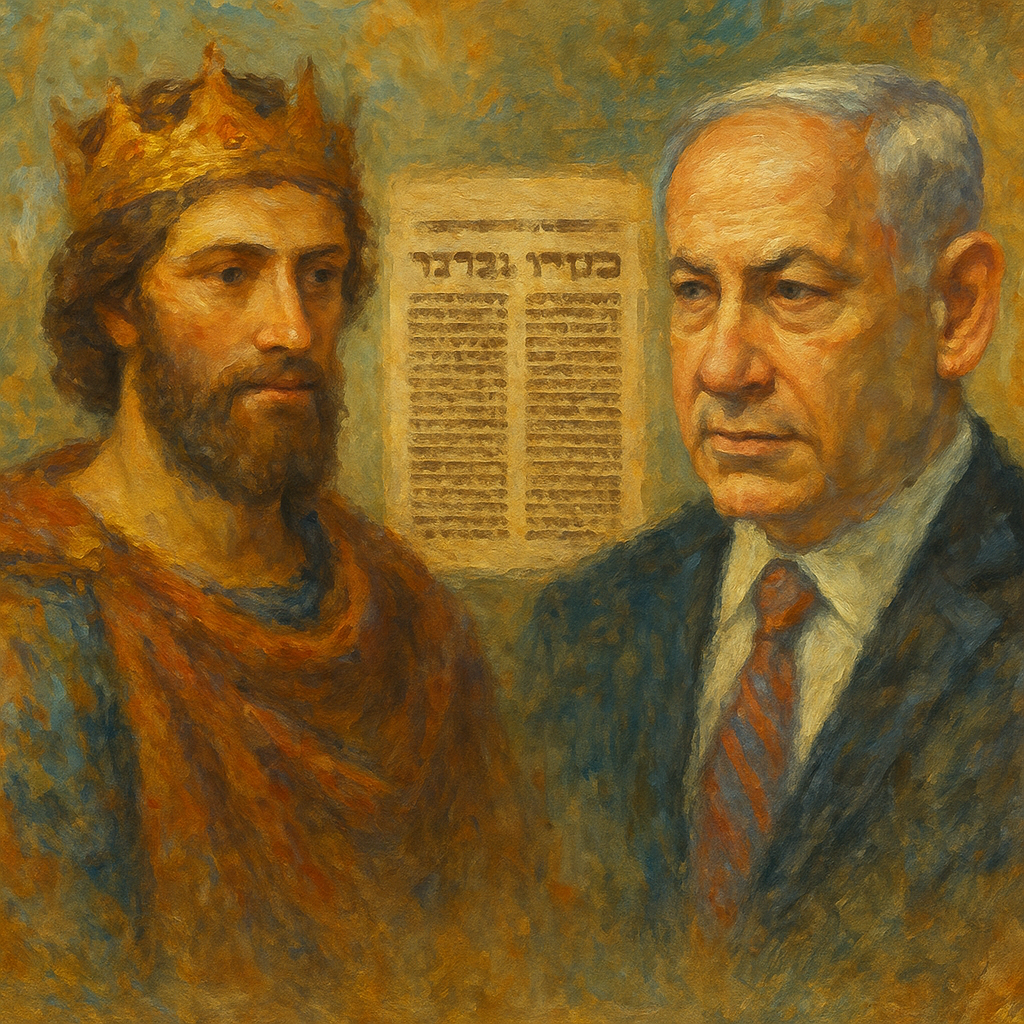
From Torah and Talmud to today’s Israel and Diaspora, our tradition demands more from leaders than the mediocrity we’ve learned to accept.
If you read Jewish history honestly, it’s hard to avoid a painful conclusion.
Most of the time, our leadership has been bad.
We prefer to tell our story as a chain of giants: Abraham, Moses, David, the Maccabees, Ben-Gurion. But zoom out, and the pattern reverses. Jewish history is made up mostly of long stretches of flawed leadership, punctuated by rare moments of genuine greatness.
The Torah and the Talmud are very clear about this. They don’t hide the failures. They showcase them.
The point is not to depress us. It’s to tell us, over and over: this is what happens when you lower the bar. And then they offer a handful of luminous counterexamples so we can never say, “Well, this is just how leadership works.”
Those exceptions exist for a simple reason:
Yes, this is what leadership can look like.
No, you are not allowed to call anything less “good enough.”
The problem is that, as a people, we’ve become used to “lousy like usual.” We shrug at bad leadership and call it realism. In Jewish terms, it’s something else: surrender.
Torah’s bar vs. our bar
Start with the Torah’s laws of kingship in Deuteronomy.
A king in the ancient Near East is normally above the law. He is the law. The Torah does the opposite. It puts the king under a set of tight constraints:
- He may not multiply horses, wives, or personal wealth.
- He must write a Torah scroll and read from it “all the days of his life.”
- “So that his heart be not lifted above his brothers.”
This is not a sociological description of how kings behave. It’s an ethical demand: if your king looks like every other king, something is wrong.
The Talmud tightens the screws. It doesn’t romanticize power. It treats leadership as conditional, limited, and revocable.
The story of Rabban Gamliel is the classic example. As nasi, he humiliates Rabbi Yehoshua in public more than once. He uses his position to enforce conformity and crush dissent. Eventually the sages say, in effect, “No more.” They depose him and replace him with Rabbi Elazar ben Azarya. The beit midrash expands. More voices enter the room.
The message is sharp: a leader who rules by fear and humiliation is not a “strong leader.” He is disqualified.
In other words, the Torah and Talmud set a bar that looks something like this:
- Leadership is service, not entitlement.
- Power is bounded by law, not above it.
- Humility and willingness to admit error are essential, not optional.
- Leaders must share the burdens they place on the people.
- And above all, they may not become “machti et harabim” – those who lead the public into sin, corruption, or hatred.
That is the Jewish standard. It is not utopian; it is the baseline.
History as warning, not alibi
Now lay that standard over Jewish history.
The biblical record does not flatter our kings. For every David, there are dozens of rulers described as “doing evil,” building corrupt systems, or dragging the people into idolatry and injustice.
Solomon achieves dazzling things: wisdom, Temple, peace. And then he does exactly what the Torah warned against—multiplying wealth, horses, and wives. The kingdom fractures soon after his death. Great success followed by predictable overreach. We were warned.
The divided monarchy is worse. Jeroboam sets up rival sanctuaries and golden calves. Later kings normalize violence and idolatry. Their problem isn’t just private sin. It’s systemic misleadership.
Second Temple leadership, as remembered in rabbinic literature, is a study in what happens when you turn religious authority into a business model. High priesthoods are bought and sold. Elite families treat the Temple as a power base. Zealot leaders choose honor and ideological purity over the survival of Jerusalem.
These are not meant to be “that’s just politics” portraits. They are case studies in disaster.
The Talmud doesn’t record them so we can say, “Look, it’s always been this way.” It records them so later generations can’t hide behind that excuse.
And yet, we do. We take exactly this arc—corrupt kings, self-serving priests, false messiahs, narrow factional leaders—and we quietly translate it into:
- “They’re all corrupt.”
- “That’s how coalitions work.”
- “Religion and politics are always messy.”
We transform history’s warning into history’s alibi.
Today’s leaders stand in that same line
I’m not interested here in naming villains or heroes. That’s the quickest way to turn a moral argument into a fistfight.
I am interested in saying: the same tests still apply, whether we are looking at:
- Israeli political leadership,
- Israeli religious leadership,
- Diaspora organizational leaders, or
- Rabbis and educators across the spectrum.
The questions are the same ones the Talmud asked:
- Mission: Are you here to serve Klal Yisrael, or primarily your own position and your narrow base?
- Law and limits: Do you respect limits—constitutional, legal, halachic, institutional—or is your instinct to weaken checks on your own power?
- Humility and criticism: When confronted with failure, do you reach for spin, or for something like teshuvah: “We were wrong, we need to correct course”?
- Burden-sharing: Do you and your community actually share the risks and sacrifices your policies impose on others? Or do other people’s children bear the brunt while your circle remains protected?
- Impact on the public: Does your rhetoric make your followers more ethical, compassionate, and reality-based—or more hateful, fearful, and conspiratorial?
- Integrity: What do your actions show about money, appointments, and favors? Are you building institutions, or patronage networks?
Apply those questions across the board. Left, right, Haredi, Hiloni, Orthodox, Reform, American, Israeli, British, South African. Nobody gets a pass because they are “on our side.”
My claim is not that everyone fails every test. That’s not true, and it’s not fair. We do have leaders—mayors, military officers, local rabbis, activists, educators—who are quietly living much closer to the Torah’s standard than the headlines suggest.
My claim is that, on the whole, we have become accustomed to accepting far less. We have normalized:
- Politicians who treat the state as a personal legal shield or ideological lab.
- Religious leaders who defend institutions at any cost, but rarely admit error or abuse.
- Diaspora organizational heads who confuse donor management with moral clarity.
We shrug and call this realism. In the language of our own tradition, it’s something closer to aveirah b’shogeg that risks becoming b’mezid: from half-conscious failure to knowing complicity.
Why “lousy like usual” is no longer survivable
There were long eras in which Jews had very little agency over who led them. Foreign powers chose kings. Internal elites fought over what was left. Ordinary Jews tried to stay alive.
That is not our situation today.
We live in a time when:
- The State of Israel has enormous agency over Jewish destiny.
- The global Jewish community has money, education, and access that our ancestors could not dream of.
- We have elections, courts, media, and civic tools, however imperfect, that allow us to challenge and replace leadership.
In that context, continuing to treat “lousy like usual” as inevitable is not realism. It is a choice.
And because it is a choice, it is also a moral failure.
If we watch leaders treat law as disposable, treat other Jews as enemies, treat human lives as bargaining chips, and we keep supporting them because “the alternative is worse” or “that’s just how politics works,” then we are not just victims of bad leadership. We are co-authors of it.
Torah and Talmud don’t let us off that easily. They insist that a generation and its leaders shape one another. A corrupt generation earns corrupt leaders; a healthier generation demands and supports better ones.
The Torah did not tell us about Moses and David at their best so we could indulge in nostalgia and then accept whatever comes next. It told us about them so we would know what to expect, and what to demand.
Jewish history shows that mediocre and corrupt leadership is common.
Jewish tradition insists that it is never acceptable.
At this point in our story—after everything we have survived, and with the power we now hold—“lousy like usual” is not a description of reality. It is an indictment of our choices.
We can’t afford to keep making them.