

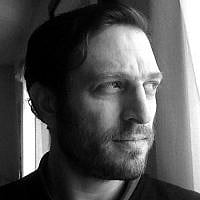
Lumina Wang Interview | Alexandre Gilbert #293
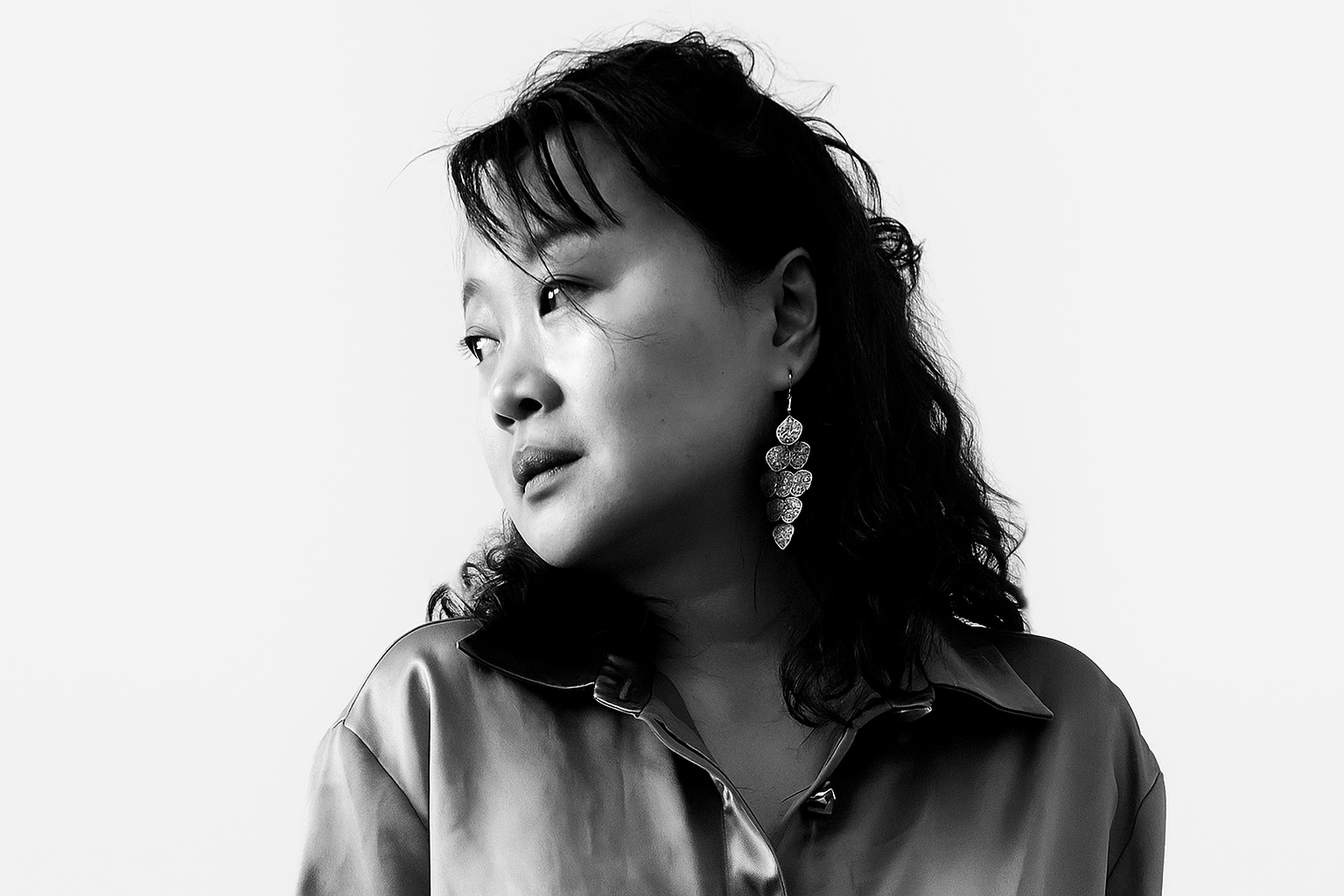
Lumina Wang is a multidisciplinary artist trained in cinema at the National Taiwan University of Arts and studied theater at Sorbonne Nouvelle University. She appeared in Jacques Audiard’s Les Olympiades (2021). The following text is inspired by her Master 2’s thesis in Philosophy at Panthéon-Sorbonne, The Multiple Unity: Unveiling the Actor’s Soul and the Art of Metamorphosis.
In the realm of performing arts, few disciplines demand as much from the human spirit as acting. Drawing inspiration from Lumina Yen-Chun Wang’s master’s thesis, “L’Unité Multiple ‒ l’âme de l’acteur et l’art de se métamorphoser,” this article explores the profound complexity of the actor’s craft. Wang’s work, rooted in philosophical notions of identity, delves into how actors navigate multiple selves, drawing from childhood memories, reincarnation metaphors, and transcendent inspirations to embody characters. Acting is not merely imitation or performance; it is a metamorphic journey that fuses body, mind, and soul, making it one of the most enigmatic and intricate art forms. Through this lens, we examine the actor’s desire to become “other,” the poietic process of transformation, the trance-like states of inspiration, and the power dynamics within the theatrical hierarchy.
The Desire to Become Other: Roots of the Actor’s Vocation
At the heart of acting lies an innate yearning to transcend one’s own identity—a desire Wang traces back to childhood games and collective memories. From a young age, humans engage in role-playing, mimicking doctors, teachers, or parents, fostering connections and self-recognition. This mirrors Jacques Lacan’s “mirror stage,” where identity forms through the gaze of the “Other.” For actors, this evolves into a professional calling, blending vanity, secrecy, and a quest for glory, as articulated by Louis Jouvet in Le Comédien Désincarné. Jouvet posits that acting begins with egoism but ascends to noble aspirations, allowing performers to “evacuate” themselves while seeking triumph.
Wang extends this to a metaphor of reincarnation, where actors “reincarnate” diverse identities, genders, ethnicities, and eras, yet retain an immutable core soul. This nomadic existence—flitting between individual, doubled, and becoming states—nourishes the actor but risks identity confusion. The profession’s mission is transmission: actors serve as intermediaries, conveying authors’ ideas while evoking audience empathy. Like shamans in ancient rituals, they bridge the sacred and profane, using masks and costumes historically to amplify this role. In modern contexts, the face and body become the mask, demanding “pure imitation” (Diderot) or full incarnation (Stanislavski), where actors pour their humanity into fictional beings.
This desire is also therapeutic, akin to drama therapy, healing through role-play and confronting repressed parts. Actors, Wang argues, seek connection with the “World,” reconciling self and society. Yet, it’s paradoxical: to exhibit, one must conceal; to triumph, one risks loss. The actor’s art thus embodies multiplicity, navigating time and space as a “fantasy machinery,” per Michel Foucault’s heterotopias—spaces like theaters that juxtapose incompatible realities, offering escape and perfection.
The Poietic Process: From Imitation to Metamorphosis
Wang’s second chapter dissects the actor’s creative process, or “poiesis,” as a metamorphosis from unity to duality. Beginning with text study, actors “enchant” characters, crafting biographies from subtle clues. Imitation is the foundation: Diderot’s “ideal model” guides actors to mimic gestures, voices, and emotions externally before internalizing them. Visualization—observing oneself in mirrors—fosters living images, but risks psychological peril if not balanced with personal essence.
Vocal expression is equally vital. Words, as creative forces (echoing Genesis or Gorgias’ “tyrant speech”), materialize thoughts and evoke emotions. Actors imitate tones, then interpret, blending internal dynamics with external actions. Eastern-Western distinctions emerge: Western acting emphasizes psychological depth (Actors Studio’s memory work), while Eastern traditions like Noh prioritize corporeal mechanics. Yet, both converge on body-mind unity, using “body maps” (Yoshi Oida) or “affective athleticism” (Artaud) to link postures with feelings.
Language games—monologues and dialogues—reveal limits: inner monologues build private identities, public ones expose thoughts, and dialogues spark conflicts or affections. Non-verbal cues amplify this: gazes, micro-expressions, breaths, tones, and silences convey the inexpressible, per Wittgenstein. Actors reclaim animality, projecting repressed shadows onto roles, blurring self and character in a cathartic ritual.
This process demands rigorous training, transforming actors into instruments. Inspiration bridges imitation to incarnation, where actors fully inhabit roles, achieving sublime moments. Wang emphasizes that metamorphosis isn’t mere change but rebirth, nourished by sensory memories and collective unconscious.
The Actor in Trance: Inspiration and Transcendence
Wang’s third chapter elevates acting to a trance state, where inspiration propels actors from inspiration to transcendence. Drawing from Diderot’s “sublime moment,” she distinguishes transcendental inspiration—mystical possession akin to Platonic Muses or shamanism—from empirical intuition, rooted in subconscious and repressed memories (Stanislavski, Jung).
Transcendental inspiration evokes divine possession: actors, like shamans, channel spirits, effacing self for collective ecstasy. Examples include Jan Fabre’s Mount Olympus, a 24-hour ritual invoking Greek tragedies through exhaustion-induced trances, or Beckett’s Waiting for Godot, tapping collective unconscious archetypes like salvation figures.
Empirical inspiration arises from rigorous preparation, unlocking “refouled memories” and “personal unconscious.” Actors draw from shadows, fusing intuition with technique for spontaneous brilliance. Commonalities include trance (division of consciousness), possession/liberation, spirituality (actor as medium), and resistance (fear of the unknown).
Other performative arts like Butoh—born from Hiroshima’s trauma, blending horror and poetry—or theatrical improvisation highlight inspiration’s role. Butoh dancers “dance with their corpses,” transcending dichotomies (life/death, body/spirit) via intuitive movements. Improvisation relies on shared “vital impulse” (Bergson), fostering collective creation through hazard and intuition.
Inspiration, whether divine or subconscious, culminates in incarnation: actors forget self, achieving ecstatic unity with characters, rewarding sensitive efforts with sublime performance.
The Actor as Pivot: Power Dynamics in Scenic Hierarchy
Wang’s final chapter positions the actor as “pivot” in a hierarchical “scenic society,” inspired by Howard Becker’s collective art worlds. Theater and cinema involve interdependent roles: production (founders managing resources), artistic direction (authors, directors, designers), fellow actors, and audience (ultimate judges).
Production wields financial power, influencing casting via auditions and star systems, often rendering actors passive. Directors hold creative authority, demanding conformity; actors navigate as “academic” (obedient) or “insubmissive” (rebellious, per Banu), risking isolation for authenticity.
Other creators shape actor’s expression: lighting casts shadows enhancing emotions, sets dictate spatial interactions, costumes/makeup aid metamorphosis. Fellow actors are partners/adversaries; chemistry fosters intensity, but conflicts arise from projections or hierarchies (leads vs. supports).
The audience, noblest tier, co-creates via imagination, evolving psychologically: initial recognition of actor, empathy with character, full identification yielding catharsis. Actors transmit energy, blooming like Zeami’s “flower,” rewarding metamorphosis with applause.
This hierarchy underscores acting’s collaborative yet precarious nature: actors dialogue with all, balancing self-effacement and assertion in a microcosm of society.
Conclusion: The Enigmatic Essence of Acting
Wang’s thesis illuminates acting as the pinnacle of artistic complexity: a metamorphic art demanding soul-deep surrender. Actors embody multiple unities, drawing from childhood play, reincarnation metaphors, inspirations, and power plays to transcend self. This craft, blending science and mysticism, heals and reveals human nature—ourselves as eternal performers on life’s stage. Yet, it risks identity loss, underscoring acting’s profound paradox: to become other is to truly become oneself. In a world of illusions, actors mirror our souls, reminding us that art’s true power lies in transformation.