Lviv’s Insult to Polish and Jewish Dead
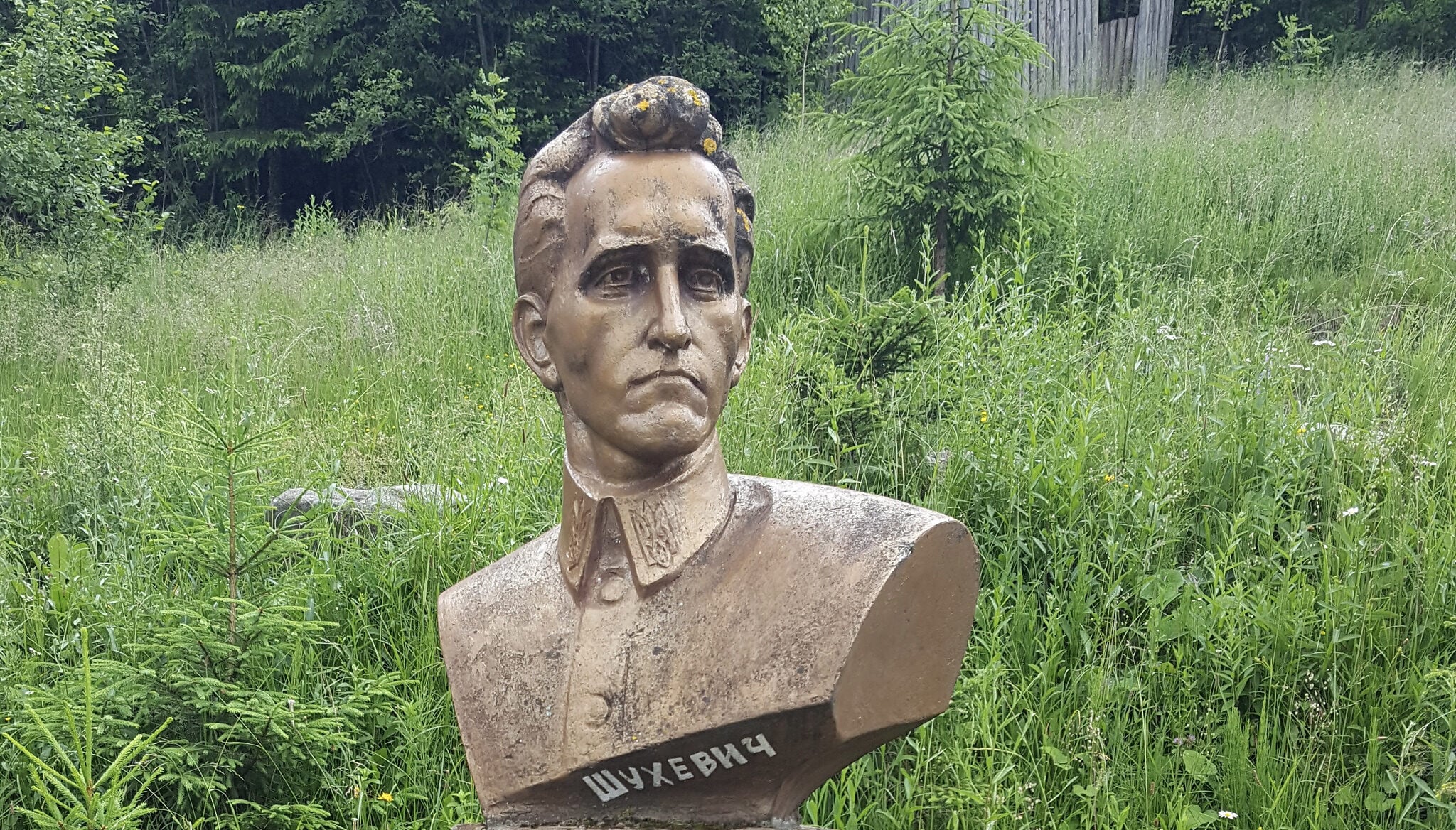
As Ukraine fights for its freedom, regional authorities in Lviv have chosen to glorify the Ukrainian Insurgent Army and its commander Roman Shukhevych. It is an insult not only to the memory of approximately 100,000 murdered Poles, but also to the Jewish victims of Ukrainian nationalist violence and Nazi collaboration.
On October 20, 2026, the Lviv Regional Council adopted resolutions declaring 2027 the Year of the Ukrainian Insurgent Army (UPA) and the Year of Roman Shukhevych, its supreme commander. A separate resolution honored nationalist activist Oleh Olzhych, who died in Nazi captivity and whose individual biography should not be conflated with Shukhevych’s.
The authorities plan an extensive program of commemorative and educational events. One council member described the honorees as “our heroes.”
But what kind of heroes massacre women and children? What kind of historical memory celebrates commanders responsible for ethnic cleansing?
The facts are devastating.
Between 1943 and 1945, the UPA and Ukrainian nationalists carried out a systematic campaign of mass murder against the Polish population of Volhynia and Eastern Galicia. The massacres were not random acts of wartime violence; they were the execution of a radical ethno-nationalist ideology crafted by the Organization of Ukrainian Nationalists (OUN-B), which sought an ethnically pure state by eradicating minorities. Approximately 100,000 Polish civilians were killed. Entire villages were wiped out. Women, children, and elderly people were murdered with extraordinary brutality.
On July 11, 1943, remembered as Bloody Sunday, UPA units launched coordinated attacks on 99 Polish settlements. Churches, homes, and farms became scenes of slaughter. These victims were not casualties caught between opposing armies. They were deliberately targeted because they were Polish.
Roman Shukhevych cannot be separated from this history. Before becoming the UPA’s supreme commander in late 1943, he had served in the Nachtigall Battalion, established under German military intelligence, and subsequently as an officer in the German-controlled Schutzmannschaft Battalion 201, deployed to occupied Belarus. As UPA commander, he oversaw the continuation of the campaign against Polish civilians in Eastern Galicia.
And the Jewish victims? They too have a place in this history of terror.
The antisemitic violence associated with the Organization of Ukrainian Nationalists is extensively documented. During the Lviv pogrom of July 1941, German occupiers, Ukrainian nationalist activists and militiamen helped unleash murderous violence against the city’s Jewish population. Local civilians, including Ukrainians and Poles, also participated.
According to the United States Holocaust Memorial Museum, Jews were beaten, humiliated, sexually assaulted and murdered. Thousands lost their lives.
The UPA itself did not yet exist in 1941. But its later history also includes the murder of Jews. Historian John-Paul Himka, in his extensively researched book Ukrainian Nationalists and the Holocaust, documents how OUN members participated in Nazi-controlled police structures and how UPA fighters subsequently killed Jews who had survived earlier waves of German extermination.
Some victims escaped the ghettos and killing operations only to be hunted down in the forests. Survival from the Nazis did not necessarily mean survival from Ukrainian nationalist violence.
This is not Soviet propaganda. It is documented history, supported by survivor testimony, archival evidence and serious scholarship.
In June, I wrote here an article entitled No Honor for the Killers of Poles and Jews. I argued that celebrating the UPA was an affront not only to Polish historical memory but also to Jewish memory and the victims of the Holocaust.
The latest decision in Lviv makes that warning even more urgent.
There is something profoundly disturbing about a European country seeking solidarity from democratic nations while some of its regional authorities publicly honor an organization responsible for the mass murder of civilians. Ukraine’s path to European integration cannot bypass the European culture of remembrance. A nation aspiring to join the European Union must align with its foundational values, which include honest confrontation with the darkest chapters of history, rather than glorifying those who orchestrated ethnic cleansing.
None of this diminishes Ukraine’s right to defend itself against Russia’s brutal aggression. Ukrainians fighting today for their country’s independence deserve international support. But resisting one criminal regime does not absolve historical figures of their own crimes.
Solidarity with Ukraine must never become an obligation to remain silent about genocide, antisemitism, or collaboration with Nazi Germany.
Ukraine has genuine heroes. This glorification is an insult to those heroic Ukrainians who risked their own lives to save their Polish and Jewish neighbors from UPA terror and Nazi persecution. They are the true heroes Ukraine should elevate today. It does not need to rehabilitate the perpetrators of ethnic cleansing to establish its national identity.
The Lviv Regional Council should reverse its decision. Ukraine’s national authorities should unequivocally reject the glorification of those responsible for atrocities against Poles and Jews.
History cannot be rewritten by resolutions, monuments or patriotic ceremonies. Murder does not become heroism simply because the perpetrators also fought for independence.
There can be no genuine Polish-Ukrainian reconciliation built on the glorification of mass murderers. And there can be no honest European remembrance of the Holocaust that ignores the Jewish victims of Ukrainian nationalist violence.
The dead cannot speak, but they demand truth. Honoring their executioners is a second death for the victims—and a moral failure for the living.
No honor for the killers of Poles and Jews. Not in 2027. Not ever.