Won't Be Silent
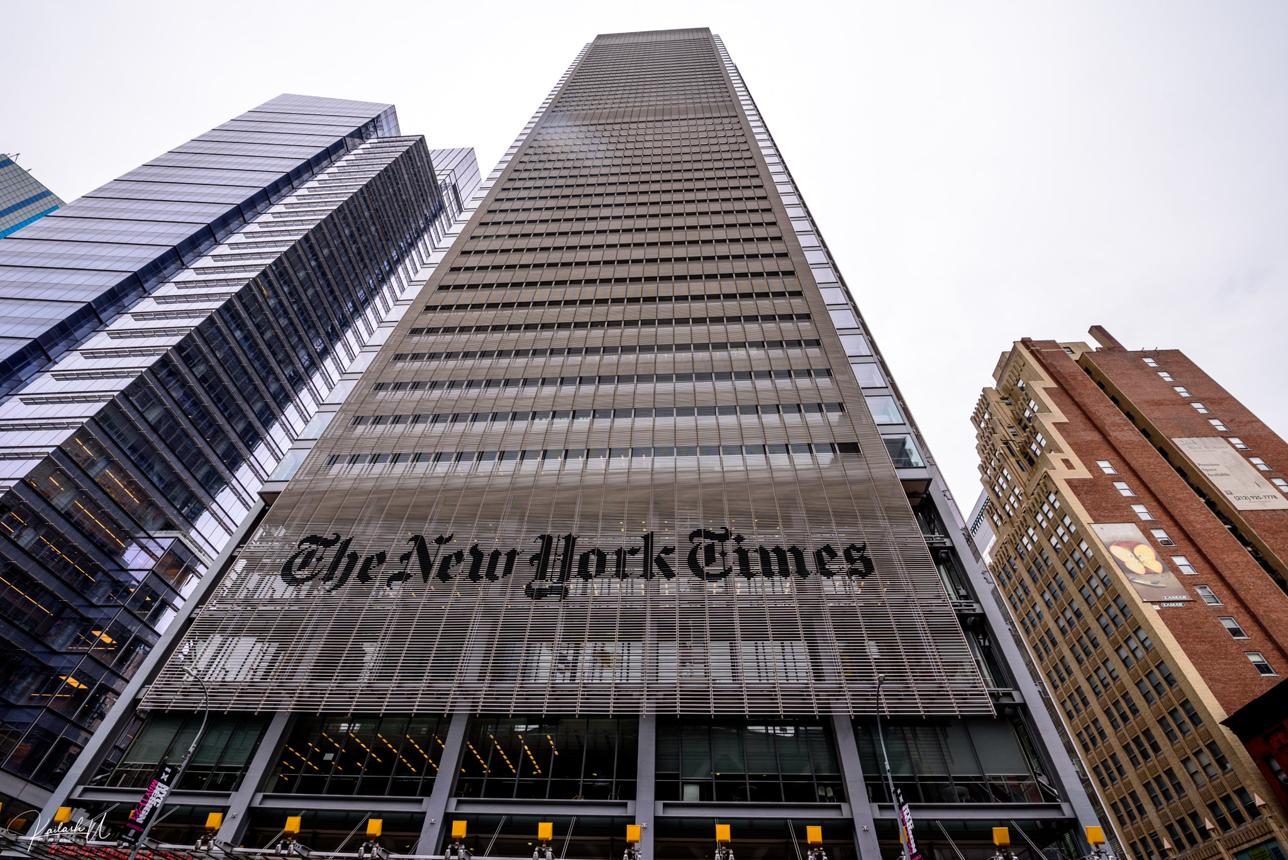
Making the Case Against The New York Times
Creative Commons CC0 1.0 Universal Public Domain Dedication.
“We Could Have Saved More Lives.” Say What?
Reading the New York Times interview with Mirjana Spoljaric, president of the International Committee of the Red Cross, I was getting ready to scream, expecting Israel to be misrepresented—or erased altogether.
Erased? No. Shortchanged? Yes.
So let’s talk about how Israel is shortchanged.
Looking at the Gaza question. It recites the Palestinian numbers: millions of people squeezed onto 30 percent of the territory, with more than 80 percent of its buildings damaged or destroyed. Then Spoljaric is asked whether the rules of war were followed there.
Where is the matching question about Hamas’s conduct in the war?
Where is any mention of October 7?
Nowhere.
The massacre that triggered the war—and created the hostage crisis at the center of this conversation—is never mentioned. Not by the interviewer. Not by Spoljaric.
Then come the hostages.
Did the Red Cross ever gain access to the Israeli hostages while they were held in Gaza?
Spoljaric shakes her head.
No.
It may be the most consequential answer in the entire interview. And she keeps going. There was, she says, “room to apply pressure earlier.”
Then: “We could have saved more lives.”
Say what? More lives!
Whose pressure? On whom? Applied when? Who didn’t push?
Nobody asks.
She met Netanyahu. She met Haniyeh. And still:
No “Why couldn’t you reach the hostages?”
No “What exactly did you demand from Haniyeh, face to face?”
No “What did you tell the families?”
The Red Cross deserves credit for helping bring hostages home. But people held for months and years without a single ICRC visit cannot be reduced to a tsk tsk and an admission that more lives could have been saved.
Coulda. Woulda. Shoulda.
The interviewer received both—and failed to pursue either.
The photographs follow the same pattern. The captioned pictures place Spoljaric in Gaza, Tehran and Moscow. Not one shows her in Israel, meeting hostage families or visiting Kibbutz Nir Oz.
Israel is in the interview. Israeli suffering does not receive equal weight.
Whether conscious or not, the pattern is hard to miss. Palestinian suffering gets the statistics and the scale. Israeli suffering gets a headshake—kinda like “whatever”—before the conversation moves on.
It does not require an outright lie. It requires the right question to go unasked—again and again.
One interview cannot prove the existence of an institutional culture, and let’s not pretend otherwise. But I am hardly the only person asking questions.
A peer-reviewed study published in Israel Affairs—and cited in the shareholders’ petition—found that the Times acknowledged 72 errors in its Israel-Hamas war coverage between October 2023 and June 2024, 48 of them concerning Israel. The study also examines what critics have called a “newsroom intifada”: internal pressure over how the newspaper reports and frames Israel.
I am not saying this interview proves the above thesis, but this is the kind of editorial framing that makes me want the standards placed on the table. Or want to scream.
Last month, the Florida State Board of Administration and the National Center for Public Policy Research—both Times shareholders—sued to obtain internal records concerning how the newspaper oversees its coverage of Israel and handles complaints about antisemitism.
The suit relies partly on allegations from a former Jewish newsroom employee who says she raised concerns about antisemitism and anti-Israel bias at least 15 times between 2019 and March 2026.
The Times says the suit “has no merit” and “was brought for an improper purpose.”
The lawsuit does not ask a court to decide whether the newspaper’s coverage is biased. It asks for records that could show how the company supervises its editorial standards and addresses concerns raised inside its own newsroom.
The so-called “paper of record” is being asked to show its work.
This doesn’t make the allegations true. But today’s interview offers a small example of why the questions should not be waved away.
The interviewer asked about Israel.
She just didn’t ask nearly enough.
So I am.
Because, as you know, I won’t be silent.