
Making the women of our story part of us: Ushpizot
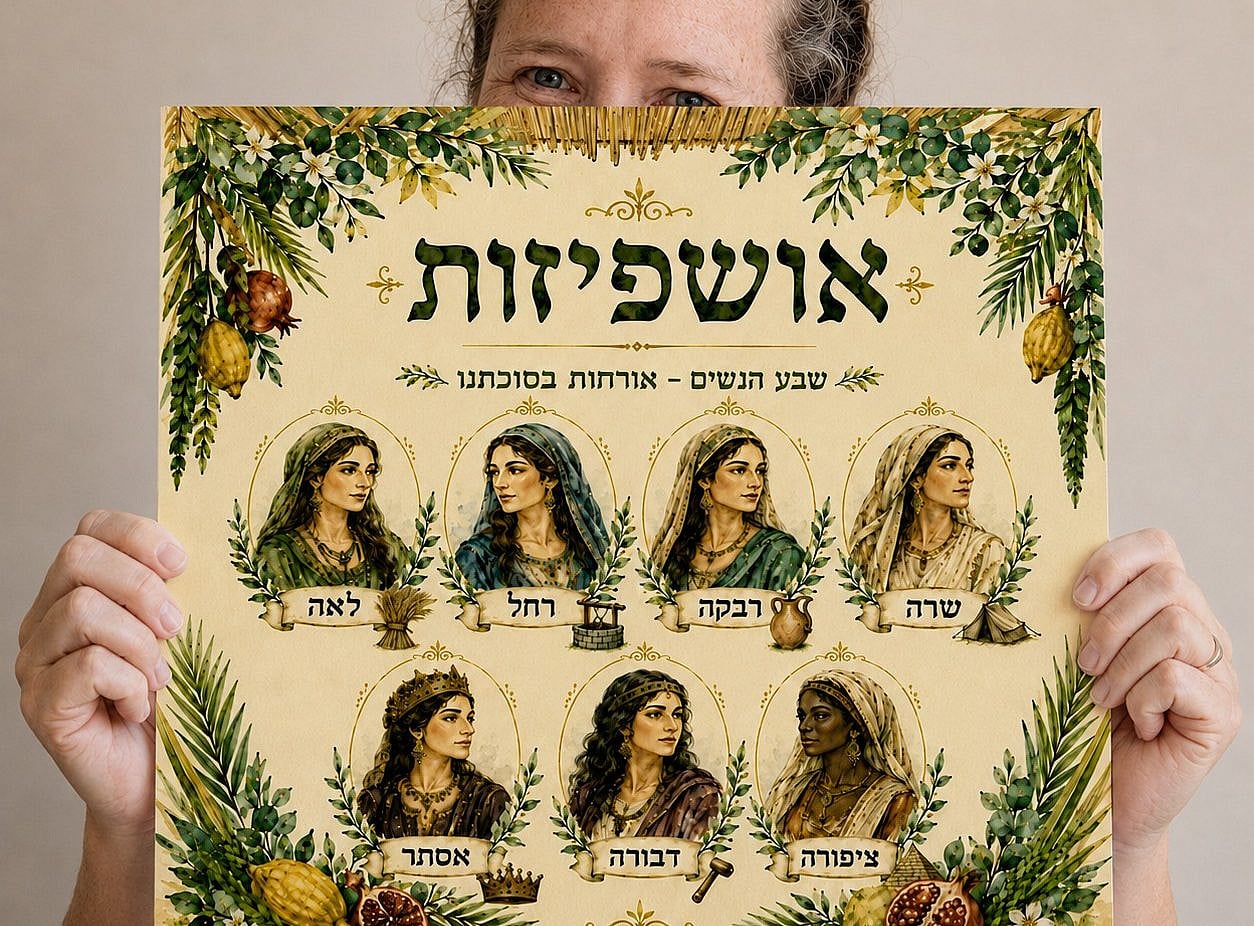
For more than 30 years, I have been sitting in sukkahs and being quietly annoyed by the same thing.
On the white-cloth sukkahs that seem to appear on balconies and in gardens all over Israel every Tishrei, there is almost always that traditional decoration: the Ushpizin, usually in gold, the seven male guests we symbolically invite into our sukkah.
Abraham. Isaac. Jacob. Moses. Aaron. Joseph. David.
Every year I would look at them and think: I really need to get some Ushpizot in here!
And then Sukkot would end.
A year would pass.
The sukkah would go down and then up
There they would be again.
And I would think the same thing.
Apparently, after more than 30 years, even I have a limit.
This year, I decided to actually do something about it.
The ridiculous part is that my husband owns a printing shop. That old story about the shoemaker’s children going barefoot, or in accord with the Hebrew expression, hasandlar holech yachef, the shoemaker himself goes barefoot, pretty much sums up the situation. I had spent 20 years complaining about the decorations in my sukkah while being married to someone who could literally print me new ones.
So I started designing.
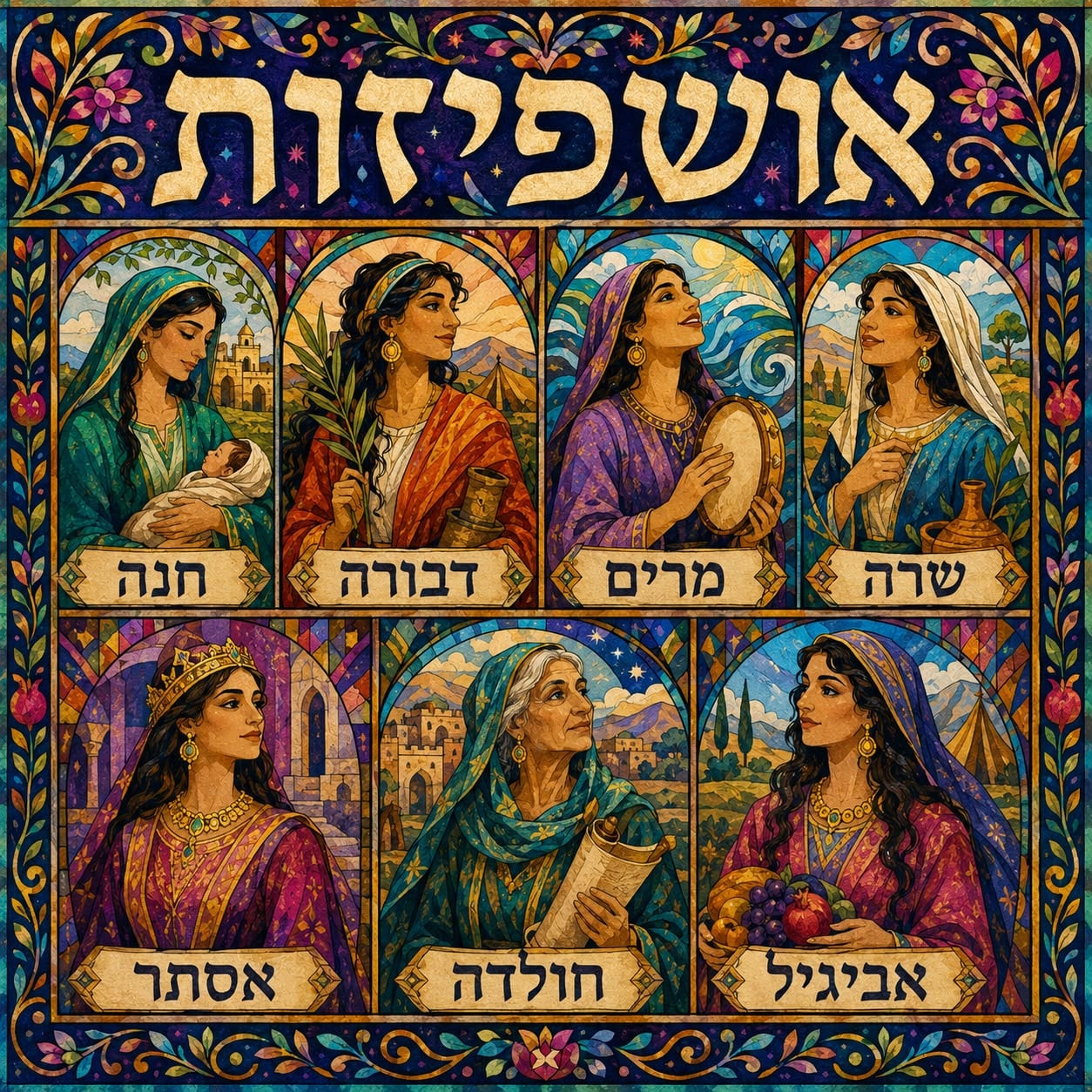
I thought the difficult part would be creating the artwork.
It wasn’t.
The difficult part was deciding which women get to come in.
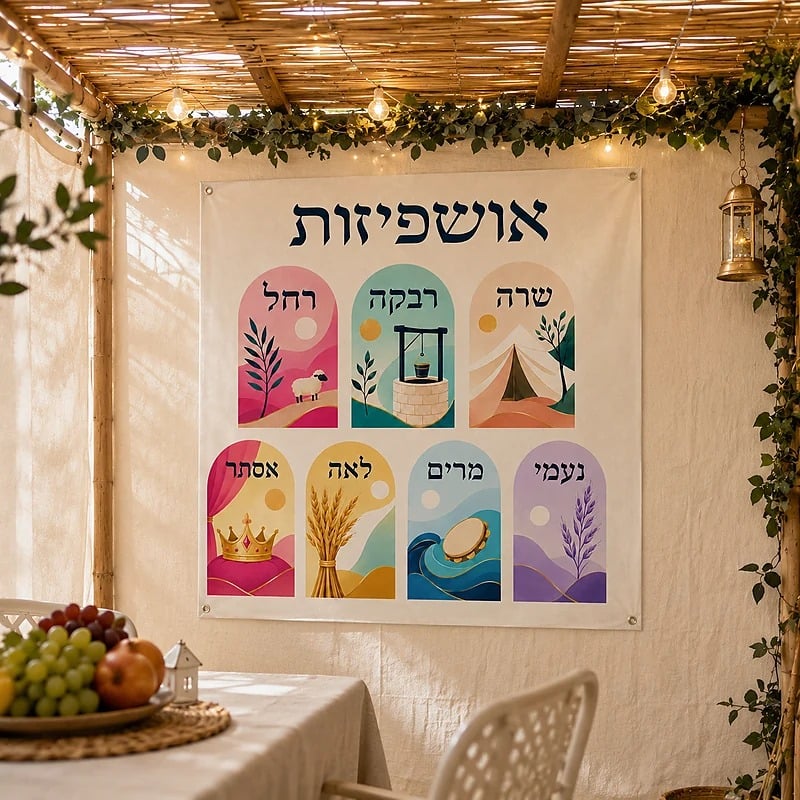
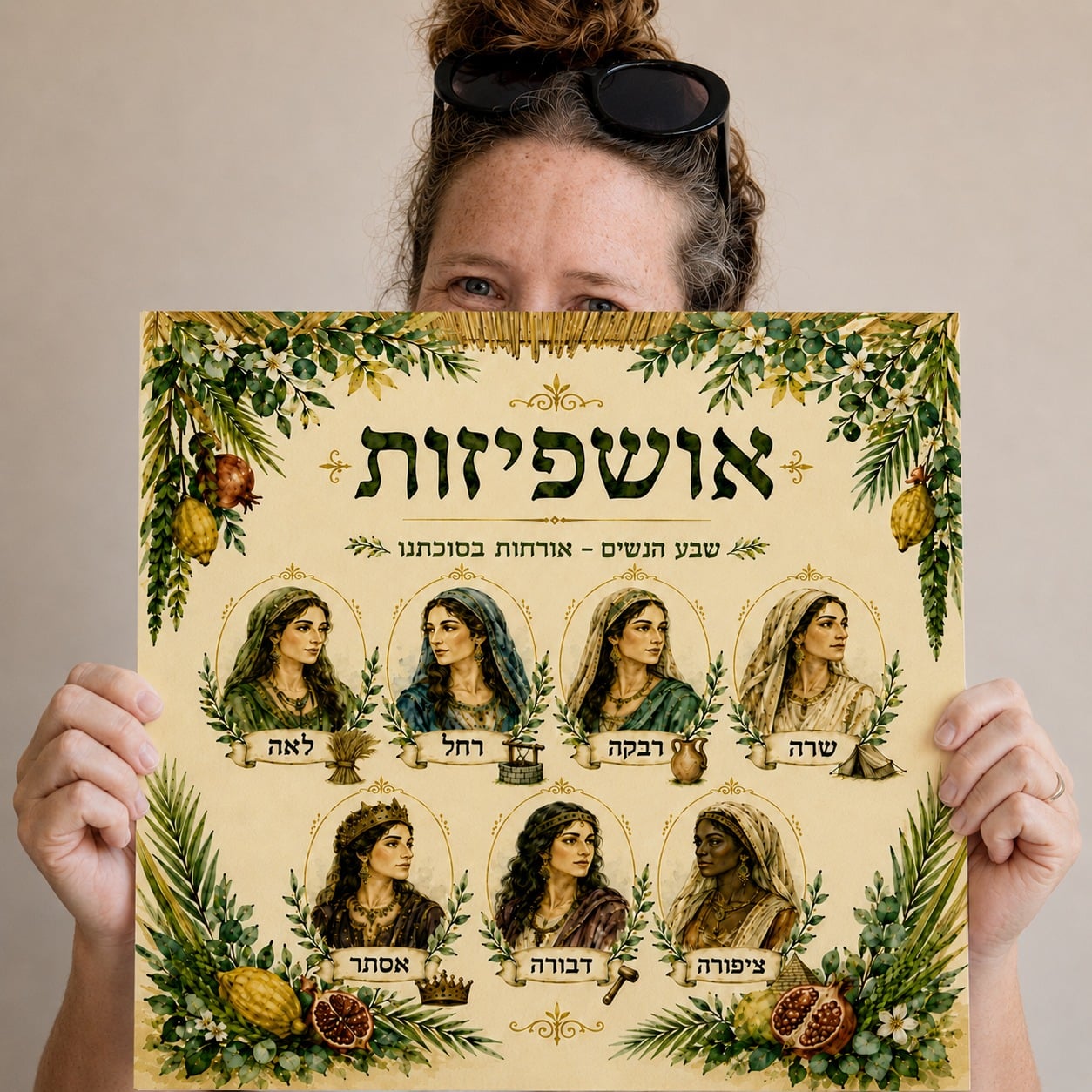
The four matriarchs, Sarah, Rebecca, Rachel and Leah, felt non-negotiable. But after that? Jewish history and tradition suddenly give you an embarrassment of riches.
I have always loved Zipporah. She is in some ways an outsider to the central story, yet she becomes part of its backbone. I once read a children’s book based on a modern midrash about Naamah, Noah’s wife. While he is busy collecting the animals two by two, Naamah collects two of every seed and plant, preserving what will be needed to make the earth grow again after the flood.
I love that image: Noah saving the animals. Naamah making sure there would still be a world for them to live in.
And suddenly the project became much more interesting than simply producing female versions of the traditional Ushpizin.
I began thinking about who these women were, how I wanted them to look.
My French-Moroccan husband, who has long since perfected the art of rolling his eyes at some of my more liberal ideas, was shocked when I showed the idea to a friend and her response was:
“OMG. I want one.”
And that was when it started to snowball.
Another friend wanted one. Then another. People started choosing their women, asking questions, putting in orders and, most interestingly, saying some version of the same thing:
Why didn’t we look for something like this before?
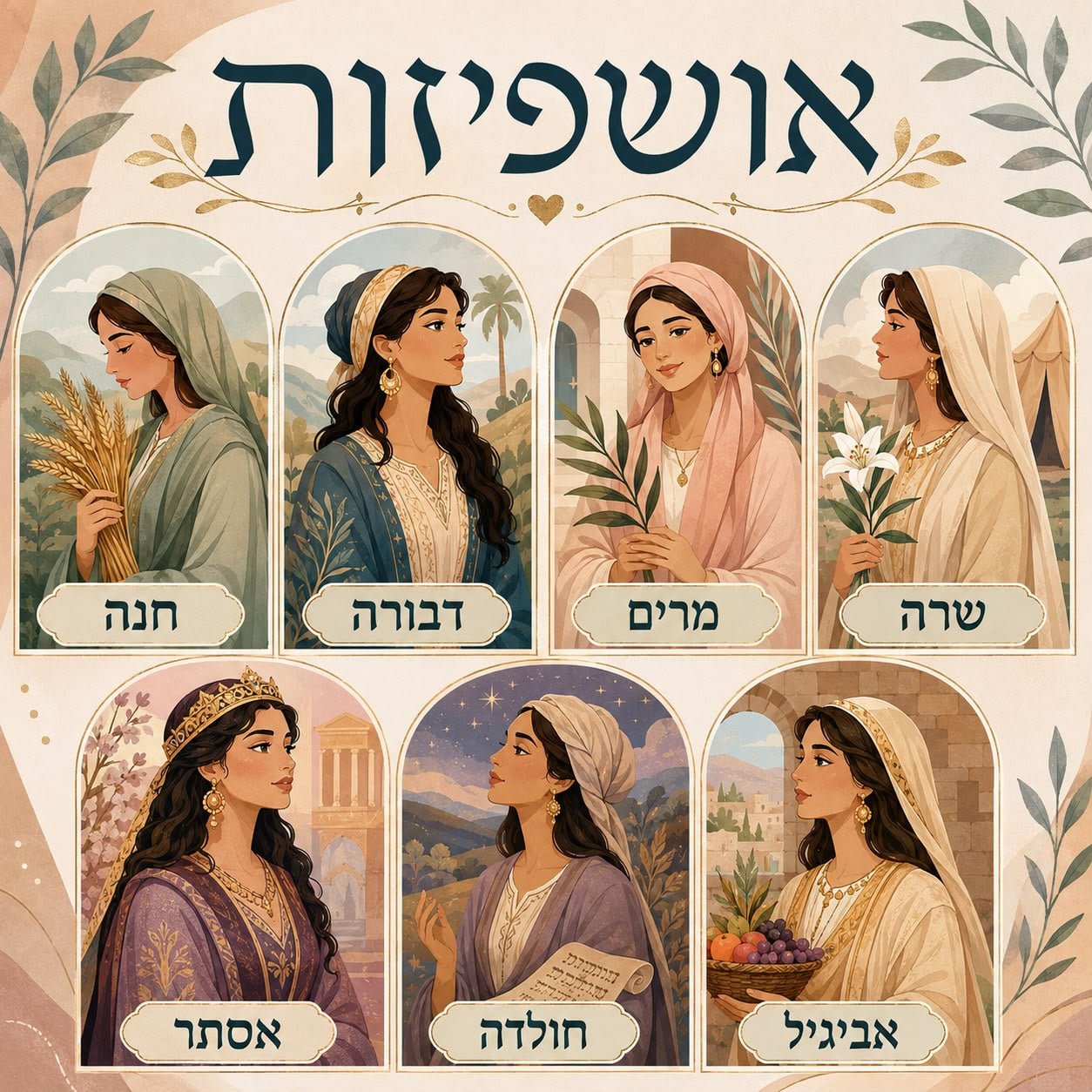
And that question stayed with me.
Because in the end, I realized this wasn’t really about sukkah decorations.
It was about what we put on our walls.
Years ago, I heard a woman speak at a local school about education and the messages our children absorb. She said something I have never forgotten.
Imagine taking your child through a shopping mall. You are a busy mother. Your head is full. You need pens from Kravitz. Socks from Bigud. A book from Steimatzky. You are remembering what you still need from the supermarket, who has to be picked up, what you forgot yesterday and what needs to happen tomorrow.
Your child has none of those lists running through their head. They are simply looking, and absorbing. They are absorbing that enormous billboard with the impossibly perfect, Botoxed reality-TV stars, the junk-food advert, and all the messages about what is beautiful, important, successful, and desirable.
We think education happens when we sit our children down and explain our values to them. But children are also being educated all the time when nobody is speaking. And, frankly, most of them have an extraordinary ability to stop listening the moment a parent begins to talk anyway.
So perhaps part of our job is to think about the background. What do they absorb simply because it is there? That thought came back to me as I worked on the Ushpizot.
In a small way, the walls tell our children who belongs in our story. Who do we choose to remember visually? Whose names do our children repeatedly see? Who gets to become part of the background of Jewish childhood, the figures you may not consciously study, but somehow grow up knowing?
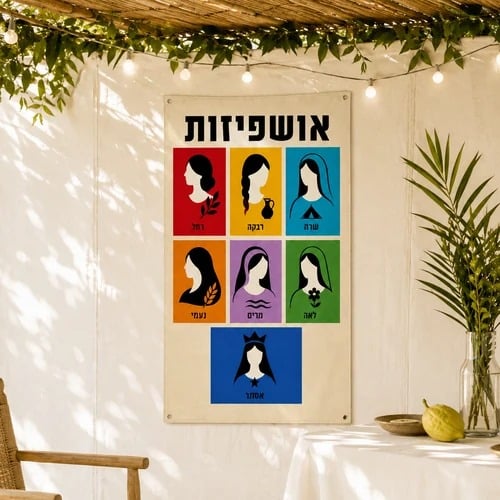
I am not trying to remove anyone from the sukkah. Abraham can stay exactly where he is. There is room. That may be one of the loveliest things about a sukkah. For one week we live, eat and celebrate beneath a deliberately incomplete roof, in a fragile structure that we open to family, friends, strangers, and symbolic guests from generations before us. So this year, I want the women there too.
I want my children, and eventually their children, to know these women not only because someone once taught lessons about them, but because their faces and names were simply there.
On the wall.
Part of the scenery.
Part of Sukkot.
Part of us.

After 30-odd years of looking at those golden Ushpizin and thinking, “Next year, I really must do something about this,” I finally did.
And perhaps, one day, our children won’t think it’s radical that there are women on the sukkah wall.
They’ll wonder why they weren’t ever there in the past.
–
To order your own Ushpizot, please click here and scroll down for the six designs shown in this post.