Maybe the last captive and fragile path to peace
“We make war that we may live in peace.”
– Aristotle, Nicomachean Ethics
The Israel–Palestine conflict has long demonstrated that wars rarely move toward resolution through decisive moments alone. More often, they are shaped by unresolved particulars that accumulate moral, political, and symbolic significance over time. In late January 2026, this reality resurfaced once again when the fate of the last unaccounted Israeli captive in Gaza became central to the future of a fragile ceasefire. What might appear as a limited operational disagreement has come to reveal deeper structural constraints that continue to define conflict management in the region.
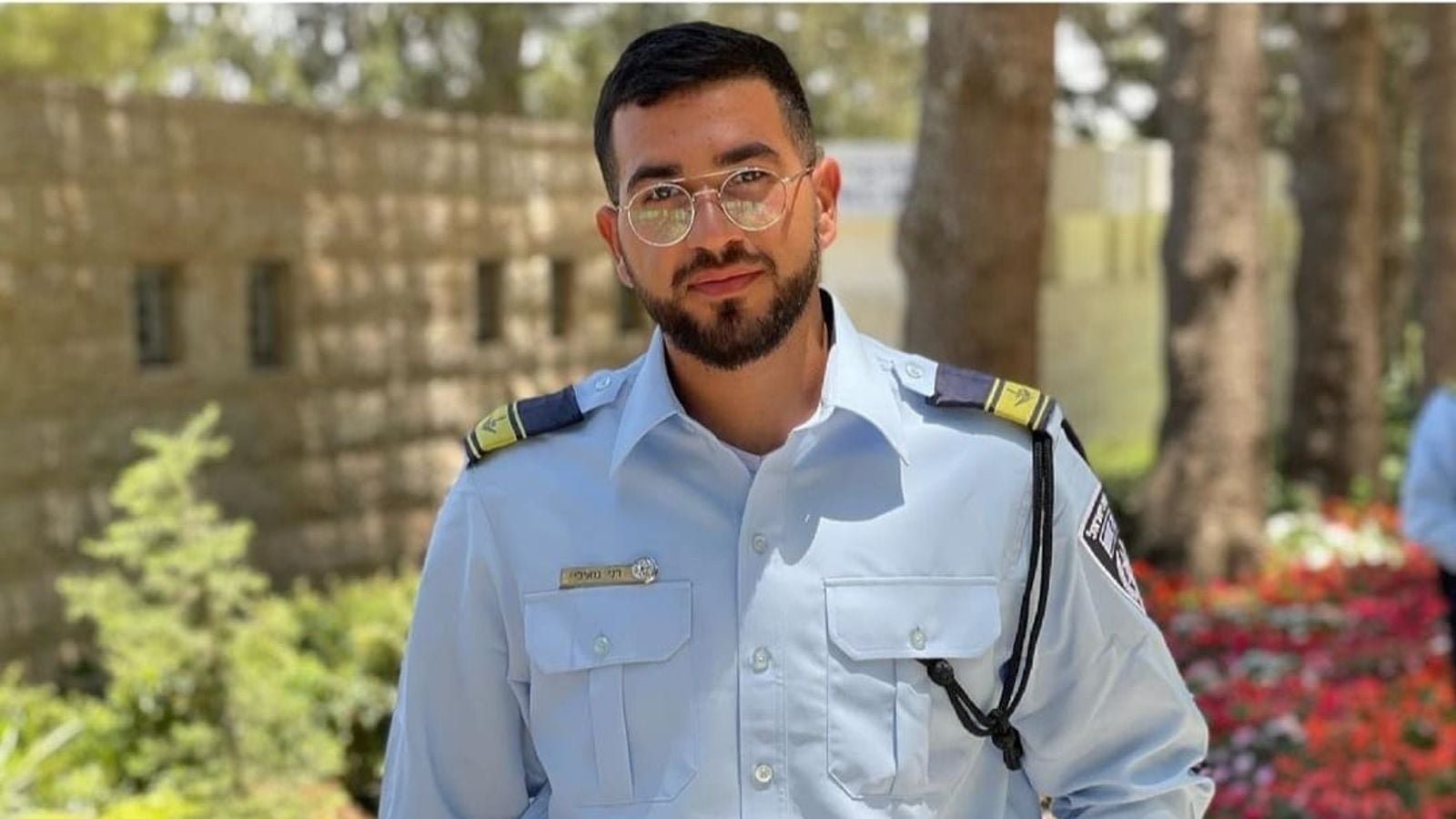
At the center of the current impasse is Ran Gvili, an Israeli police officer killed during the Hamas-led attack of October 7, 2023, whose body was taken into Gaza. More than two years later, his remains have yet to be recovered. Under a United States brokered ceasefire agreement that took effect in late 2025, the return of all captives, both living and deceased, was established as a prerequisite for advancing to the next phase of the truce. That next phase carries significant implications, most notably the reopening of the Rafah crossing between Gaza and Egypt, a development with direct humanitarian consequences for Gaza’s civilian population.
Israel’s decision to launch a large-scale military operation to locate Gvili’s remains must be understood within its domestic political and cultural context. In Israeli society, the obligation to account for captured soldiers and officials is deeply embedded in national consciousness. It reflects not only security considerations but a moral commitment rooted in collective memory, religious tradition, and the historical experience of past wars in which missing persons became enduring national wounds. For Israeli leaders, proceeding with broader concessions while the fate of the last captive remains unresolved risks being perceived as a breach of that moral contract.
Hamas, by contrast, has publicly maintained that it has already fulfilled its obligations under the ceasefire framework. According to its statements, detailed information regarding the location of Gvili’s remains has been provided to mediators, and any delay in recovery lies beyond its control. By asserting compliance, Hamas seeks to shift responsibility for the impasse onto Israel and to frame the continued restrictions on Gaza, particularly the delayed reopening of Rafah, as political choices rather than technical necessities.
The resulting standoff illustrates a persistent challenge in ceasefire arrangements between deeply mistrustful adversaries. Such agreements often rest on ambiguous language and lack robust, mutually accepted mechanisms of verification. In the absence of trust, compliance becomes a matter of interpretation, filtered through strategic calculation and domestic political pressure. Each side assumes bad faith on the part of the other, while mediators are left to manage competing narratives rather than shared facts.
The Rafah crossing has emerged as the most tangible symbol of this stalemate. For Gaza’s residents, Rafah is not merely a border point as moreover it represents access to specialized medical care, educational opportunities, family reunification, and a limited connection to the outside world. Years of restricted movement have contributed to economic collapse and humanitarian vulnerability, making the reopening of Rafah a matter of daily survival for many civilians. From the Israeli perspective, however, the crossing is inseparable from security concerns and from the conditional logic underpinning the ceasefire. Opening it without resolving the hostage issue risks domestic political backlash and undermines the narrative that the state does not abandon its obligations to its citizens.
Any balanced assessment must also acknowledge the asymmetry that defines this situation. Israel retains overwhelming military and administrative control, while Gaza’s civilian population bears the consequences of decisions over which it has little influence. Yet this asymmetry does not negate the reality of individual loss on the Israeli side. For the family of Ran Gvili, the absence of his remains prolongs grief and denies closure. In Jewish tradition, burial is not simply a ritual act but a moral imperative, and its absence transforms loss into an open-ended trauma.
At the same time, for Palestinians in Gaza, the continued linkage between humanitarian relief and unresolved political conditions reinforces a sense that civilian suffering is perpetually subordinated to strategic objectives. Many families in Gaza have experienced repeated displacement, bereavement, and material deprivation over years of conflict. While the scale, context, and power relations differ sharply, both societies are shaped by unresolved trauma that constrains political imagination and narrows the space for compromise.
From an academic perspective, this episode highlights a recurring dilemma in protracted conflicts. Ceasefires are often expected to perform multiple roles simultaneously: reducing violence, resolving symbolic grievances, facilitating humanitarian access, and preparing the ground for political negotiation. When progress in one domain is made contingent upon absolute resolution in another, the entire framework becomes fragile. Humanitarian needs risk being instrumentalized, not necessarily out of malice, but through a strategic logic that prioritizes leverage over relief.
Time further compounds this fragility. As conflicts endure, individual cases accumulate symbolic meaning far beyond their immediate circumstances. Within Israel, Gvili’s unresolved fate has come to represent an unfinished moral account of the war. Within Gaza, Rafah has become a symbol of broader isolation and the unresolved question of whether civilian life can ever be meaningfully insulated from security imperatives. Such symbols exert a powerful influence on political decision-making, often reducing complex human realities to rigid positions.
Historical experience suggests that meaningful progress in the Israel–Palestine conflict has rarely emerged from technical arrangements alone. When advances have occurred, they have required political leadership willing to absorb domestic criticism in pursuit of broader human outcomes. Such moments have been fragile and contested, but their absence has ensured that ceasefires remain managerial rather than transformative, regulating violence without addressing its deeper causes.
As search operations continue and mediators attempt to bridge the remaining gaps, the implications extend beyond the fate of a single individual. How this impasse is resolved will shape perceptions of the ceasefire’s credibility and influence the prospects of future agreements. A resolution driven primarily by coercion and suspicion will reinforce entrenched mistrust. A resolution that allows humanitarian measures to proceed without exhaustive preconditions could, even modestly, signal a shift toward a more humane political calculus.
Ultimately, this episode underscores a sobering reality. Peace in the Israel–Palestine context has not faltered for lack of diplomatic ingenuity or technical solutions. It has faltered because human suffering is repeatedly deferred in the pursuit of strategic certainty. The unresolved fate of one man and the closed gates of one crossing have thus become emblems of a broader moral stalemate.
Whether this moment becomes another entry in a long history of deferred resolution or a modest step toward aligning political decisions with human realities remains uncertain. What is clear is that peace demands more than the suspension of violence. It requires sustained attention to dignity, responsibility, and the human costs that persist long after the fighting pauses.