Mayday, Mayday
American Jewry is currently living through a remarkably dark era. It is certainly the darkest era I’ve lived through in my 37 years. The Jewish Question seems to have returned to public discourse yet again. To be a Jew in America is now viewed, first and foremost, in relation to Israel. This means one of three things: you oppose the existence of the State of Israel; you accept the existence of the state of Israel as a settled fact and do not wish to see it abolished or destroyed; or you actively advocate for Israel’s right to exist. In many cases, being an American Jew now means estrangement from longtime friends and social ostracization from social cliques that were once welcoming. And far too often now, it means being harassed, physically assaulted, or even murdered.
The American Jewish community currently finds itself trapped between two aggressive, competing ideologies that have come to dominate our public political discourse: the Left, which is characterized by its focus on anti-capitalism, Third-worldism, and identity politics; and the Right, which is based on traditionalism, capitalism, nationalism, and identitarianism.
Alt-right and fascist rhetoric, once closely tied to Trump’s first term, has since become mainstream within the younger generation of Republican and conservative movements. It is not uncommon to see right wing influencers and pundits celebrating Hitler and Nazi Germany, denying the Holocaust, or claiming that Israel, Zionists, or Jews control the U.S. government. The far-right is now closing in on the old guard. In the words of white nationalist Nick Fuentes recently, “My war against Israel is the only thing keeping me going at this point.” Any hope that the Right might defend America’s Jewish community is disappearing.
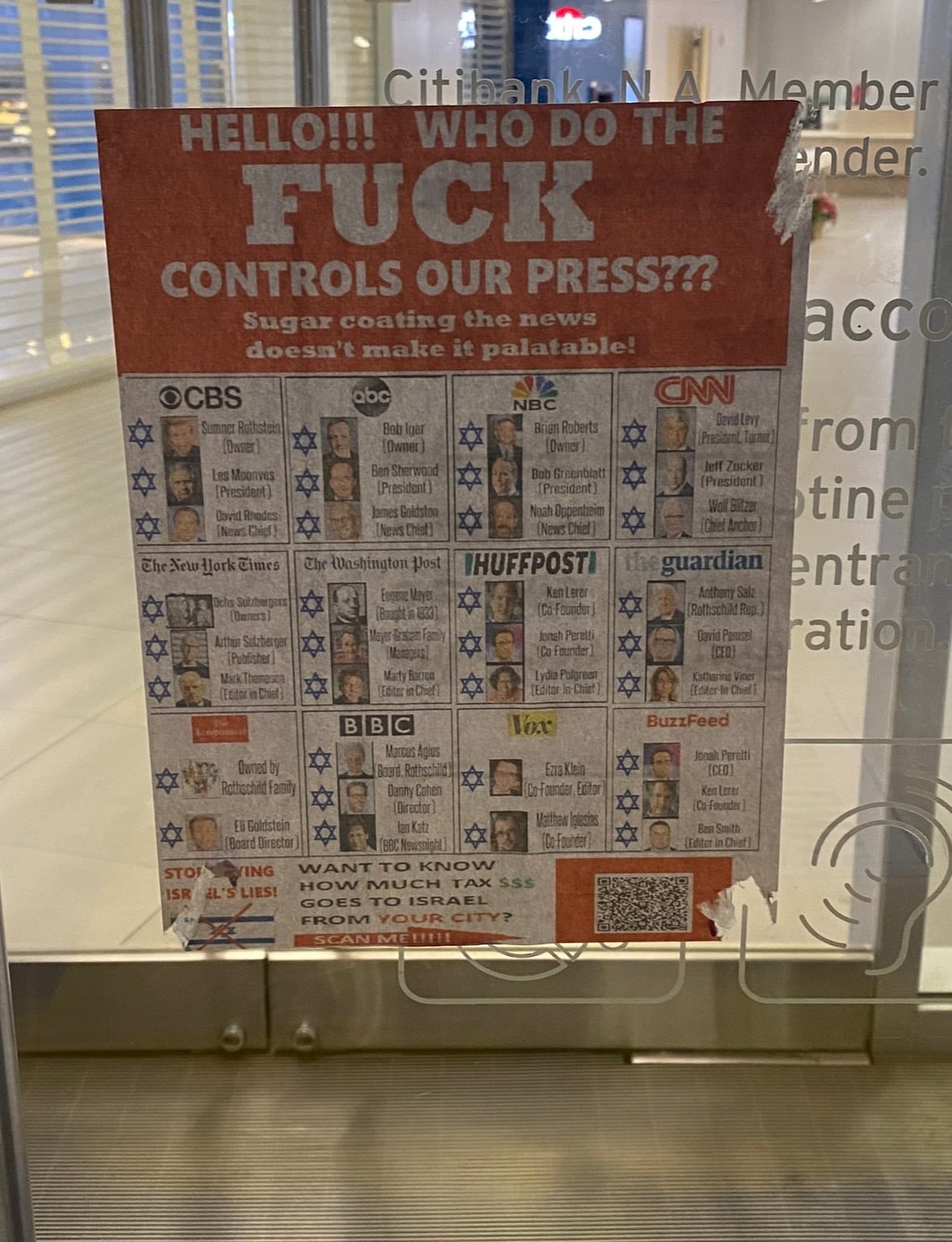
On the Left, the rhetoric and actions traditionally associated with the far right have become commonplace. Prominent Leftist pundits have circulated ZOG (“Zionist Occupied Government”) conspiracy theories, something previously seen only in Klan literature or on Stormfront.com. NYC hipsters protest synagogues; communist groups organize boycotts of “Israeli” businesses and vandalize Jewish businesses in the name of activism. In a return to the ideological gatekeeping seen during the BLM movement, those who dared question the severity of this commentary are branded a right-wing Zionist. It has become clear that the Left cannot be relied upon to protect the Jewish community.
Both sides have found an unsettling common ground over an obsession with Israel. Every terrorist attack is the supposed work of the Mossad. Jewish influence over American politics is treated as the single greatest threat to American democracy. Social media is flooded with talking-heads from both the Left and Right promoting the “dismantling”, “abolition”, or destroying Israel through “violent resistance.” People may claim that social media isn’t real life, but real-life people have social media accounts. Abolishing Israel would mean eliminating almost half of the world’s Jews, or forcing them into permanent displacement. This type of social environment has occurred throughout Jewish history. It never bodes well.
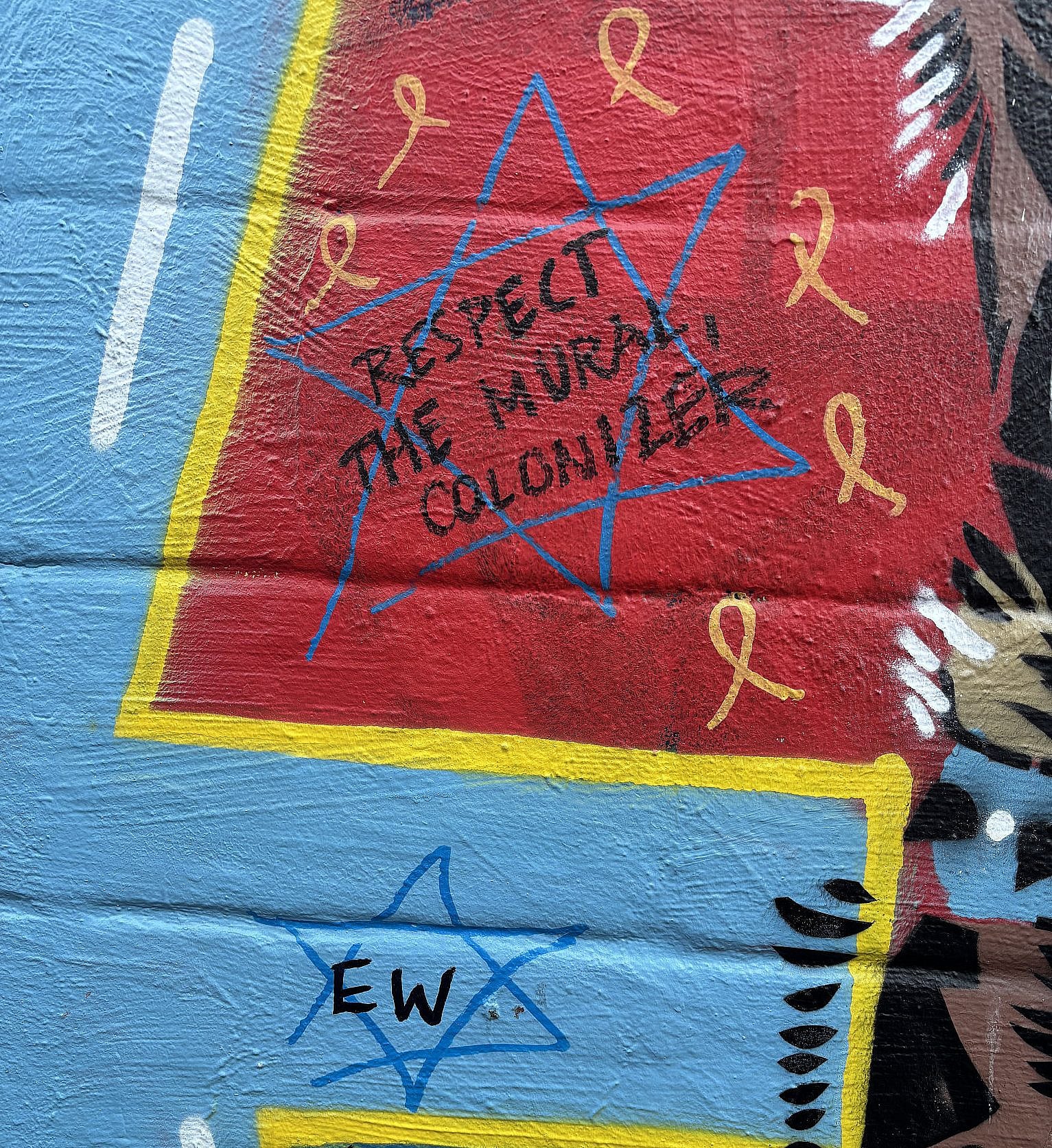
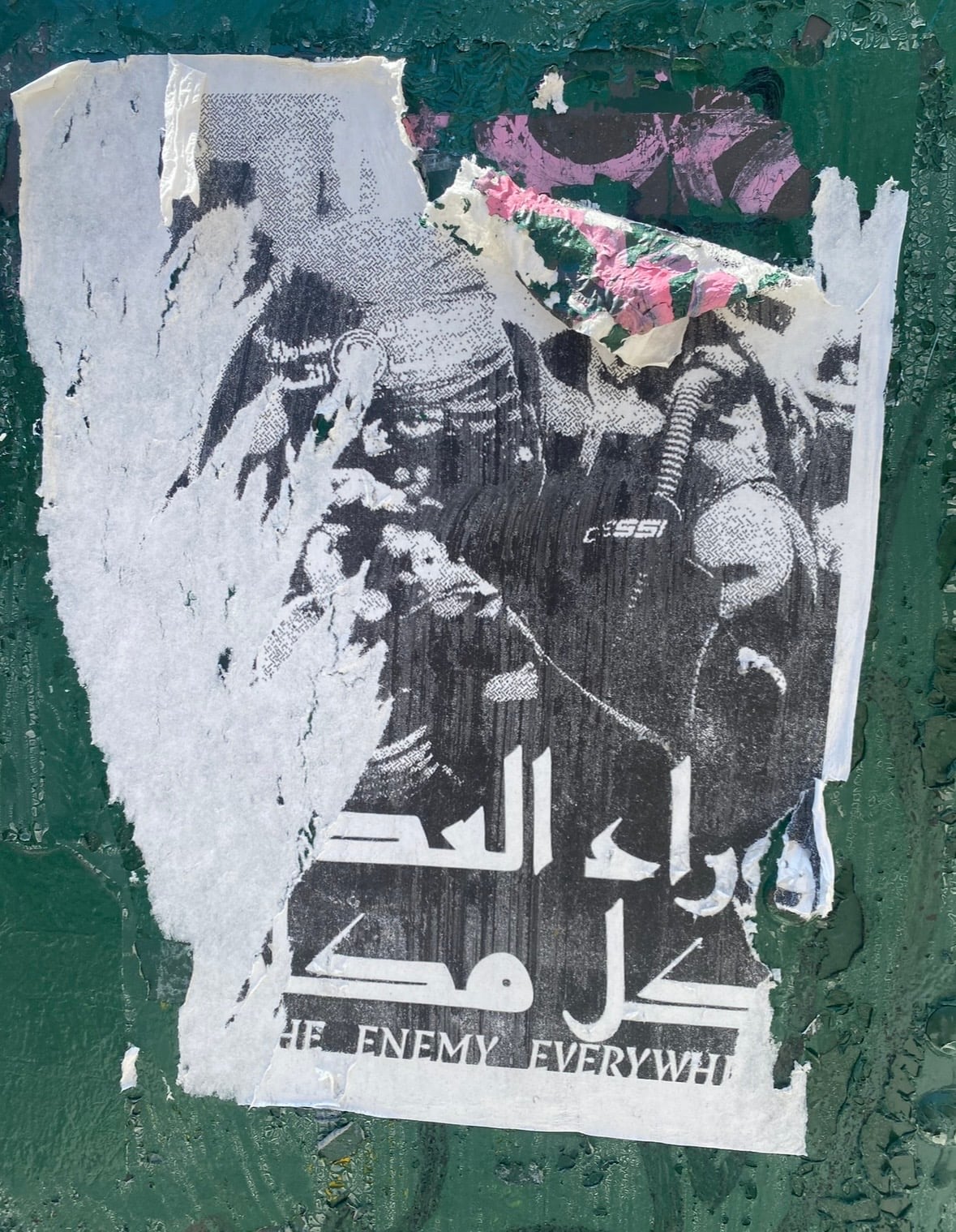
My wife and I moved to Israel in January 2026, though I was born here and spent many summers here before. I moved from Brooklyn, New York. By the time I left New York City, I felt completely alienated from many of my peers. Dozens of friends and acquaintances were popping up on my social media feed liking content from white nationalists spouting Israel and Jewish conspiracy theories and hatred, or re-sharing radical Left accounts that were saying the same thing. Walking around my neighborhood, I routinely saw wheatpasted posters of Hamas and Popular Front for the Liberation of Palestine (PFLP) – a group known for shooting up a synagogue, hijacking planes, and participating in the October 7 attacks – pointing their guns and threatening “we are behind the enemy everywhere” (see below). I saw Stars of David vandalized with the word “ew” (see below). Smart phone and security cameras routinely captured attacks on Jews and Jewish institutions. To anyone dismissing these concerns as overinflated, try a simple thought experiment: reread the sentences above, substituting ‘Black American’ or ‘Muslim immigrant’ for ‘Jew,’ and replacing Jewish institutions with mosques or Hindu temples. The outrage would be immediate, universal, and entirely justified.
And while this hypocritical behavior isn’t the reason I moved to Israel back in January 2026, it made leaving the U.S. much easier. I spent most of my twenties aligned with the political left in varying capacities. The last five years have made it clear to me that life in America as a Jewish or Israeli person has reached a dangerous precipice. There is neither a political or social home on the Left or the Right. To the Jews of the United States,* I appeal to you: come to Israel. Now. Even now. Especially now.
Whatever grievances you might have with the current government, and there are frankly too many to list, Israel still offers a robust democracy and a vibrant sense of belonging that is hard to find anywhere else. You can still change things here. By virtue of its parliamentary democracy system, Israel has many political parties that represent all facets of Israeli life, from Arab-led communist parties to far-right fascistic parties and everything in between. It is a true plurality.
Socially, Israeli society is (mostly) a warm, hospitable, and generous country defined by a shared, collective drive to move forward and build something magnificent out of the ashes of tragedy, displacement, and centuries of ostracization. Here, you can trade the exhaustion of being a perpetually scrutinized minority (that is often denied minority status) for the comfort of being surrounded by community. Israel is ultimately where the Jews seized agency over their own fate. If that isn’t convincing, then the food, nature, beaches, cities, hiking, nightlife, and cultural diversity make for a great quality of life.
Israel undeniably faces profound challenges, the realities of war chief among them. But I have found that sitting through weeks of Iranian and Hezbollah missiles is worth it (The safety infrastructure built into the country also helps make war more manageable). While the United States will forever be my second home, there is an irreplaceable sense of belonging I find here among my own people—especially now, as the world searches for new labels to mask an old animosity toward us. I want to contribute positively to the society I live in and I don’t feel there is a place for me to do that in the US. Maybe you feel that too. Whatever Left I thought I knew is gone. The Right is an even bigger mess. So, it was time for me to go somewhere else.
Organizations like Nefesh b’Nefesh and the Jewish Agency provide vital financial help to new immigrants from across the world, be it India, Argentina, France, Ethiopia, or America. New immigrants learn Hebrew for free and are exempt from income tax. Notably, all new immigrants who make Aliyah can vote. Come make a difference here. Help cure cancer, invent new sustainable technology, open a business to share a little piece of your hometown like so many others have, or just live. It’s still possible to be part of a pluralistic, but vibrantly Jewish country here in the Middle East.
*A Note About the Potential Antizionist Reader:
Despite the extremely loud and radical fringe of anti-zionist Jews that have emerged in recent years, the State of Israel is still a settled fact within the American Jewish community. In fact, most polls suggest that less than 10% of American Jews think that Israel should not exist.
Just as non-white Proud Boys used their identities to invalidate accusations of racism, antizionist Jews use their ancestry to dismiss claims that the broader movement is antisemitic. This perversion of Jewish identity actively jeopardizes the safety of global Jewish communities. By reflexively blaming Israel for antisemitic violence, as if such hatred were a post-1948 phenomenon, these individuals provide a cover for bigotry and violence. This is Jewishness as performance art – epitomized by the protester who never wears a kippah in their daily life, yet dons one as a political prop the moment a camera is present.
With antisemitic violence and harassment reaching at record levels, such behavior is unforgivable. To these Jews, I would say – if you have actively worked toward undermining Jewish safety during this particularly dangerous moment in Jewish history then you have no place in Israel, or even in mainstream Jewish life. You are outside the fold.