Senior Research Fellow, S. Neaman Institute Technion
Medical Imaging — The Jewish Connection
From Life to Lab: Medical Imaging: The Jewish Connection
It is hard to imagine modern medical science, without medical imaging: X-ray, CAT scans, MRI scans and Ultrasound.
Two of those key instruments, MRI (magnetic resonance imaging) and ultrasound, have a Jewish connection.
MRI: Our story begins with a Jewish couple emigrating to the United States from Rymanow, then in Austria-Hungary, today in Poland. Their son, Isador Rabi, whom they called Izzy, became a physicist. He won the Nobel Prize for Physics in 1944 for his discovery of nuclear magnetic resonance: the phenomenon in which atomic nuclei in a magnetic field absorb and re-emit electromagnetic radiation.
Rabi said he credits his mother with the prize. Why? When he came home from school, she didn’t ask what he learned that day; instead, she asked, what good questions did you ask today? Rabi asked what would happen when protons were placed in a strong electro-magnetic field – and reported that they resonated, emitting radiation as a result.
So what? From lab to life. An American-Armenian doctor Dr. Raymond Damadian, realized that if people were placed in strong magnetic fields, all the atoms in their body would radiate and that radiation when captured could image the body’s soft tissues. He built the world’s first magnetic resonance scanner in 1977. MRI scans have saved millions of lives.
Ultrasound: I had the privilege of working with Diasonics, a US-Israeli startup founded in 1978, with R&D here in Israel. Ultrasound uses high frequency sound waves to image the body’s structure. Diasonics built early ultrasound devices used to study heart ailments. Its engineers saw they could cheapen and shrink huge machines by basing ultrasound on the PC, whose computing power was growing exponentially. Diasonics Vingmed was ultimately bought by GE and became GE Healthcare.
Recently, a loved one underwent mammography (X-ray) and then, just to be sure, ultrasound. The ultrasound (more sensitive than X-rays) found a tiny lump, half a centimeter, that was soon removed. Thanks to mammography and ultrasound, Israel’s five-year survival rate for women diagnosed with breast cancer is high, 85%, and is rising.
Former Israeli Prof. Yoel (Joel) Mokyr won this year’s Economics Nobel, for showing how culture is a key determinant of a nation’s economic growth and progress. Jewish culture is one of constant critical thinking, questioning and ‘what if’ explorations. It has made Israel wealthy – and helped heal many millions of people with the resulting innovations.
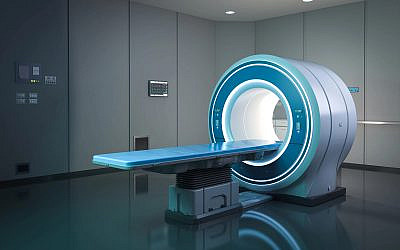
MRI
Related Posts