
Megyn Kelly’s friends deserve tougher questions
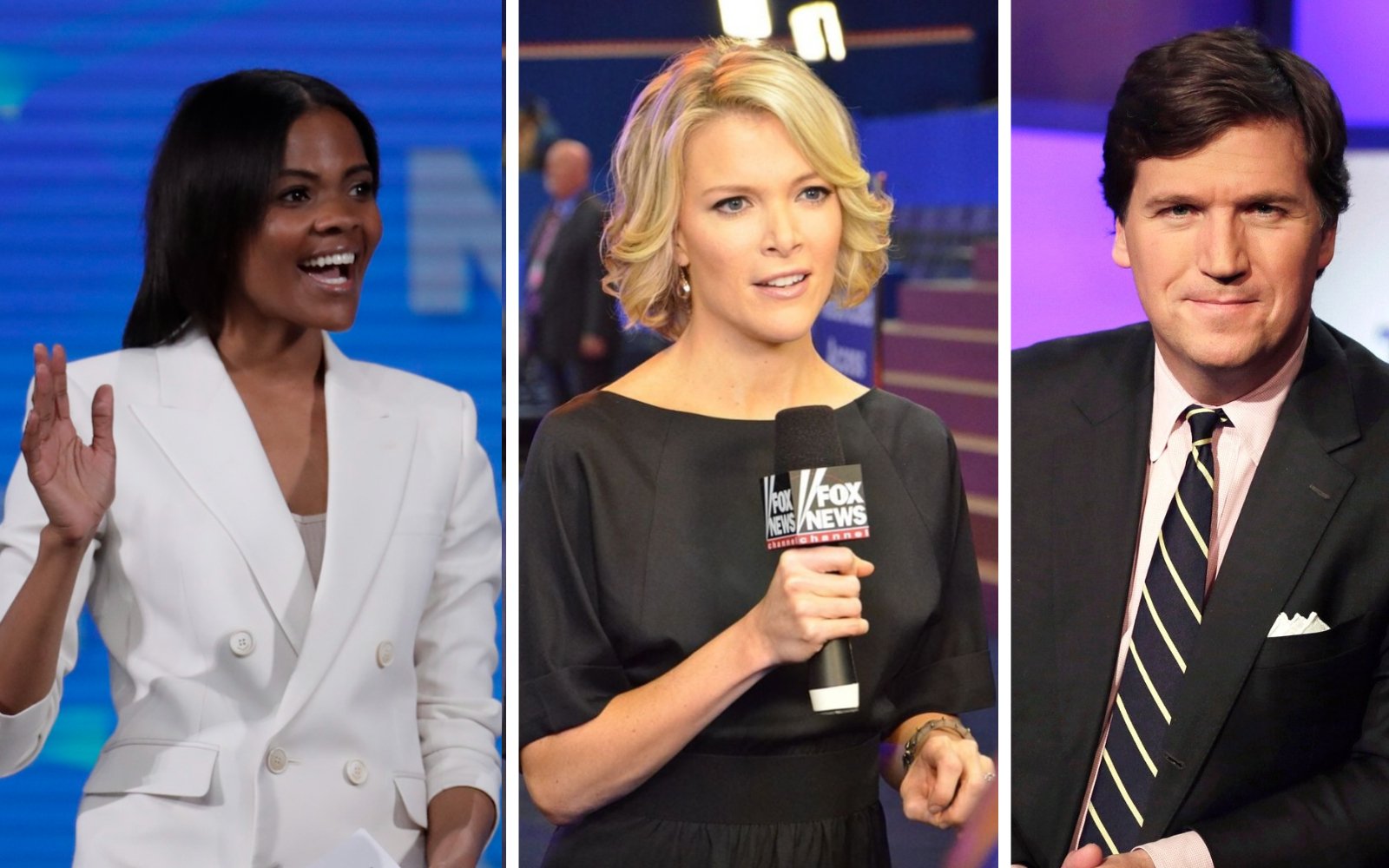
Megyn Kelly is one of the most prominent pro-Israel voices in independent media – a staunch Zionist with a clear and undeniable record of opposing antisemitism. That’s what makes the recent wave of criticism against her from within the pro-Israel world both complicated and consequential.
On her show late last week, Kelly read aloud a message she received from Abe Greenwald, executive editor of Commentary Magazine. With heavy sarcasm, Greenwald praised her “stellar work” in amplifying, as he put it, “the paranoid conspiracy theory of a well-known lunatic Jew-hater” – a reference to Candice Owens.
In sending this message, Greenwald cast Kelly as complicit with figures like Owens and Tucker Carlson, who repeatedly peddle conspiratorial narratives about Israel. It was a lazy and ultimately self-defeating way to address Kelly.
Still, no one should be exempt from criticism.
While Greenwald and others fail to distinguish between genuine enmity and flawed judgment, Kelly blurs that distinction by sometimes withholding the sharp scrutiny she otherwise applies so well. In particular, when Carlson makes claims about Israel (or American foreign policy more generally) that Kelly herself regards as wrong, she doesn’t press him on those points.
Kelly seems intent on avoiding what she considers unhelpful infighting on the political Right. And by her own account, she does not appreciate being told to sever her friendship with Carlson over his words. Whether only one of these motives is at play, or both are, her instinct is understandable – and perhaps even admirable.
But neither political sensitivity nor friendship can justify letting falsehoods pass without challenge, least of all for someone who built her reputation on calling things as they are. The fair ask of Kelly is simple: stay friends if you like, but the truth comes first. If someone you care about says something false, correct them – especially if they do it over and over again.
Kelly has applied this standard with people across the political spectrum, including those she describes as friends, but notably not with Carlson. She often downplays his far-fetched assertions – bizarre, historically inaccurate, and empirically unsound takes – by suggesting he simply hates war and doesn’t want America getting dragged into unnecessary foreign conflicts. But Carlson’s fear, while indeed rooted in the Iraq War, has long since hardened into paranoia. His deep mistrust of US military action has curdled into conspiracy thinking, reinforced week after week by obsessively anti-Israel guests. Excusing Carlson by saying “he just hates war” is like giving Bernie Sanders a pass on socialism because “he just hates greed.”
A similar pattern appears with Candace Owens, who, immediately after Charlie Kirk’s assassination, seized the chance to grossly distort his recent interactions with billionaire hedge fund manager Bill Ackman. She offered a framing of those interactions that lacked evidence, portraying Kirk as wavering in his support for Israel (and bullied by Ackman for doing so) shortly before his death – a version of Kirk that Owens prefers, but one that never existed in reality.
Earlier this month, Kelly defended Owens by citing her own August conversation with Kirk as aligning with Owens’s claim. Michael C. Moynihan disputed that reading on air with Kelly, noting that even in the early August conversation, Kirk wasn’t wavering on Israel at all, but was rather bemoaning the way some pro-Israel voices respond to criticism of the Jewish state. That distinction matters: it’s the difference between Owens reporting and Owens making things up. Moynihan’s point, however, seemed to pass without acknowledgment from Kelly.
It is unfair to chastise Kelly for associating with people who don’t like Israel. But it is entirely fair to criticize her for failing to challenge commentators in her orbit when they promote baseless nonsense – something Carlson and Owens do regularly. There’s no problem platforming them, but for it to be journalism, she must also push back. Failing to do so warrants disappointment. Invoking Tucker’s friendship won’t – and shouldn’t – cut it.