Mental Health in the Parsha: Parshat Toldot: Two Truths at Once
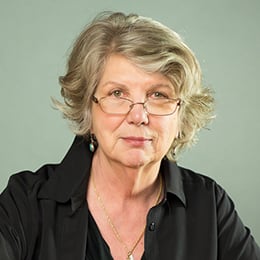
This week we lost Marsha Linehan. I never met her, and still I am grieving her the way you grieve a teacher, because that is exactly what she was to me, even from a distance, for years.
Marsha Linehan was the psychologist who created DBT, dialectical behavior therapy. She built it for the people the rest of the field had almost given up on, the ones in such unbearable pain that they could not stop hurting themselves, the ones cycling in and out of hospitals, the ones too often written off as hopeless. She looked straight at those people and said, no, there is a way through, and then she spent her life building it. And she built it, we later learned, out of her own darkness. As a young woman she had been one of those patients herself, locked on a psychiatric ward, in agony she could not escape, nearly given up on. In her memoir, Building a Life Worth Living, she describes the moment it all turned. Alone in the piano room on the unit, one more lonely soul among lonely souls, she made a vow. In her words, she vowed to God that she would get herself out of hell, and that once she did, she would go back into hell and get others out. She kept it. Out of that pit, over decades, she built the very thing that has since pulled countless other people out of the same pit. She turned her own worst suffering into a rope for everyone coming behind her, and she spent the rest of her life climbing back down into hell to pull people up.
I learned from her in a real, everyday way. Her ideas are not theory to me. They are in my days. I reach for them when I am overwhelmed and about to say the thing I will regret. I use them when I am sitting with someone in pain and do not know what to say. They have quietly become part of how I try to be a person. And this week, reading Toldot, I realized that the Torah has been teaching her lessons all along, because Toldot is the parsha of exactly this. Toldot means generations. It is the parsha about what one generation receives, holds, and hands to the next. Which is the whole story of how her wisdom reached me, and the whole question of what I do with it now that she is gone.
What we inherit, and what we pass on
Think about the chain this parsha is built on. Avraham to Yitzchak to Yaakov. Wisdom, blessing, a way of being in the world, handed down, generation to generation, each one receiving it from the one before and carrying it to the one after. That is what toldot means, and it is not only about biology. It is about everything we inherit from the people who came before us and everything we are responsible to pass forward.
We do that with Torah. We also do it, I have come to believe, with everything that keeps a soul alive. Nobody learns how to survive their own hardest moments entirely on their own. We learn it from teachers, from parents, from the ones who went into the dark before us and came back with something to hand us. Marsha Linehan is one of those teachers for me, as real in that chain as any name in the parsha. She went into the pit, found a way out, and left the map for the rest of us. And now the only fitting way to honor her is to keep using it, and to keep handing it on.
Two nations in one womb
Here is where her great idea and this parsha become the same idea. The word she chose, dialectical, means holding two opposite truths at the same time. Not choosing one. Holding both. And the parsha opens on precisely that.
Rivka is pregnant and something is wrong. ויתרצצו הבנים בקרבה. The children are struggling, crashing against each other inside her. The pain is so great that she cries out למה זה אנכי, why do I even exist. And the answer she gets is not simple comfort. It is a truth about opposites. שני גוים בבטנך. Two nations are in your womb. Two peoples, pulling in two directions, and both are real, and both are hers, and she has to carry both at once.
That is the first thing Marsha Linehan taught me, sitting right there on the opening page of the parsha. Two opposite truths can be true at the same time, and the struggle between them is not a sign that something is broken. It is just what it feels like to be a whole person. I love this person and they are driving me crazy. I am grateful for my life and I can barely get through the day. I am doing the best I can and I need to do better. My instinct, always, is to pick one and call the other one false. She taught me, and the Torah teaches, to hold both. Most days, that one idea alone keeps me sane.
“I am going to die”
Then the twins are born, and the parsha gives us one of the most psychologically precise scenes in the whole Torah. Esav comes in from the field, starving, spent, overwhelmed. Yaakov has stew. And Esav says הנה אנכי הולך למות. I am going to die. Right now. Give me the food, because I cannot survive one more second of this feeling. And he trades away his birthright, something permanent and precious, for one bowl of soup, just to make an unbearable moment stop.
Anyone who has been in real distress knows that voice from the inside. I cannot take this. I have to make it stop now. And the cruel thing about that voice is that it feels like the truth. Esav genuinely believed, in that moment, that he was dying. He was not. He was overwhelmed, and overwhelmed feels like dying, and from inside the storm you cannot tell the difference.
This is the exact moment Marsha Linehan built her life’s work around, and it is the lesson of hers I carry most carefully, because it is the one that saves lives. The feeling that you cannot survive this moment is not a fact. It is a wave. And waves, even the biggest ones, crest and pass, if you can just ride them a little longer without doing the permanent thing. Esav made a permanent choice to quiet a temporary feeling, and he spent the rest of his life grieving it. When he finally understands what he traded away, he lets out ויזעק זעקה גדלה ומרה עד מאד, a cry as great and bitter as any in the Torah. That cry is the sound of a decision made inside a storm, regretted long after the storm passed.
If you are in that place right now, where a feeling is screaming that you cannot survive it and you have to do something drastic to make it stop, this is the thing I most want to hand you, the way it was handed to me. Do not make a permanent decision inside a temporary storm. The wave is real, and it is also passing, even when every part of you swears it is not. Ride it out. Call someone. Just get to the next hour. The feeling is lying to you about how long it will last.
Accept it fully, and change it anyway
The deepest thing she taught me is also the hardest, and it is the deepest dialectic of all. She would tell her patients two things that sound like they cannot both be true. You are doing the best you can. And you need to do better, and you can. Accept yourself completely, exactly as you are, right now, with real compassion. And commit to changing. Both. At the same time. Not acceptance instead of change, and not change instead of acceptance. Both, held together. She called that the central dialectic of a whole life, and I think she was right.
That same wisdom lands at the end of the parsha. When Yitzchak realizes Yaakov received the blessing meant for Esav, he trembles, and then he says something quietly enormous. גם ברוך יהיה. He shall remain blessed. Yitzchak accepts the reality in front of him, fully, even though it is not what he planned, and from that acceptance the whole future moves forward. That is radical acceptance, another of her core skills, and it is not approval and it is not giving up. It is laying down the exhausting war against a reality that already exists, so that you finally have the strength to work with what is actually there. So much of our suffering is not the hard thing itself. It is our refusal to accept that the hard thing is real. Acceptance is the ground you have to stand on before you can take a single step.
She even taught a skill for it that she called willing hands. When you are clenched against a reality you cannot change, you turn your palms open, and you let your body begin to accept what your heart is not ready to yet. I cannot hear that without thinking of the moment in davening when we open our hands at פותח את ידיך, opening our palms to receive whatever we are given. Acceptance, it turns out, is something we can start to do with our hands before the rest of us catches up.
Wise mind
One more, because the two brothers draw it so perfectly. Esav is all raw feeling, pure appetite and impulse, ruled entirely by the emotion of the moment. Yaakov, at least here, is all calculation, so careful it tips into something cold. She had a name for the place between them. She called it wise mind. Not drowning in the feeling, which Esav shows us can trade away everything that matters in one hungry moment. And not frozen in cold logic either. Wise mind is the steadier place in the middle, where what you feel and what you know finally speak to each other, and you can act from both at once.
And here is the most hopeful thing she ever said, the thing I hold onto. Wise mind is not something you are simply born with or not. It is a skill. All of it, every one of these, is a skill. Which means it can be learned, and practiced, and gotten better at, by anyone, starting from anywhere, even from a locked psychiatric ward. That was her whole faith. The things that keep us alive and whole are not fixed traits you either have or you do not. They are skills, and skills can be taught, and taught again, and handed down.
What we can carry
None of this is me having it figured out. It is just what I carry, from her and from the parsha both, and what I hope to hand to whoever comes next.
• Hold two truths at once. You can love your life and struggle in it. You can be doing your best and still need to grow. The contradiction is not failure. It is two nations in one womb.
• Do not make a permanent choice inside a temporary storm. The feeling that you cannot survive this moment is a wave, not a fact. Ride it to the next hour before you decide anything.
• Accept what is real, and still work to change it. Radical acceptance is not surrender. It is putting down the war against reality so you finally have the strength to move.
• Aim for wise mind. Not drowning in feeling, not frozen in logic, but the steadier place in the middle. It is a skill, and you can build it.
• Reach for the skills, and for the people. She proved that the things that save us can be learned, and that almost no one learns them alone. Asking for help is the bravest skill of all.
That is what toldot really means. We receive something precious from the generation before us, we live it as best we can, and we hand it forward so it outlives us. Marsha Linehan received her own survival the hard way, built it into something she could give away, and handed it to a world full of people she would never meet, including me.
She also taught us how to grieve, and I am leaning on it this week as I grieve her. Grieve, she said. Have the memorial. Visit the cemetery. But do not build a house at the cemetery. So I will grieve her fully, and I will honor her, and then I will do the only thing that would actually make her proud, which is to get back to the work. I will keep using what she taught me, every day, in my own life and with everyone I am lucky enough to walk beside. And I will keep passing it on, which is the only tribute that ever really lasts. She kept her vow a thousand times over, climbing back into hell again and again to pull people out. May her memory be a blessing, and may the skills she left us go on saving lives, l’dor vador, from one generation to the next, long after all of us.
If any of this is sitting close to home, please reach out. In the US you can call or text 988, the Suicide and Crisis Lifeline, any hour of any day. In Israel, ERAN’s emotional first-aid line is 1201. Wherever you live, a local crisis line, your doctor, or one person you trust is a good place to start. The feeling that you cannot survive this moment is a wave. Please let someone help you ride it out.
Dedicated l’ilui nishmat Zev (Will) Shakin, z”l, who loved Israel and lived v’ahavta l’reacha kamocha. May his memory be a blessing, and may his light keep reaching the people who need it.
Mental Health in the Parsha is a weekly series on the weekly Torah portion and what it can offer us right now. These thoughts are meant for reflection and conversation, not as a replacement for professional mental health care.