


Mathematics Teaching Professor, Author
Michigan’s oldest Jewish congregation: Temple Beth El of Bloomfield Hills
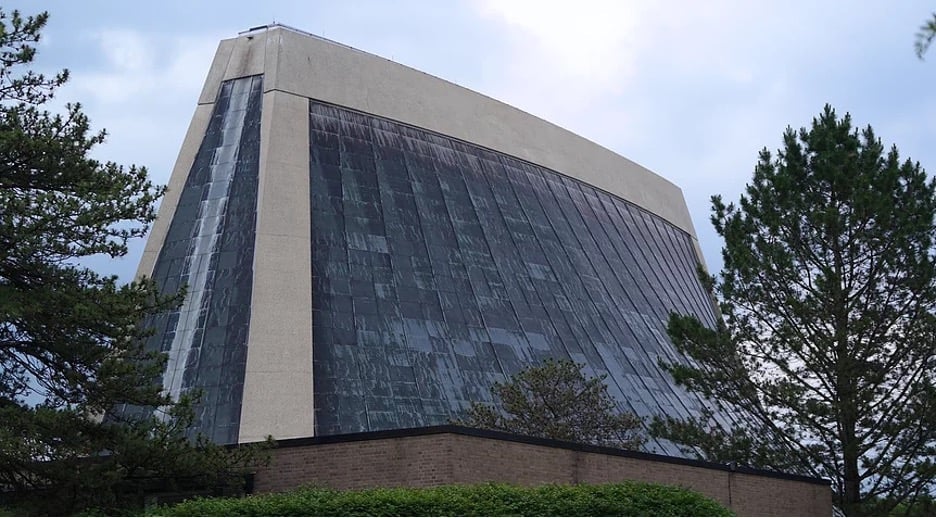
Temple Beth El relocated it campus to Bloomfield Hills in 1973. (Source: Temple Beth El of Bloomfield Hills, Michigan)
Temple Beth El of Bloomfield Hills, Michigan, is a welcoming Jewish congregation dedicated to building and nurturing meaningful relationships through faith, family, and community. Founded on the values of inclusion, compassion, and shared experience, the congregation serves as an extended family, bringing people together for religious, social, cultural, and educational activities and providing support during times of joy and sorrow.
Temple Beth El embraces Jewish families from diverse backgrounds, including interfaith families, LGBTQ individuals, Jews of Color, and people with disabilities. Through its commitment to hospitality, interfaith partnerships, community involvement, and forward-thinking leadership, Temple Beth El continues to expand its understanding of Jewish engagement while honoring tradition and responding to the changing needs of its members.
I would like to thank the esteemed Rachel Grey Ellis, Executive Director and Laura Gottlieb, MLIS, Director of Cultural Resources, of Temple Beth El for their guidance.
Synagogue
Temple Beth El of Bloomfield Hills, Michigan, has a notable architectural history associated with two renowned architects, Albert Kahn and Minoru Yamasaki. Kahn, a member of the congregation, designed its 1902 and 1922 temple buildings. The congregation’s 1973 building was designed by the firm of Minoru Yamasaki, whose other celebrated projects included the World Trade Center in New York City.
According to the congregation, the World Trade Center towers and the Temple Beth El building were being designed at the same time. The architectural models for both projects were physically adjacent to each other while they were being refined and constructed.
Yamasaki was said to have designed the current Temple Beth El to resemble a tent, reflecting the early temporary Jewish synagogues used during the Jewish Exodus from Egypt, when places of worship were located in tents.
The current Temple Beth El incorporates many architectural features for which Yamasaki is known, including poured-concrete pillars, a natural skylight running the length of the building, and large ground-level windows accommodating views of the surrounding natural landscape.
Life Cycle
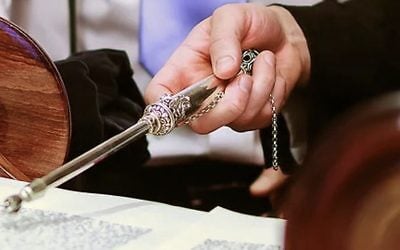
Temple Beth El of Bloomfield Hills offers regular Shabbat services every Friday evening, with both in-person and virtual attendance available. The congregation also supports important Jewish life-cycle events, including B’nai Mitzvah, weddings, funerals, and memorial observances. Its clergy and educators guide families through the B’nai Mitzvah process, beginning with date assignments at the end of third grade, a family kickoff lunch in fourth grade, Hebrew tutoring in fifth grade, and family preparation at the end of sixth grade. Approximately 14 months before the ceremony, students begin prayer and Torah preparation, study with a B’nai Mitzvah tutor, and participate in preparation and rehearsals with clergy. The Bar/Bat Mitzvah represents an important rite of passage, celebrating personal growth and a continuing commitment to Jewish values and community life.
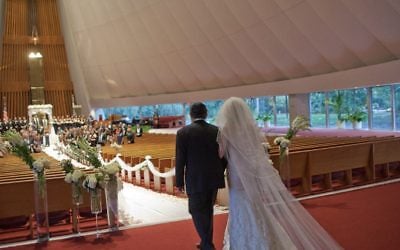
Temple Beth El provides clergy support and guidance for couples preparing for marriage, including wedding planning, discussions of Jewish wedding traditions, and premarital counseling focused on building lasting relationships.

For families experiencing the loss of a loved one, the congregation offers funeral services, shiva support, and ongoing bereavement assistance. During sh’loshim, the first month of mourning, the deceased’s name is read during Friday evening services, with additional annual recognition on the yahrzeit. Names are also included in four Yizkor services during the first year. A weekly minyan is held every Sunday at 10:30 a.m., providing an opportunity for mourners to recite Kaddish. Yahrzeit observances may take place during a morning minyan on the anniversary of a loved one’s death or at a Shabbat service, with advance reminders provided to Temple members.
The congregation also maintains Beth El Memorial Park, located at 28120 Six Mile Road, between Inkster and Middlebelt Roads. The thirty-acre cemetery features mature trees, paved roadways, and carefully maintained landscaping, providing a peaceful setting for Jewish burial and remembrance. Perpetual care is included in the cost of burial sites, and extended payment arrangements may be available. The memorial park provides families with an opportunity to make advance burial arrangements in accordance with Jewish tradition, offering peace of mind and relieving loved ones of making difficult decisions during a time of loss. Temple Beth El also provides a Memorial Book as part of its remembrance offerings.
Education
Temple Beth El of Bloomfield Hills, Michigan, offers a comprehensive range of educational programs for children, teens, and adults. Its Early Childhood Center provides a nurturing, play-based learning environment for children from three months through pre-kindergarten, emphasizing compassion, creativity, literacy, exploratory play, and Jewish values. Small classes, low student-teacher ratios, outdoor activities, music, art, cooking, and holiday celebrations are central to the program. The center incorporates Jewish traditions through stories, songs, blessings, interaction with clergy, and weekly Shabbat experiences. It also offers Temple Tots, a Friday morning program for children ages zero to two accompanied by a parent or caregiver.
The Meyer and Anna Prentis Family Religious School provides Jewish education from kindergarten through high school, with age-appropriate instruction in Torah, Hebrew, Jewish history, holidays, prayer, and mitzvot. Programs include project-based learning, Hebrew tutoring, Bar/Bat Mitzvah preparation, Holocaust education, studies of Israel, and opportunities for teens to serve as assistant teachers and community volunteers.
Temple Beth El also offers a diverse Adult Education program designed to support continued Jewish learning and engagement. Educational opportunities include weekly Saturday morning Torah study, an 18-month Adult B’nai Mitzvah program, a Jewish-themed book club, Chai Mitzvah study groups, and Introduction to Judaism courses. Additional offerings include short courses with rabbis, Shabbat afternoon learning sessions, and lectures covering Jewish history and interfaith topics.
The congregation is also home to the Prentis Memorial Library, established in 1878 by Rabbi Henry Zirndorf and believed to be the oldest Jewish congregational library in Michigan. Renamed the Anna S. and Meyer L. Prentis Memorial Library in the mid-1970s, the library contains approximately 10,000 volumes of English-language Judaica, including adult and children’s fiction and nonfiction. Its notable holdings include the Leonard N. Simons Collection of Rare Judaica, comprising approximately 900 volumes dating from the seventeenth through nineteenth centuries. The library also hosts Bites & Books, a book club meeting every other month.
The congregation preserves its history through the Rabbi Leo M. Franklin Archives, founded in 1981 and the largest Jewish congregational archive collection in Michigan. Named for Rabbi Leo M. Franklin, who led Temple Beth El from 1899 to 1941, the archives preserve an extensive record of the congregation, the Jewish community of Detroit, and the individuals who helped shape its history. A significant portion of the collection consists of materials documenting Rabbi Franklin’s life and work, including his leadership as president of the Central Conference of American Rabbis (CCAR) and his connections to prominent Detroit figures, including Henry Ford, who was his neighbor. Historical documents, photographs, and oral histories provide insight into the religious, cultural, and civic contributions of Jewish leaders and the development of the community. Together with its educational programs and Prentis Memorial Library, the archives reflect Temple Beth El’s enduring commitment to Jewish learning, community, and heritage.
Community
Temple Beth El offers numerous volunteer opportunities that encourage members to support one another and strengthen the broader community. The Braille Bindery, operated by the TBE Sisterhood, produces free Braille books for children through trained volunteers who operate specialized printing equipment. The Caring Community provides assistance to members experiencing difficult times through personal visits, telephone calls, notes, meal deliveries, and baby baskets. Greeters welcome attendees at Shabbat services, High Holiday observances, and congregational events, while the Shiva Corps consists of clergy-trained volunteers who lead shiva services in the homes of grieving families.
These programs reflect the congregation’s commitment to compassion, accessibility, hospitality, and mutual support. The Beth Elders Senior Connection provides social, cultural, educational, and holiday programs for older adults, including luncheons, entertainment, and opportunities to develop friendships. Membership is open to both Temple and non-Temple members, and its activities are supported in part by the Howard and Celia Jacobson Memorial Fund for the Beth Elders.
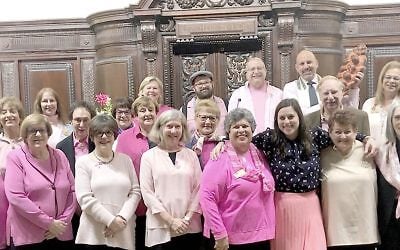
Temple Beth El’s Brotherhood and Sisterhood organizations contribute to congregational life through charitable activities, social gatherings, education, and community service.
Established in 1919, the Brotherhood was among the first organizations of its kind in the country and helped establish the National Federation of Temple Brotherhoods in 1923. Its activities have included honoring B’nai Mitzvah students through contributions to the Prentis Memorial Library, supporting the Temple’s Braille Bindery, providing Chanukah gift bags for college students, and organizing social and charitable events. Brotherhood members also participate in the Intercongregational Men’s Club Softball League and enjoy cultural activities, including Detroit Symphony Orchestra concerts and Jewish Ensemble Theatre performances. The organization has expanded its membership and activities to welcome the wider community and encourage cooperation among congregations and faith communities.
The Sisterhood is an active part of Temple life, offering programs that promote personal growth, spiritual development, religious understanding, and friendship. It also supports major Temple events, including the annual Purim Carnival, recognizes B’nai Mitzvah students and graduating youth, and participates in the wider Reform Jewish community through Women of Reform Judaism, YES (Youth, Education and Special Projects), and sponsorships for Jewish professionals.
Temple Beth El’s youth programs provide opportunities for children and teenagers to develop friendships, participate in social activities, and build lasting connections to Jewish community life. The 2026–2027 youth programming includes BETY K2 for kindergarten, first, and second graders; BETY 35 for third, fourth, and fifth graders; JBETY for sixth, seventh, and eighth graders; and BETY (Beth El Temple Youth) for high school students in grades nine through twelve. These programs are designed to encourage participation, camaraderie, and engagement among young members while strengthening their connection to the congregation and Jewish traditions.
Historical Backgrounds
Jews first arrived in Michigan in 1761, when Ezekiel Solomon, a fur trader and supplier to the British Army from Berlin, Germany, arrived at Fort Michilimackinac during the summer. He is recognized as the first Jewish settler in Michigan. By 1762, Chapman Abraham had become the first known Jewish resident of Fort Detroit, where he worked as a merchant in the fur trade. These early Jewish settlers established the beginnings of Jewish presence in Michigan during the eighteenth century.
During the 1840s, a larger wave of German-Jewish immigrants arrived in Michigan, contributing to the growth of Jewish communities throughout the state. Michigan’s first Jewish religious society and cemetery were established in Ann Arbor during this decade, marking an important period in the development of organized Jewish religious and community life.
Which brings us to 1850.
In 1850, the United States had 30 states until California joined the Union as the 31st on September 9. The nation faced growing tensions over slavery, leading to the Compromise of 1850, which addressed California statehood, slavery in the western territories, and the slave trade in Washington, D.C. The year also saw President Zachary Taylor die in office on July 9, succeeded by Vice President Millard Fillmore as the 13th U.S. president.
In 1850, Michigan had a population of 397,654 residents across 73 counties. The state adopted a new constitution that included a prohibition against cruel or unusual punishment. Agriculture, commerce, and expanding settlements contributed to Michigan’s growth, while communities such as Bloomfield Township in Oakland County remained largely rural, characterized by family farms, orchards, and open countryside.
In 1850, Bloomfield Township was a predominantly rural agricultural community with a population of approximately 1,595 residents. Nearby West Bloomfield Township, which had separated from Bloomfield Township in 1833, had an additional population of approximately 1,086. The surrounding landscape consisted primarily of family farms, orchards, and open pastoral land. Long before Bloomfield Hills developed into a suburban community, the area was characterized by agricultural settlement and rural family life.
It was in that year, 1850, that twelve German-Jewish families gathered in the home of Isaac and Sarah Cozens in Detroit to establish the Beth El Society, Michigan’s first Jewish congregation, now known as Temple Beth El. At the time, Detroit had approximately 21,000 residents, including just 60 Jews. The founders hired Rabbi Samuel Marcus, established a Jewish cemetery and religious day school, and initially conducted services in German. After meeting in private homes and rented spaces, the congregation purchased its first permanent synagogue on Rivard Street in 1861. During this period, it began adopting Reform practices, including instrumental music, mixed seating, and Confirmation, prompting seventeen families to establish Congregation Shaarey Zedek.
As the congregation grew, it moved to Washington Boulevard and Clifford Street in 1867, followed by a new synagogue at Woodward Avenue and Eliot Street in 1903. Rabbi Leo M. Franklin, who became spiritual leader in 1899, served for nearly fifty years and helped establish important Detroit Jewish institutions, including United Jewish Charities, the predecessor of the Jewish Federation of Metropolitan Detroit. In 1922, the congregation moved into a new building at Woodward Avenue and Gladstone Street, designed by renowned Detroit architect Albert Kahn.
Under subsequent rabbis B. Benedict Glazer and Richard C. Hertz, Temple Beth El expanded its community, educational, and interfaith programs. Rabbi Hertz reintroduced Bar Mitzvah ceremonies established a new Bat Mitzvah ceremony, and developed programs for young families. As membership increased and Jewish families moved into Detroit’s northwest suburbs, the congregation opened its present Bloomfield Hills location at Telegraph Road and Fourteen Mile Road in 1973.
Since relocating to Bloomfield Hills in 1973, Temple Beth El has continued its longstanding tradition of religious leadership, innovation, education, and community service. With roots dating back to 1850, the congregation remains an integral part of the Jewish community of metropolitan Detroit. Through worship, lifelong learning, cultural programming, and community engagement, Temple Beth El continues to nurture Jewish identity, strengthen connections across generations, and create meaningful opportunities for spiritual growth. Honoring its rich history while embracing the evolving needs of its congregation and the wider community, Temple Beth El remains committed to shaping the future of Jewish life.
Contact Information:
Temple Beth El of Bloomfield Hills, 7400 Telegraph Road, Bloomfield Hills, MI 48301
Phone: 248.865.0636
Email: support@tbeonline.org
Website: https://www.tbeonline.org/